I absolutely LOVE focaccia and I think I have indoctrinated my children to love them too. Whenever I bake one, it is almost gone before it cools down.
It’s ideal for picnics too.
This is my very, very simple version, that takes a very short time to make:
THE DOUGH
400 g strong white bread flour
100 g fine ground semolina flour
sea salt
1 sachet dried yeast
½ tablespoon golden caster sugar
300 ml water, lukewarm
1 egg
Preheat oven to 350deg.
Mix all the ingredients together and knead until the dough is bouncy (see my post on bread making). Leave to rise in a warm place (cover with a towel) for about an hour until the dough has almost doubled in size.
THE TOPPING
This is my favourite:
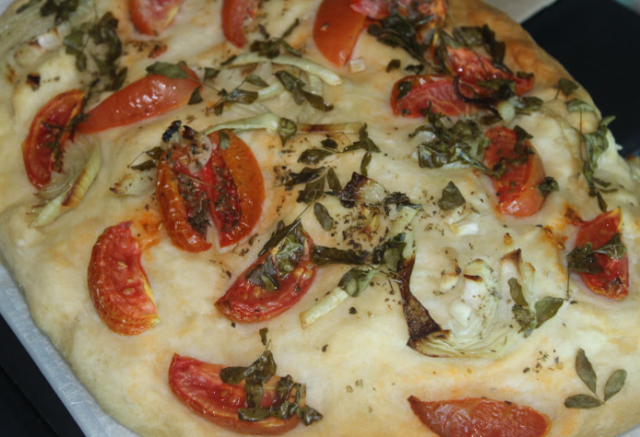
Mixed together halved cherry tomatoes, sliced onions, fresh basil leaves and sea salt in a tablespoon of white wine vinegar.
When the dough has risen, flatten it on a baking tray. Pour the topping evenly over the dough and press the tomatoes and sliced onions into the dough. You may wish to sprinkle some dried oregano on it. I added some fresh moringa leaves for topping…anything goes, that’s how I cook!
Drizzle generously with olive oil and bake in the preheated oven until slightly browned…there is nothing worse than burnt focaccia, so keep a close eye on yours.
I am JK. I have 5 children. I write parenting books and articles. And here’s my rule for parenting:
Have very, very few rules.
Don’t confuse children with a long list of do’s and don’t’s, to the extent that they dare not fart without your permission, get confused as to whether it is OK to eat ice cream at 6am or think they’re growing up in a correction unit for criminals.
Don’t nag children either about homework, dietary choices, bedtimes, etc, because they will develop selective hearing, i.e. they will perfect a mechanism for tuning you out very effectively.
Moreover, the longterm effect of nagging is it makes you sound and look like an old hag.
For my headstrong, impatient and extremely wilful youngest child, I only have three rules:
Church every Sunday.
Score goals on the football pitch.
Learn Chemistry MY way.
This is the logic behind these three (only three) rules:
Church because it is about being part of a community. My daughter is leads a privileged life, and she has to learn to be on equal terms with children whose parents do not own cars and who and to walk for miles to school. She needs to spend Sunday chilling out and “doing nothing tangibly useful”. This “going to church” rule is also about teaching her to believe in something beyond self, to wonder and to question, more so than indoctrinating her with specific religion.
Scoring goals on the football pitch teaches her about commitment, hard work and dedication. And a certain amount of physical fearlessness (which translates into confidence). It is also about being outdoors, lots of exercise, learning how to get on with her peers and the thrill of winning.
Many friends chide me for being a tiger mum when it comes to teaching my child chemistry. Oh dear friends, please understand that it is not about the marks (I know she will exceed her university requirements) but the process. One must learn how to obey before one can lead. Chemistry seems to push all her buttons….and mine, too, unfortunately. So we circle each other like a couple of warring hellcats, but we will get there in the end, battle-scarred and hopefully wiser as individuals and closer as mother-and-daughter: it has been said that the most challenging thing about parenting is being patient to a smaller version of impatient you. It is weird but in the last two years or so, we learn to find our way to each other hearts and about life though our shared, and sometimes contentious, journey in chemistry.
Note: hell breaks loose if any of these three (only three) rules are breached. But touch wood, I have a high level of compliance because my children know they have a good deal. Only three rules!
We put so much store into Christmas. I, for one, am guilty. I blame my mother. She would start baking Christmas cakes as early as October and the tree would be up in our house by the first day of December. And yes, she does go over the top with the celebrations.
“It’s the happiest day in the year!” My mother would say with a big, happy, smiling face.
But what if it’s not?
******
When my friend Nico’s wife died 2 years ago, he suddenly became a single parent to their three sons. Before then, he had been a rather hands-off father, having spent most of his life working long hours whilst his wife stayed at home to bring the boys up.
So suddenly, he is plunged into the deep end. And he is often at a loss about what’s the “right” thing to do.
This year, his sons signed a “petition” and presented it to him – they don’t want Christmas!!!!
He was absolutely distraught, torn, because being Italian, being home with his Mamma at Christmas is very important to him. He had not missed a single Christmas at home, and was so looking forward too, to this time to heal, replenish and recharge with his large family.
“Why don’t you want Christmas?” I asked the boys.
“Because it’s sad. Our Mummy died at Christmas.”
“Christmas is horrid.”
“We hate it.”
I read them The Night Before Christmas by Clement Clarke Moore,via Skype. It’s a classic, and I grew up listening to my mother read this story to me. Here’s a youtube clip of the story:
The three boys listened attentively, despite themselves, because they love stories.
And then…..
“We don’t want Christmas!”
Their father is equally adamant that they will not be sitting at home in a motherless house missing their Mummy either.
Then I had a brainwave. I suggested, how about visiting the Plum Village, which is near where they live? It’s the home of the spiritualist, Thict Nhat Hahn, whom I’ve been studying, after accidentally discovering his work with my partner about a year ago when we visited Ho Chi Minh City.
Father and sons did their research.
“GOOD IDEA!” They beamed happily at me. 😀
For more information about Plum Village, please visit the website.
I don’t often bother making my own pâté because you can buy really good ones at a reasonable price in the UK though it costs a small fortune in Asia. I decided to make some for a friend who is anaemic, and also some for myself because pâté tastes ever so lovely with crusty bread.
Disclaimer: The Food Standards Agency advises caterers that all liver should be thoroughly cooked to kill any bugs that might just be present.
But the most important thing is, chicken liver is actually good for you. And it is cheap, because it is not at the top of most people’s shopping list – “offals, yukh!”. Boy, what are they missing out! Chicken livers are high in protein, vitamin A, iron and certain B vitamins (especially B12). As my friend has dizziness with his anaemia, the this nutritional profile of chicken livers make pâtés the ideal snack for him.
Brandy & pepper pâté
225g GOOD salted butter (I use Presidente)
400g chicken livers, tendons removed
4 shallots, sliced
4 cloves garlic, roughly chopped
150mls brandy, good quality, for goodness sake
2 teaspoons sugar, dissolved in the brandy
50mls cooking cream
1 tablespoon dried thyme (use fresh if possible)
1 pinch mace (or grated nutmeg)
1 tablespoon black peppercorns
Salt and freshly ground black pepper
Cashew nuts and sunflower seeds, toasted
COOKING INSTRUCTIONS
Melt 75g of the butter in a heavy frying pan.
Add the shallots and garlic, and fry until fragrant. Sprinkle in the thyme.
Add the livers and fry until cooked through but still pink and moist on the inside.
Remove from heat and pour everything into a blender. Blend until smooth.
Pour the brandy into the saucepan. Add the sugar. Boil until it is reduced to 2 tablespoons of syrupy liquid. Add 75g of the butter. Pour in the cream. Add the mace or ground nutmeg and peppercorns. Add to the blender and blend briefly, just until the mixtures are mixed together. Pour into a pate bowl and leave to cool.
Toast the nuts. Set aside.
Melt the remaining butter in a clean saucepan. Make sure that it does not burn or go brown. When the pate is set, pour the butter over it. Top with the toasted nuts. Chill and it will be ready to eat when the buttery top layer hardens.
My long-time friend, Toni de Coninck, from Belgium came over for a whirlwind visit.
He is a fellow foodie and we met ten years ago at Gourmand World Cookbook Awards where my cookbook, The Kundalini Yoga Cookbook, was a finalist. Toni says, “Too bad I don’t have time to cook my ragu for you.”
We all have our heirloom ragu recipe – mine has marmite. Toni’s different. But however different, homemade ragu always tastes nothing like the sweet, sticky goo you get if you make it with mass-produced sauce.
He sent me his recipe. Here it is, in his own words.
The secret is time. Time and a decent red wine. First you fry your sofrito in olive oil: 1 chopped carrot, 1 branch of celery, 1 large onion or 2 big shallots. Finely chopped, fry until the onion looks glazed.
I most commonly use 50/50 minced veal and minced pork. Now some people add the meat to the sofrito in this stage, but I fry it in a separate pan so the meat can fry golden brown and in somewhat larger chunks. I find this important because it gives more substance to the later sauce.
Season the meat with black pepper, salt, herbes provencales and if you can find it sweet paprika or pimenton de la vera.
If fried, add the meat to the sofrito, put the whole thing under red wine (half a bottle will do) and bring to a boiling point until all the alcohol has evaporated.
Then add stock or water and 1 large tin of tomato paste or Spanish tomato frito. Put it to simmer, and let it simmer slowly for 3 or 4 hours until it all comes together.
Now, commonly I would use linguine or tagliatelle and it is important to add the sauce to the pasta before serving, so it kinda clings itself to the starch.
Only use freshly grated parmigiana and drink it away with the rest of the red wine.
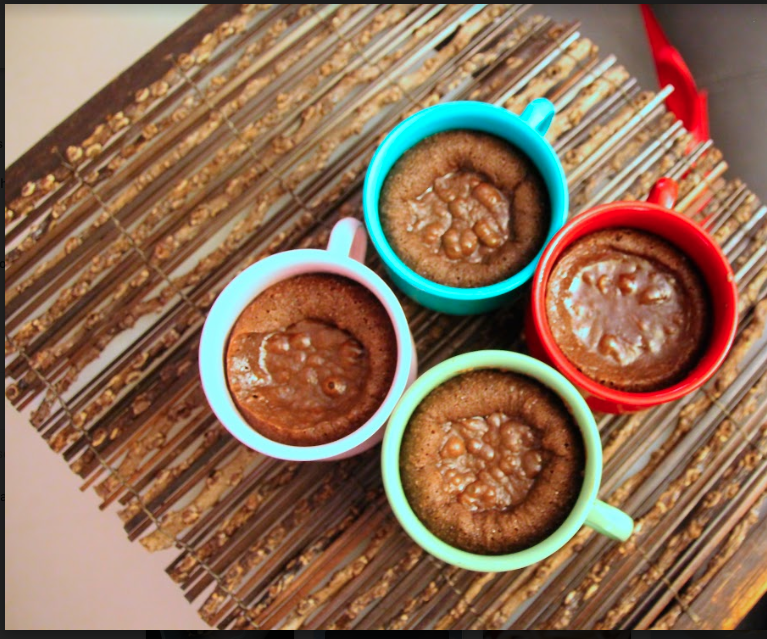
I love “nursery food” as there is something very emotionally satisfying about eating food from our childhood. I made this quickie chocolate cupcake today for my 17-year-old daughter, but here’s a sophisticated version for an adult dinner party:
INGREDIENTS
120g butter butter
4 ounces dark chocolate drops (I used Dutch chocolates)
1 1/4 cups soft brown sugar
2 whole eggs
3 egg yolks
1 teaspoon vanilla
1/2 cup all-purpose flour
4 tablespoons Cointreau (omit the Cointreau for small children 🙂 )
METHOD
Preheat oven to 420 degrees.
Put the butter and chocolate in a small bain marie and melt.
Stir in the sugar until well blended. Whisk in the eggs and egg yolks, then add the vanilla. Stir in the flour. Divide the mixture among the custard cups. Add 1 tablespoon of Cointreau into each cup.
Bake until the sides are firm and the centers are soft, about 13 minutes. Let stand 1 minute. Serve with a generous dollop of ice cream.
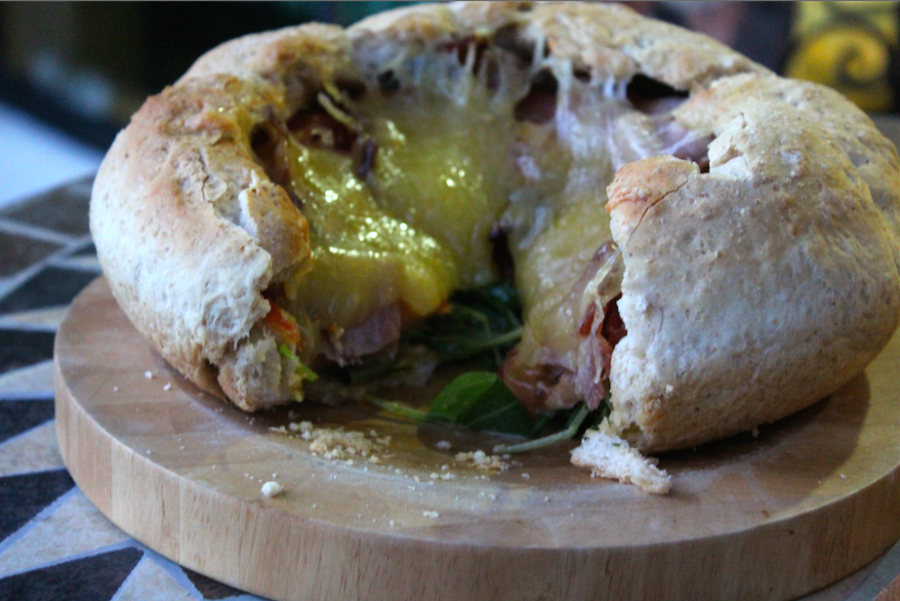
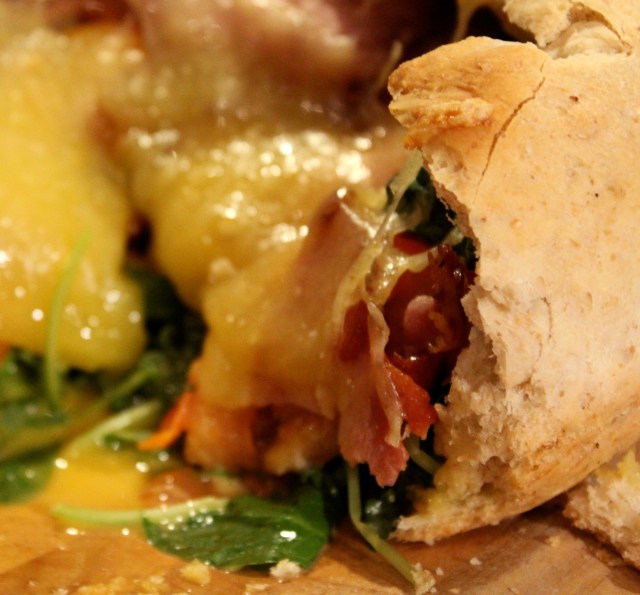
This deli in London sells more than 500 of these each weekend – these loaded bread bowls have become a sensation! No brainer, as it combines the best of two breakfasts: English cooked breakfast and nice (French) bread. At the Barge House, you have 5 combos to choose from. I made The Original. It is easy enough: hollow out a sourdough, fill it with spinach, bacon, sausage, tomato, fried mushroom, egg yolks and grated cheese, and bake until the cheese is melted but the egg yolks still gooey. My word, it was DELICIOUS and we literally licked our fingers!
My psychologist-friend told me with grave seriousness, “Read back your last 10 Facebook posts to me.”
Eeek ….. food, food, food, misbehaving teenager, misbehaving twenty-something, food, chemistry tests, medical school application for the youngest, friends, food.
“That’s where you are at,” my friend said smoothly. “Mentally and emotionally.”
“Jac, I hope you are not going to fuss over me instead when Georgina leaves home,” my partner said with a heart-felt shudder. “I don’t need a mother, housekeeper, cook, office manager or tutor, you know.”
“I don’t fuss,” I told him haughtily.
“Yes, you’re right. You don’t fuss. You OBSESS.”
“Well, that has always been my nature. I give 100%. That’s what makes me successful in everything I do.”
“Just don’t make me into what you do,” he muttered.
Truth is, my whole world has shrunk to encompass only green smoothies, bone broths, energy balls, organic food, the forthcoming international baccalaureate exams and running 35 kms a week.
Sure, I am content enough with my life. Who wouldn’t be? It is a blessed existence. And I am fortunate enough too that I write books that win awards that people want to read. But a small voice inside me asked, “Will this be all?”
Yes, a very small part of me miss getting dressed to go to work and not care about food, kids and a properly-run home. I feel like not nagging sometimes or not getting all huffy when my bread goes wrong. Hmm, I didn’t used to be like that…..
I began putting out feelers for the D-day, which is the last day of my youngest child’s all-important exams (May 2018). You know, JUST IN CASE.
What’s out there?
A few years ago, UK’s National Health Service talked about working with Harvard University to train leaders for the health service. That scheme came under a lot of criticism because currently, the NHS is so poorly managed that it is always in deficit. Hospitals are closing, wards face severe shortages, staff over-worked…..there are certainly challenges and opportunities there for reform. With the right training, it could be the perfect desk job for someone who has strong views (and experience) about how the health service should be run.
Mumsnet, the leading UK website to support parents, have a Returning to Work section within its careers area. The Return Hub is a specialist recruitment agency working with financial firms which are supportive of women returning to work after a career break. Credit Suisse runs a very interesting programme for senior returnees who undergo a 12-week trial period before walking back into top positions (yes, with lots of mentoring, emotional support and learning new technologies):
If like me, you are thinking of the “just in case” scenario, do get your CV shipshape. Just in case, you know. There are certainly plenty of opportunities out there.
Who knows, I might do another postgraduate degree.
“Just not in my area,” everybody at home gasped, aghast, even my beloved father. My daughter threatens to have extensive facial reconstruction and change her name by deed poll should she find me lecturing at the medical school she intends going to. But you know, the world is my oyster in my second stage of life.
Main photo: in the days I used to get dressed and go to work.
I used to remember waking up in my parents’ house to the smell of warm bread in the oven. Yes, sourdough. I love it. Because it is about the happy vibes in my mother’s kitchen.
But asking my mum for any recipe is a nightmare, because she cooks by feel rather than precise measurements – haha, pot calling the kettle black, I do the same too! So I told my friend I wanted to bake a simple sourdough and she laughed at me.
“You?” she said. “You need patience!”
Anyway, where I live at the moment, it costs a whopping £6 for a loaf. So I decided to make my own. OK, what’s beautiful about sourdough is that it does not use dried yeast but airborne microbes to ferment the flour, so you get this lovely, lively starter to bake your bread with. I have lots of happy bugs in the house. It is such a happy house. So why not? I decided to add apples for that lovely background taste to my sourdough (note: use organic apples!)
TO MAKE THE STARTER:
Chop up one apple and mix with 50g rye flour and 50ml cold water.
Mix well and store in a clean jar, covered on top with a clean towel.
FEEDING THE STARTER (5 days)
Everyday, add 1tbsp flour and 1 tbsp water. Mix well.
Cover mixture in jar as per day 1.
On Day 5, it must smell bubbly and doughy. If it smells alien, junk the whole mixture!
STAGE 1: STIFF STARTER
Add 50% of your starter (about 45g) to 85g of strong bread flour (up to you whether you throw away the other 50% or bake 2 loaves) and 45ml of cold water. Mix well.
Store for 8-12 hours.
STAGE 2: THE KNEADING
Put 145g of the starter above in 400mls of tepid water. Mix the starter into a colloidal form in the water.
Add 400g of strong bread flour, 50g of rye flour and 50g of wholemeal flour into the colloid and knead well. Knead for about 10 minutes and leave to rest for 20 minutes.
Then add 12g of sea salt and knead again, thoroughly mixing in the salt.
Put the dough in an oiled mixing bowl and leave to rest for 1 hour.
After 1 hour, knead it for a few minutes.
Repeat for 4 kneads and rest periods.
Then line a colander with a clean towel. Put the dough in it and cover with the other half of the towel.
Place in the dough in the fridge overnight.
STAGE 3: BAKING IT
Turn oven up to 250deg (max!)
Warm up a cast-iron casserole dish in the oven for 10 minutes.
Put the dough in there. Dust with semolina, and make two slashes with a knife.
Bake for 35 minutes with lid shut.
Remove lid and bake for another 25 minutes or until browned.
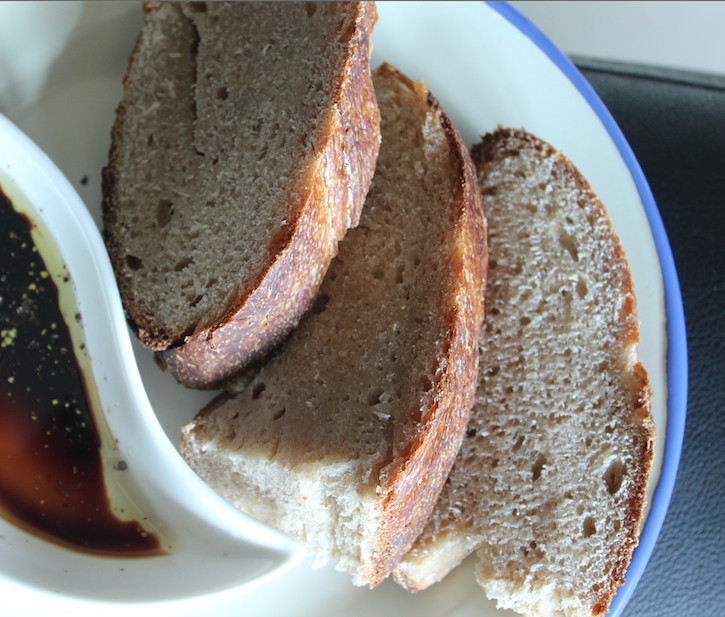
Cool, and leave for a few hours before slicing….though it tastes absolutely delicious when warm!!!!!
Note: I had a fun time with baking this. The whole family got involved with the multiple kneading stages, we sat around and enjoyed it with an Irish friend (with a glass of wine), gave half a loaf to another, and here’s my daughter’s faux pas which is part of our crazy happy household:
PS: The loaf was not perfect and the edges fell apart when I sliced it. But hey, they made a yummy simple aperitif !
I fight with my 17-year-old. “Hellcats, both of you,” her father says in exasperation. We fight about everything, like two feral cats in a paper bag, in her father’s colourful terminology.
Yet I hold her close always. I mean physically close. Especially when words fail me. Our physical closeness nullifies our meaningless fights: immediately after a shouting match, she would huff at me and tell me I am annoying, but with that slant of a smile in her eyes, building up to a hug that makes everything better between us once again. I will worry the night she goes to sleep without hugging or touching me, or if I could not kiss her cheek, her hair, and feel her melt into me.
I notice this is an oddity, even in Western cultures, to be always touching and hugging one’s teenage child. Those who spout attachment parenting in early years are surprisingly non-tactile to their teens. My psychologist friend tells me that there is this belief that the teenage years is about “individuating” a child, that is to say, force them to become self-sufficient.
‘Ah,” I said. “Be tough to a child in order to raise a tough adult who will be successful in a tough world.” I understood. I have seen, first hand, the destructive effect of the mindset that values self-sufficiency and independence above all. I knew one woman who sneered at me, “You still run home to your parents, at your age?” She left her parents as soon as she could, never looked back and I suspect, she would not allow her son the luxury of this “weakness” of coming home to the family, of asking for softness. The son, a qualified pilot, is handsome, healthy and outwardly successful, but he is beset with something inside that made him break off a two year engagement because of fear of commitment rather than flaws in the relationship, have outbreaks on his youthful skin, and being unable to work in a career that he had trained so many years for.
From this example and others, I am convinced that emotional distance and lack of physical bond between grown-up children and parents is not healthy. Our adolescents and young adults still need to hear, feel, and know that we love them and enjoy being with them. Heck, I am almost fifty, and I blossom each time I hear those words! Thus, it feels good for me to be home in my first family’s home. I love the fact that sometimes, it seems as if my brothers and I have not yet left home. The closeness remains, despite the miles and the passing time.
Hold your children close, and I mean physically, because sometimes, this matters more than words. But how? I hear many ask. Teens are especially prickly to close proximity, especially if they have not been brought up within a touchy-feely framework.
Six ways to cuddle your teen:
Cook unhurriedly together with your teen/grown up child. With cooking, you stand close, work in concerted harmony, learn to anticipate each other’s moves and yes, touch.
Rough and tumble. My children’s father still wrestles with his grown-up children – I have to remind the children not to be too rough with their old father! He is not 30-years-old anymore!
Do things for each other, such as massage, manicure, reiki.
Cuddle up together on a sofa watching a film. Slowly move closer.
End each night with a goodnight kiss. I miss my mother’s “No star” (goodnight in Welsh), the way she touches me gently as she kisses me.
Make time for each other. All of the above has to happen naturally.













 raisinghappystrongkids