Emotional Health, Not Academic Obsession

When I wrote my book, Barefoot in the City, I put down the heart of my ethos and philosophy for raising children. With the exception of my eldest child, my four children were schooled in the British system, both at home in the UK and at international schools in Asia. For me, with the benefit of hindsight, the greatest thing about the British education system is that it allows me the flexibility to affect my child’s learning. Its creative syllabus and passionate teachers also play a large role in inspiring my children to be internally motivated, intellectually curious and great orators.

However, though I am appreciative of the British education system and what it has done for my children, in truth, I am a passionate advocate of the Waldorf education philosophy. Simply because I believe in the Dalai Lama’s saying that ‘the planet does not need more successful people’.

“The planet does not need more ‘successful people’. The planet desperately needs more peacemakers, healers, restorers, storytellers and lovers of all kinds. It needs people to live well in their places. It needs people with moral courage willing to join the struggle to make the world habitable and humane and these qualities have little to do with success as our culture is the set.” -Dalai Lama

There are some really lovely parents in Asia, not only the fabled Tiger Mums. Haslinda Halim from Malaysia is one, and she gives me hope.

Yesterday, Haslinda simplified our shared philosophy in a nutshell:

1. 0-7yo focus on hands and good things
2. 7-14yo focus on heart and beautiful things
3. 14-21yo focus on the head and the truth


1. 0-7yo focus on hands and good things

It’s no secret: my children are late readers. I could never understand the mad rush to get children reading way before they are ready to. My belief is that the focus during the early years should be spent entirely on teaching children about their relationship to the world they live in. This relationship can only be learned by doing and exploring and discovering, not from books or by instructions. The 24 hours in a day is barely enough, given that the world is such a big, magical place.

Young children need to learn that they have eyes, ears, nose and skin that enable them to interact with their world, cultivating an early system of emotional intelligence. Young children need to learn to use their hands too, because it teaches them empowerment. Our little people all could cook, garden, knit, build things. By doing all these, a child feels rooted and develops a clear sense of self, which will help him relate to his world and others around him.

If you feed a child with good things, she will radiate good things. Georgina refuses to read as a child. Rather than getting angry with her and forcing her to read, her father patiently spent years reading to her every night. He read pony stories, he read fairy stories and he read teenage stories. It became their special time at the end of each day, something to look forward to, cuddling up together with a book, these bedtime stories were magical.

English remains her weakest subject because she does not have an affinity for the written word. But she brings such a breadth and depth of insight to the language. For example, she asked us to correlate between the words parent, participant and participle.

The other beneficial thing to emerge from the ‘hands and good things’ phase is that all my children are very confident physically. They have spent much of their childhood naked outdoors, climbing in the Alps, in sunny meadows somewhere, scrambling over rock pools, jumping on cowpats and playing a million outdoor games. I simply love Georgina’s physicality, the way she charges at the world with her arms outstretched, eager to meet the new challenges each day, secure in the knowledge that she is empowered, in control and happy with her place in the world. That’s what her first seven years of life had given her.
2. 7-14yo focus on heart and beautiful things

I take ‘giftedness’ in children with a large pinch of salt, because my fundamental belief is that all children are gifted. And gifted or not gifted, children still have to develop the same skillset to function happily in this world, to be contributing adults that the Dalai Lama and our inner wisdom speak of.

Two of my five children are mathematically gifted, but they are schooled alongside ‘lesser children’ (I say that with tongue-in-cheek). I nurture their gift, but I choose to nurture the hearts more, because a good heart is the platform for the gift to sit on and serve. It is easy to cosset Georgina and buy into the belief that I have a young Einstein, but instead, she learned mathematics from another enthusiastic mathematician Gary Macaulay, her father’s buddy, in pubs, making tetrahexaflaxagon models out of beer mats and loose sheets of paper (try it). No, she does not get special treatment because she can ‘see’ maths.

Georgina does not need our help when it comes to schoolwork, but we subversively entwined ourselves in history, English, maths, business studies, science and the other subjects that she studies. The reason is not to help her achieve better grades – because she is already top of the class for many subjects – but to weave heart and values into those subjects. After all, we must never lose sight of the fact that the real value of learning those subjects is simply as a guide to help us understand ourselves and our world more, and to learn how we can make the world a better place. So onwards with the First World War, company valuation models, chambers of the heart and tetrahexaflaxagons. They are beautiful, if they are learned with beauty in the heart rather than blinkered goal of getting 100%.
3. 14-21yo focus on the head and the truth

Entering this phase, Georgina is beginning to ask us difficult questions, which some parents would consider ‘rude’. (That is the beloved trick of Asian parents, to chide a child for being rude to get out of answering difficult questions or facing uncomfortable subjects). But the fact is, Georgina just wants to delve into ‘the truth’, and at 14, her tentacles are fully extended to gather information to aid her cognition of ‘the truth’ and find her own version of it.

But as we know, truth is subjective.

For example, I believe that primary healthcare should never be in private hands. I also believe that the UK has a weak government at the moment. I believe in many things, which are not necessarily right. I would never influence a child to vote for the same political party as me. Thus it takes a whole village to raise a child, to give her a balanced view of the world to enable her to find her own place in it. We are grateful for the villagers who help us to raise our child. In this month alone, during our long car drive to school, we discussed the possibility that vegetarianism could be unkind to some animals (loss of habitat, etc), the existence of other intelligence in the Universe, creative accounting practices and UK job conditions.

Without exception, my children are all great at provoking, challenging and defending viewpoints on a wide breadth of subjects, and have never been hesitant in voicing their opinions or engaging people in debate from our road-less-travelled parenting ethos.

I have raised an investment banker, a Naval officer, an interior designer and a property developer. The biggest triumph for their father and I, however, is not that we have raised successful professionals; rather, we are imbued with deep joy at the loveliness of our children in the way they care for their grandparents, the manner in which they love each other, their inherent happiness and their commitment to the values that we have brought them up with. I am glad there is now an academic study by London School of Economics’ Centre for Economic Performance to give credence to my deep personal beliefs that a child’s emotional health is far more important to their satisfaction levels as an adult than other factors. You can read more on Professor Lord Richard Layard’s work here: http://cep.lse.ac.uk/_new/research/wellbeing/

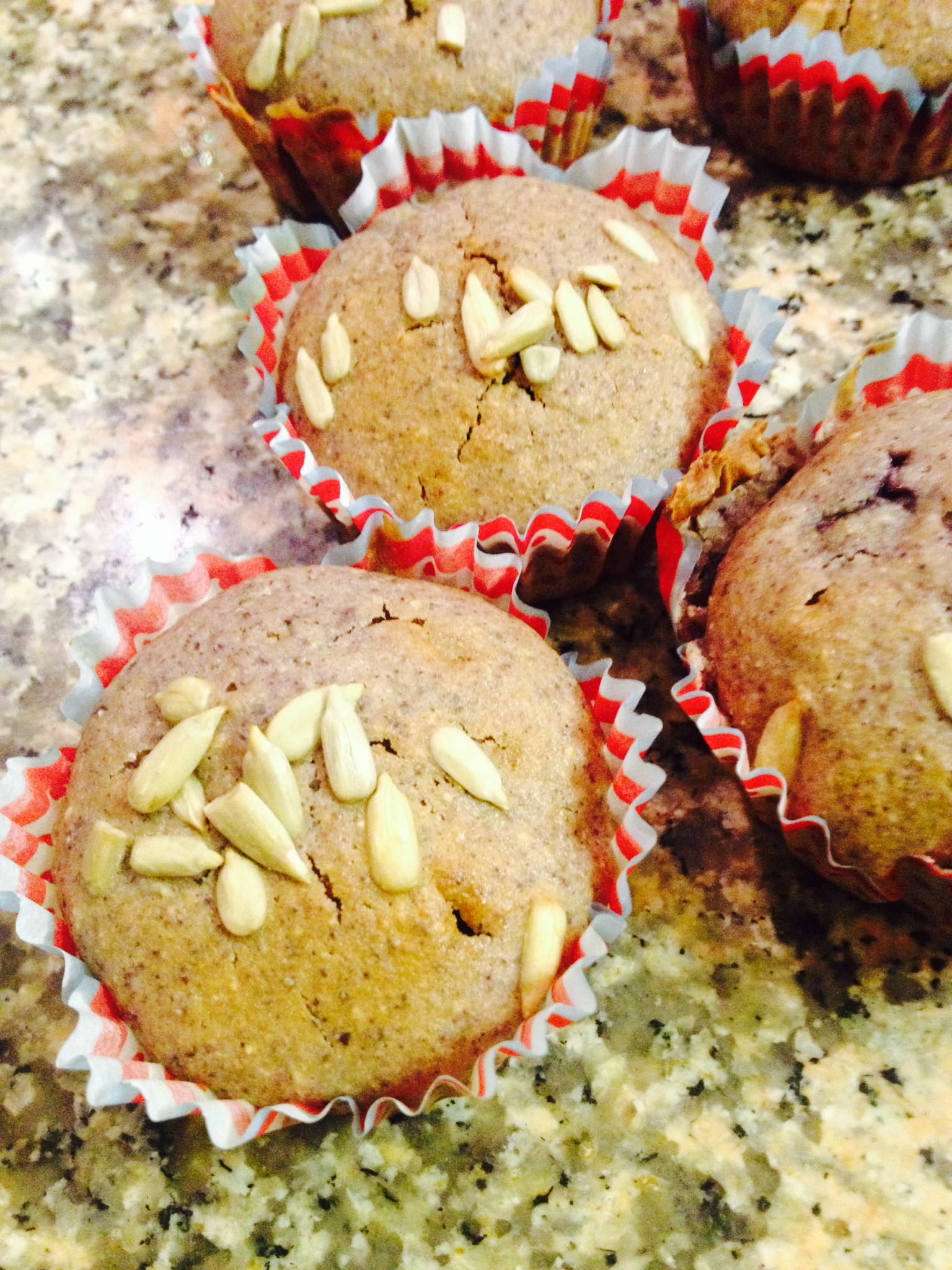
High Energy Blueberry Cornmeal Muffin

Everybody loves muffins and it is easy to eat.  But knowing my daughter, she will ask, “What’s the point of eating it? Isn’t it just empty calories?”

So on this rainy Phuket afternoon, I decided to experiment and come up with my version of turbo-charged cornmeal muffins that taste like a treat still, rather than bland health food.

The first thing I did was reduced the flour content, because white flour is just a filler. I used 75% Organic Blue Corn Meal from Arrowhead Mills.  Corn meal is made by grinding corn kernels into a coarse powder. Though it is still mainly carbohydrates, the carbs in corn meal is rich in dietary fibres, good for healthy digestion and also keeps a ravenous teenager full 🙂

Corn meal is rich in iron and phosphorus.  We might know a lot about the importance of iron in our diet, but phosphorus is less well-known. It helps make up your DNA, forms a component of your cell membranes and also contributes to bone mineral tissue. Your cells also use phosphorus to help activate or inactivate enzymes, so getting enough phosphorus also supports healthy enzyme function.

Here’s the recipe:

Ingredients:

70g unbleached organic white flour

180g corn meal

75g granulated white sugar

50g sesame and flax seed mix

30g chia seeds

3 tablespoons sunflower seeds

3 teaspoons baking powder

1/4 teaspoon salt

Zest (outer yellow skin) of one lemon (optional)

240 ml fresh or frozen blueberries (if using frozen, do not defrost)

1 large egg (see safe eggs)

240 ml milk

60 ml UDO oil

Method:

Preheat oven to 200 degrees ).  Line the muffin cups with paper liners.

In a large bowl combine the dry ingredients and lemon zest. Gently stir in the berries.

In another bowl whisk together the egg, milk, and oil.

With a rubber spatula fold the wet ingredients into the dry ingredients and stir only until the ingredients are combined. Do not over mix the batter or tough muffins will result.

Evenly fill the muffin cups with batter, using two spoons or an ice cream scoop. Sprinkle with sunflower seeds. Bake until lightly browned and a toothpick inserted in the center of a muffin comes out clean, about 15 – 20 minutes.

Enjoy!

muffins

Dare To Be

When I was at school, the prom queens and the UK-cheerleader equivalents made my life a misery. They didn’t like me based on the fact that firstly, I did not care to follow their style dictates, and secondly, I did not beg to join their silly little clubs. And girls can be mean, much meaner than boys. I would have preferred a straightforward punch-up in the playground than years of subversive torture that I was subjected to by the fairer sex. Little things of mine went missing: calculator, homework book, gym clothes. Nobody would partner me for science experiments. I was told the wrong things to do for homework. I was called names, unpleasant ones, just because I dared to be myself rather than follow the herd or fade into the background.

I hated school because of girl politics. To make my life better, I could capitulate and beg to join the herd, or I could keep my head down.  Or I could be strong and stick two fingers up at them and do as I wish. I chose the third way, simply on the basis that I would rather be a social outcast than a fashion victim or a wallflower.

Of course, no boy invited me to the prom. No corsage arrived. No hired limo. No wedding-cake dress. No highly strung anticipation or squealing excitement. But did I care?

No.

Reason: I was already dating an older boy, a scion of one of the most influential families in England and having a great time. On the night of the prom, Jamie and I were in the oh-so-romantic Angel’s Garden, lying on a horse blanket, looking at stars, drinking champagne from the bottle. It was waaaay cooler than hanging out with a gaggle of hysterical girls or worse, being fumbled by a pimply date at the prom.

Over the years, I stuck to my own dress code. When my mother asked me (nicely) to dress up in something decent, I put the family tiara on. With jeans and sneakers. But at my first year at Oxford, I capitulated and shoehorned myself into my aunt’s old ballgown for the May Ball. My feet were too big for her dainty shoes unfortunately, but I wasn’t going to buy shoes that I will never wear again. Thus, I went to the ball in the appropriate dress but in wellington boots that I wore to rake out the stables. I had a great time dancing the night away, because my feet weren’t hurting in ridiculous shoes.

My younger daughter is 14. Her wealthier friends wear branded goods. Her less wealthy friends pore over magazines and made do with cheap Far East imports from value retailers. Do you know, you are polluting the planet and encouraging child labour each time you buy an item of these unethically produced cheap clothes?

She shrugged. Like me, she is not into fashion. Or girl politics. Plus, she has no money. That is a blessing, because she has so much fun with boys. And so, this mother-and-daughter partnership has developed our own style concept. It’s called HOBOism. There is no shop or internet store to wear HOBO. The label is your name. The only rule is “enjoy wearing yourself”. (The name HOBO is a take on the great British fashion brand HOBBS).

I ran a competition for HOBOs. Hajar Nadhirah Onn from Malaysia takes the biscuit (or crown). Hajar wears the head covering of her religion with pride, but it has never stopped her expressing her individuality and joie de vivre. She is seen here wearing supercool headphones and a quirky batman mask. When I first knew about her HOBOism, she had a Goth make-up on (read: overdone, smudged kohl), walking around a small town in Malaysia, giving people heart attacks. Way to go, Girl! It delights this old aunty’s heart no end to see this.

Screen Shot 2014-10-28 at 6.15.01 PM

And with the hindsight of experience, I would like to exhort all girls out there to have fun with fashion, rather than let fashion wear you. Wear a tiara/batman mask if you want, dammit, you are worth it.


Energy Food: Transformation of the Classic Pancake

My 14 year old daughter is a competitive athlete, and one of the best things about sports is it makes young people aware of the value of nutrition and taking care of their bodies instead of opting for heroin-chic beloved of the fashion industry and unthinking women, or eating junk food.

Georgina has a small frame that is packed solid with muscles. With her high metabolic rate, she burns a lot of calories. Thus, we have to be careful that she meets her nutritional requirements plus more. I don’t want her to go down the path of supplements and vitamins, because a happy and balanced view of food and a healthy approach to eating is a lifelong state of mind. I don’t want my daughter to grow up dependent on pills and chemicals.

Thus, we have one simple principle in our kitchen: we ask ourselves, “Is it nutritionally empty?”

Pancakes, for example. It is mainly flour, egg and some milk. Flour is a filler, nothing else. Is it worth eating it, apart from the pleasure of the taste? Do you want to fill your stomach up with white flour?

But we love pancakes!!!

Here’s our super-version of the classic pancake, it’s full of goodness:

Ingredients for the batter:

120g unbleached white flour

2 heaped tablespoons maca

1 tablespoon caster sugar

1 teaspoon baking powder

½ teaspoon salt

140ml milk

1 large egg (please read about safe eggs here)

2 tablespoons of melted butter

More butter for frying


The garnishing:

1 banana, sliced

Udo oil

Wild honey

Nuts and seeds

Bee pollen

Method:

Sift the dry ingredients into a large bowl. In a separate bowl or jug, lightly whisk together the milk and egg, then whisk in the melted butter.

Pour the milk mixture into the flour mixture and, using a fork, beat until you have a smooth batter. Any lumps will soon disappear with a little mixing. Let the batter stand for a few minutes.

Heat a non-stick frying pan over a medium heat and add a knob of butter. Cook the batter until light gold in colour.

With the remaining butter, caramelise the banana slices. Pour over the pancake, drizzle Udo oil and honey on it and sprinkle with bee pollen, nuts and seeds.


She had green smoothie and the super pancakes, and off she went for an activity-filled day with a big smile on her face and bags of energy. It’s a super energy-charged breakfast, that’s for sure!


My Daughter, My Role Model

Georgina has my body shape: the skinny ‘slim’ look so beloved of Asians and women the world over too, I guess.

But she never had any intention of pandering to the majority’s perception of beauty – this girl has worked hard (not only through exercise but through optimum nutrition) to have a strong powerful body that wins her trophies and gold medals.

She has bigger thighs and bigger waist than me, and she laughs about it. Her shoulders are wide, which makes her a strong swimmer though she does not compete in swimming.

She is larger than a lot of girls, but she doesn’t care. Because she knows she is solid muscles, and she is proud of them, even if she is perceived as ‘big’. She revels in the fact that she is very seldom sick – in the last ten years, sore throat is her only ailment – and that she has bags of energy to have fun. I don’t stress about her wearing tight clothes, because she is not a feeble little thing pandering to ideals of beauty, but merely showcasing her muscles. Her role model: Jessica Ennis, the British Olympian, and she is on her way there.

Her physical strength gives her mental strength and a different approach to life …. to my surprise, she listens to Martin Luther King’s speeches on her iPod!

Way to go, Warrior Woman!

No to Anorexia

Anorexia Kills

Finding Their Own Way

Religion is actually a very beautiful philosophy. It is sad that these days, the world is so polarised, over-sensitised, fearful, filled with irrational hatred and cowed by political correctness when it comes to religion. I had to think twice before writing this, so conditioned am I into thinking that the r-word is a tinderbox that could incite a large, destructive flame.

My view is that it is a personal journey, a private choice and a joyful way to be. Religion has killed loads, but it should not be buried any more than cars, sleeping pills and guns should be eradicated. It is the darkness of men’s hearts that brings about the destruction over the centuries, not something as simple and private as religion.

It all goes wrong when we try to enforce our own interpretation of what we think religion is. I often have pious churchgoers correcting me, believing with close hearts that their views are right, and mine wrong. Wasn’t that what killed the millions? A book read with 10 different eyes will yield 10 different perspectives; a sermon heard by 10 different ears will hear 10 different messages. We each have to find our own truths.

My mother-in-law knew me when I was a spoilt teenager. She expected much of me, she was tough on me and she did not tolerate my nonsense which my indulgent parents thought was cute. It was non-negotiable where my mother-in-law was concerned that I had to learn how to cook and clean, and care for her son and her grandchildren. I did not think it was that important to clean behind the refrigerator a week after my son was born, but my mother-in-law chided me for my lack of hygiene which she believed stem from my fundamental laziness.

“How would your baby survive?” she said with a shake of her head.

Fine. Point taken. Cleanliness is next to godliness. But learning how to sew? Apparently, that was in the must-have toolkit in my mother-in-law’s view.

However, she never expected me to follow her religion. She naturally assumed I was a heathen, since I had a laissez faire attitude towards going to church at that time, and I was someone who consented to a one-night stand with her son whilst I was already promised to another.

She just went about her way, taking the grandchildren to church.

And that was how my children were brought up. Catechism classes and Catholic schools. Baptisms, Holy Communions, Confirmations. The four older ones grew up beautifully, blessed with an inner grace even when they were at their worse.

But my youngest, Georgina, she fights it.

We persevered. She fought our implacability with anger, and we did something we would never ever thought we would do: we made deals with her. If you go to Sunday school and the church service later, we’ll go swimming. We’ll buy you this. We’ll allow you to have a fizzy drink (she was not allowed them). It was bad parenting, because after all, isn’t parenting about enforcing laws and forcing children to follow the ‘right’ path?

But if we had done that, we would have ended on the same track as the zealots who believe “I am right and you are wrong”, or “my God is greater than yours”. When it comes to religion, our sole aim is to give the children the foundation to make their own choices. we flood G and her older siblings with prayers, love and the light of the church. In time, they will follow the path, because parents’ faith is like a candle in their children’s lives. It doesn’t require force, but grace in how we lead our lives as parents.

G is still a long way off from being a devout Catholic. But then, I wasn’t, until I loved my mother-in-law and saw the beauty and grace in her ways.

This child of mine “loses” her rosaries. Intentionally, I think. But we never scolded her. Instead, we buy her beautiful ones every time we visit a holy place.

“I already have ten,” she would say stormily.

“Ah well, keep this one in your school bag then,” we would answer. ‘Or your pencil case. Or football kit. Who knows when you will need it, eh?”

We go to church. I hold her father’s hand during the prayer. I feel the electricity of his fingers. Almost thirty years of history in his touch. I know G feels it too, though she glares defiantly at the priest.

“Why are you praying so hard?” she demands. “What are you asking God to give you?”

“Nothing,” I answer her. ‘I make it a point to ask God for nothing.”

“You are praying for my brother’s safe return from the Middle East,” she says. ‘You are asking God to spare his life.”

“No, Kit is a good Catholic. He can pray for himself. He does not need his mother to pray for him.”

“And then?” she insists.

I give her the answer. “I pray for your grandmother, G. She who taught me to love God. She who prayed for us all. I pray for her, because she is unable to pray for herself now.” (My mother-in-law has advanced Alzheimer’s and no longer functions).

Her eyes grow wet. Love will bring her to the light. With softness.

And for me, this is religion, the realisation that there is something beyond the narrow confines of the self, beyond the here and now, and a pure love that goes on and on, through the family, by the grace of God.

communion


So You Want To Be A Parent?

My mother is a ‘ground-up’ type of person. She is like an iceberg. What you see is merely the tip, a lot goes on beneath the waterline to solidify the top that you see. She is a firm believer of substance, not form.

Thus, my mother had always taught me that I had to learn to love cooking before becoming a mum. Not merely to learn to cook, but to learn to love cooking. Her rationale is learning to love cooking is not merely about putting food on the table, but cultivating a mindset where there is a genuine desire to nurture and care for another human being.

“Saying ‘I love you’ is easy. We can say it without too much effort, without any sacrifice,” she would say. “But at the most basic level, feeding someone with the food that you have prepared with your hands and heart speaks more meaningfully.”

My mother made a lot of comfort food, especially in the winter months. I complained about her tendency to over-cook. I chided her for using too much cream, too much cheese and too much butter. But I fly home like a homing pigeon to her sunny kitchen in Portsmouth, Hampshire, lured by sweet memories of sitting here in her kitchen, doing my homework, waiting for her simple food to be served.

My mother’s food healed me, and slowly, as I grew into a young woman, I grew to love cooking, though it was not an intuitive thing for me to do. I was a physical, outdoorsy person, impatient and driven. Spending time in the kitchen was definitely not on my agenda. In my youth, I have always felt I had more important things to do in life than the menial task of cooking.

But slowly, there was a shift in my paradigm as I understood my mum’s philosophy. It doesn’t have to be cordon bleu. It doesn’t have to be show-off food. It can simply be a bowl of creamy mashed potatoes; it can be a piping hot bowl of spaghetti. It can be hearty soup made from leftovers. It is just something that you have dedicated your time to giving someone; it is the embodiment of your intention to care for another person’s wellbeing. It is like giving your energy to nurture someone else without the grand gestures or easy words.

When I lived in Jakarta, a man called Antonio Castellano cooked for me. He wasn’t a professional cook, but a management consultant working for McKinsey & Company. His specialisation is the global energy industry, but he has an Uncle Sal who sends him Sicilian recipes from home. Unusual food that you couldn’t get in an Italian restaurant in Jakarta, Singapore, Kuala Lumpur, or probably anywhere in Europe for that matter, except perhaps in Sicily. Spaghetti coated in anchovy oil and breadcrumbs, sprinkled with capers. I watched him cook for me, this diminutive blue-eyed Italian, and I finally understood the power of my mother’s philosophy. I rather think I fell in love a little, just a little, for this is the first time a man has ever cooked for me.

I saw the beauty of food cooked with love through Antonio’s giving. I morphed into someone who genuinely loves cooking. I began to smile and hum whenever I cooked. And in my late thirties, I went back to my mother to tell her that I finally understood what she meant about a love for cooking. I had met someone who showed me his love in this deep, honourable and beautiful way.

But my mother, she said, “You have to love gardening, if you want to genuinely love cooking.”

I disliked gardening, though I have put in the hours as a teenager.

“Gardening is like raising children, Jack,” she said to me. “You nurture a plant, watch it grow, and be pleasantly surprised by it each day. There is something to love about your plant each day. And most of all, it teaches you patience and acceptance.”

“I don’t see what it has to do with cooking,” I said sulkily.

And my mother told me. Cooking is not about what you put on the table. The process starts long before coming to the stove. It is about feeling Nature, and being thankful for what we have been so abundantly blessed with. It is not a science, but a primal emotion. If we can translate that thankfulness into the food we cook, we create family consciousness.

“I don’t know why cooking schools start with the fancy stuff,” my mother mused. “It should all be about going to the garden, smelling the herbs, tasting the fruits, being familiar with the earth first. Not knives and pots and pans.”

“Ma, I buy organic food,” I sulked, as I dug the earth this summer at the vegetable patch. “It’s good enough.”

“Oh, Jack, put more energy into your digging!” She laughed gaily at me, watching me with love in her eyes. “We need good soil for the new plant we bought.”

I frowned and sulked. She came to stand by me. “You need to get to the soil on the lower layers. “

With some difficulty, she knelt on the flowerbed beside me, and took the small spade from my hand. She began digging energetically, scooping the earth from the lower layers into the flowerpot.

“Jack, this is like parenting and grandparenting. We, the parents and grandparents, are the top layer. We have had our time. But the layers beneath, that’s where all the top layer’s nutrients have leached down to. We want that layer, because that’s the best of us. See?”

I looked at her in amazement. Yes! That is the true gist of parenting – we pass our goodness down to the next layer, protecting it, nurturing it, for it is our continuity, our immortality. From here to the kitchen table, the circle of life. It’s all related, in a magical way. Thank you, Ma, thank you.

“And Jack, no short cuts,” my mother said with a small smile that carried the warmth of the whole sun in it. “Learn to enjoy gardening, love.”

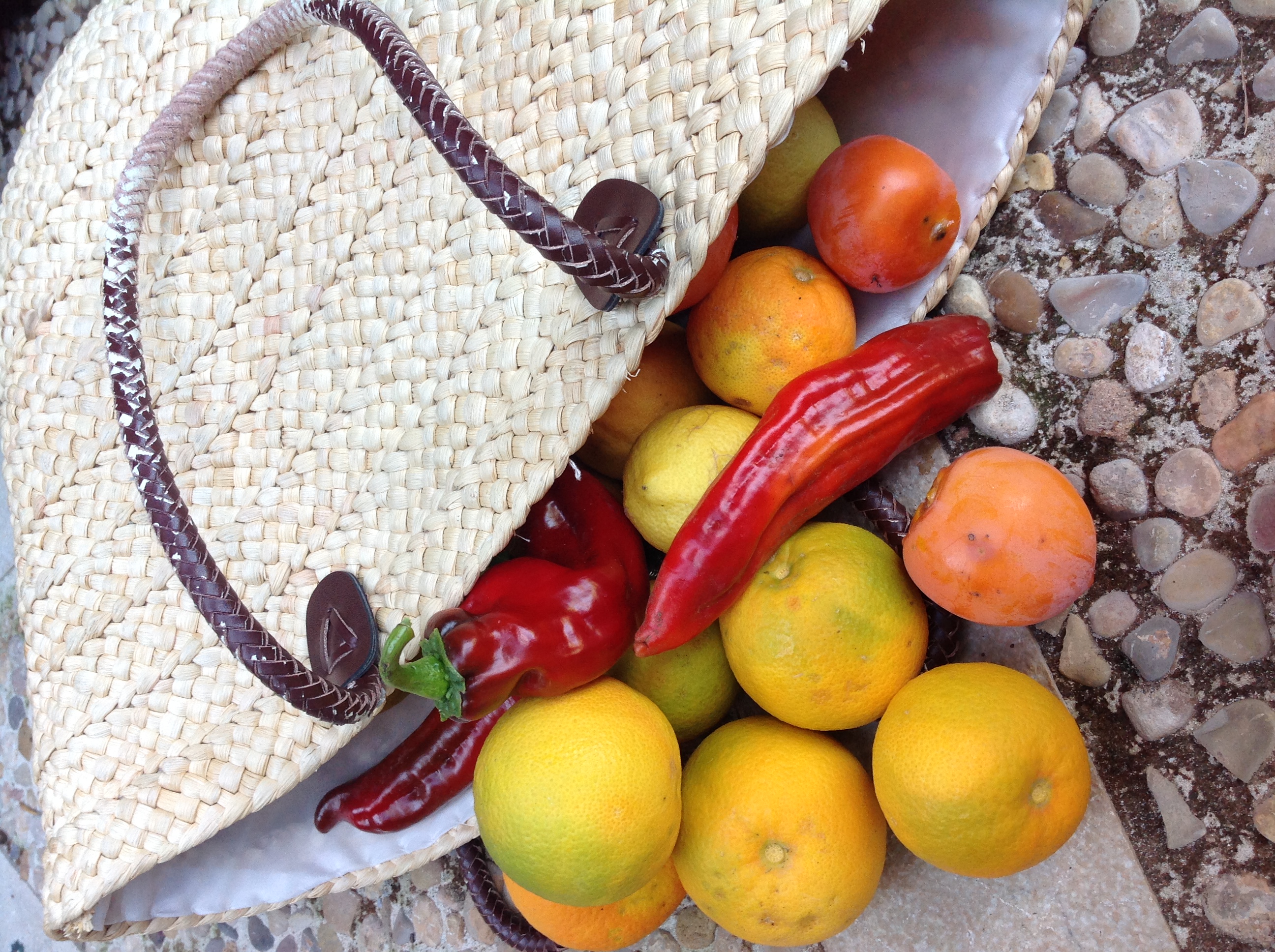
fruits

We Travel, To Come Home


When well-meaning folks say to me, “You must meet this person” or “You must try this restaurant” or “You must take your family to this place”, I just smile sweetly and say nothing, hoping that they don’t follow their suggestions up.

Because I have no intention of meeting new people (however interesting/inspiring/motivating), or going to new restaurants or taking my family to some wonderful location that you think we might enjoy.

The reason is I have spent the first half of my life like a marionette on a string, a social butterfly going to all the ‘in’ functions, and met all the interesting people I have ever dreamed of meeting. One more at this stage would only burden me, so I have no need for new friends. And all the places we want to visit are our family places, places that we have left behind when we moved to Asia. Our greatest joy is rediscovering home.

Right now, at 46 and living quietly on a sweet little island, I am happy with my life as it is. I don’t want more. I am happy with the humble restaurants I find along the way, I am happy with my local beaches, and I am happy with my quiet life of precious few friends. I cherish the space and time and isolation I have found in my life. There is no need for me to add more: the open spaces and free time is simply exquisite, time devoted to our youngest child. We do want to journey inwards.  Because we travel, to come home.

IMG_8203

Water safety for teenagers

I told my baby-daddy’s parents that swimming tops my list of life-skills, and that their grandchildren will be in the pool by the end of their first week in the world. It is not only a life-skill, but a life-saving skill.

Being able to swim isn’t enough. Your child has to be a strong swimmer who is aware of the dangers. When I was at school, a couple of my friends drowned because they tried swimming across a narrow stretch of water after missing the last boat home.

G is a fantastically strong swimmer, though she doesn’t think so (which is good). Several years back, our canoe capsized in the dark, in the open sea, and she saved her own life. She could easily swim 50 metres in choppy seas. It gives us some measure of comfort that she knows about rip tides too, and she is sensible about the dangers of the open sea. We are going to Australia for Christmas, and she has researched all the dangers about Australian seas already.

Yesterday, she was fooling around on a yacht; this Saturday she is going out on a yacht with a bunch of teenagers. We just gave her four laws that she must obey: (1) when in open seas, never swim more than 20 metres from the yacht (2) always inform someone if you are swimming in the sea (3) if jet-skiing or water-skiing, you must wear the right lifejacket, which is the one that lifts the head out of the water and (4) do not dive!!!!!

“It is also a social skill,” G smirked. “Many girls can’t swim, or are feeble swimmers, and they just sit around looking pretty and helpless, whilst I have real fun. With the boys.”

Roadmap for raising Gs: https://raisinghappystrongkids.com/2014/08/18/roadmap-for-raising-children/