World Wide Web

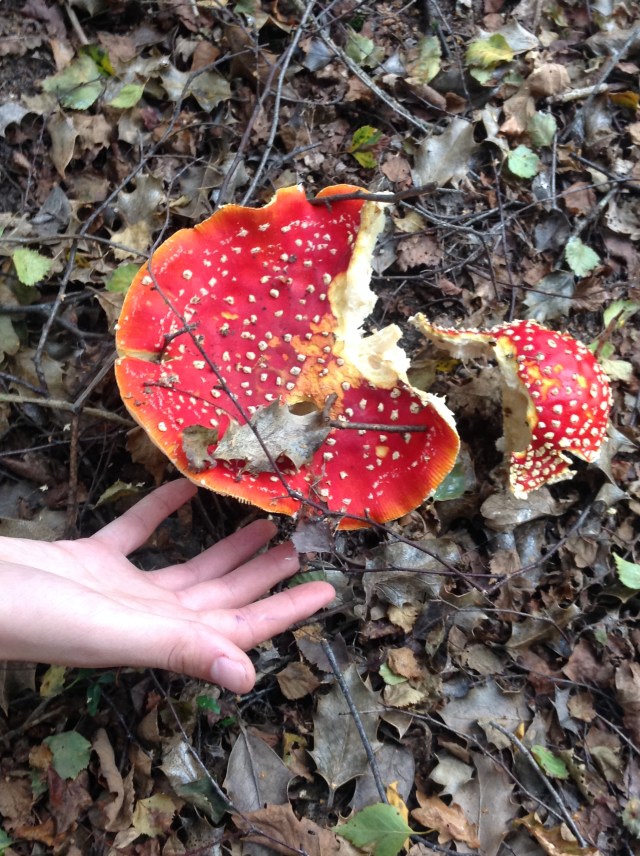
The Internet is so pervasive in our lives, but do you ever stop to wonder about a greater, more magical network, one that is created entirely Nature?

My parents are both passionate biologists, and they created that wonder in me that never dims. Their particular passion is fungi. Mushrooms to you and I. But what we see above ground are just the sex organs of these small but amazing organisms. Beneath these fungus are roots that nurture the whole forest through a beautiful mutualistic symbiotic relationship. A complexity far beyond the comprehension of the mere human brain exists below ground, connecting all living things. Indeed, the forest is far more than you can see.

So here’s a little practice in mindfulness: the next time to log on to the Internet, think about the magical network beneath your feet.

https://www.ted.com/talks/suzanne_simard_how_trees_talk_to_each_other?language=en#t-635181

Working on my next book, inspired by my parents, of course ❤

IMG_8835

Understanding the physical world

In conversations with my daughter, I became interested in how we learn maths (because my novel is maths/physics-based). She has many friends who does not understand maths, cannot do maths and are scared of maths. Unfortunately that fear and dislike persists till adulthood, possibly for the rest of someone’s lifetime. I hope my Catching Infinity will change that.

There are sociological theories about why maths holds terror for many students: thinking in abstract and in symbols is not ‘normal’ in the world we live in, and also the fact that it is a subject that a student is either right or wrong. Fear of failure often impedes progress in the subject. You have to be relaxed to be good at maths.

Yet maths is the foundations of so many things. Like physics.

Here’s something that came to my attention recently:

One thing that never fails to awe me is the fact that so much of the human brain is unknown despite the billions we have invested into its research. For example, do you know that there is a special part of the human brain that is responsible for comprehension of physics/physics-like subjects? Take away the maths and the scary equations, physics is just an inner intuitive sense for how things will bounce, wobble, or fall. We use it all the time unconsciously in our heads. So, my message to adults and children alike, learn to love physics.

To test the physics centre of your brain, go to:

Six ways of managing teenage rebellion

I get absolutely no sympathy from my mother whenever I complained about her grandchildren. She would remind me with a smug grin that I was even worse. “You were a hundred times worse, Jac,” she would say cheerily.

Which leads me to think, teenage rebellion is a rite of passage. Children become teenagers before they become adults, and thus, the teenage years are a staging post where they push the boundaries and explore who they really are (rather than extensions of their parents). When teenagers rebel against your house rules, they are testing how far they can go and what they can get away with. Clamp them down too much and they fail to develop their own personalities. Give them too much liberty and they become unlikeable, obnoxious adults.

My feisty and headstrong sixteen year old G who has strong views on everything is surprisingly easy to deal with. For someone who claims to run her own life, she is surprisingly compliant with our house rules. For example, a few months ago, her whole year group was going out to the notorious party town of Patong to celebrate the end of the year-end exams. Our curfew was midnight. “But the party hardly starts then,” she protested half-heartedly. True. They were meeting up at 11pm. Her friend’s mother offered to accompany the girls and took out a hotel room in the middle of town. G asked if she could stay over. No. Of course. “Why?” She demanded. “I just want to know.”

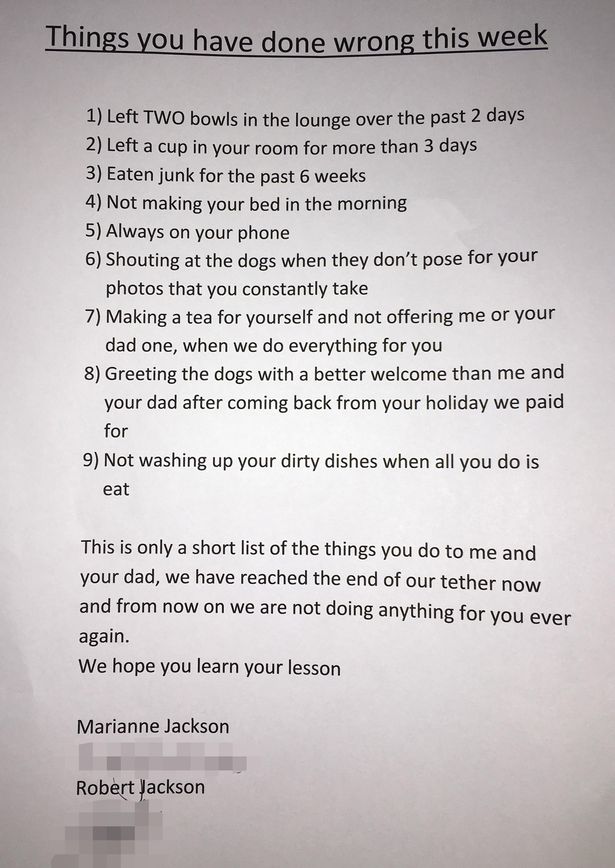
And really, that was the end of our unpleasantness. I think a lot of it is down to establishing good communication between you and your teen. Recently, a mother issued her daughter ‘rap sheet’ which the daughter posted online and it went viral:

PAY-List-of-things-that-Nicola-had-been-doing-wrong

You can read the story here.

These are my six tried and tested strategies of coping with teenage rebellion:

  • It starts long before then. It starts when your children were small enough to listen unquestioningly to your words. That is when you lay down the foundations of how your home is run and how your family life is lived. And what you find acceptable or not acceptable. For me, rudeness is never acceptable, so even when we are disagreeing, everyone must do so with respect for each other.


  • Build a good communication platform. Talk often to your teenagers. Show them that you are a good guy who sometimes have to play bad cop because that’s your job as a parent.


  • Don’t have too many rules. Have a few key ones that are non-negotiable. This means that you don’t exhaust yourself and use up your merits over inconsequential battles.


  • When rules need to be broken, come to a reasonable agreement. Because as parents, don’t be too arrogant about learning, too. It is never that simple and nor is parenting black-and-white. Be prepared to discuss and negotiate.


  • Don’t expect to solve everything with one conversation. Be prepared to park the matter and return to it later.


  • Do your best to create a happy family home (and that means you yourself being happy too). A happy teenager would be more likely to cooperate with you.

Screen Shot 2016-08-01 at 20.54.59

A way of living

When my children were young, we had lots of picnic. We almost never left the house without a picnic basket for a very simple reason: we didn’t have that much money, and even tea and cake in a cafe cost a lot when there were so many of us. So we never ate out. We ate lots of cheese sandwiches on fields, in parks, grasslands, meadows, forests and seafronts all over England and Europe. We picnicked on beautiful sunny days but we have also picnicked under grey, drizzling skies, sitting on horse blankets, eating soggy cheese sandwiches.

Whenever I was too lazy or too rushed, I’d just buy stuff from the delicatessen or supermarket and make up an impromptu picnic.

Apart from the cost-savings, the upside we found was the fact the kids never whined about being ‘hungry’ whenever the saw or smell yummy stuff. They never pestered us for candy floss or burgers. Because they know my response: “Let’s see what’s in the picnic basket if you’re hungry.”

So now, the kids are grown. We can afford to eat in cafes and restaurants on our trips. But old habits die hard….it has indeed become a way of living, something that I really cherish. That’s us today, bumping along on the country roads with a picnic basket and horse blankets in the backseat.

IMG_4450.JPG

Teaching children about the world

When my children were young, they used to make home videos about the environment, write plays about the natural world, climb, hike, swim and play with Nature, and people would often comment, “Wow, didn’t know you all are so green / into the environment / pro-Nature/ etc.”

Well, we are not exceptionally green / into the environment / pro Nature / etc. No more than we should, and we were merely passing on a love for our world to our children. Just for fun, whilst I was at University and juggling small babies (no nannies or helpers) I did a project with my young children in tow on paper recycling because it bothered me so much. I took my children to the paper mills and recycling plants, and told them never to waste paper. Published by my University, that academic work is still knocking about in the world. Here it is.

It is so important to begin teaching children environmental stewardship from a very young age. To know is to love, and whilst they are still tiny, children still have the eyes to see magic in its full glory. This is the best time to fall in love with Nature and understand its complexities. And once you understand Nature, you understand life.

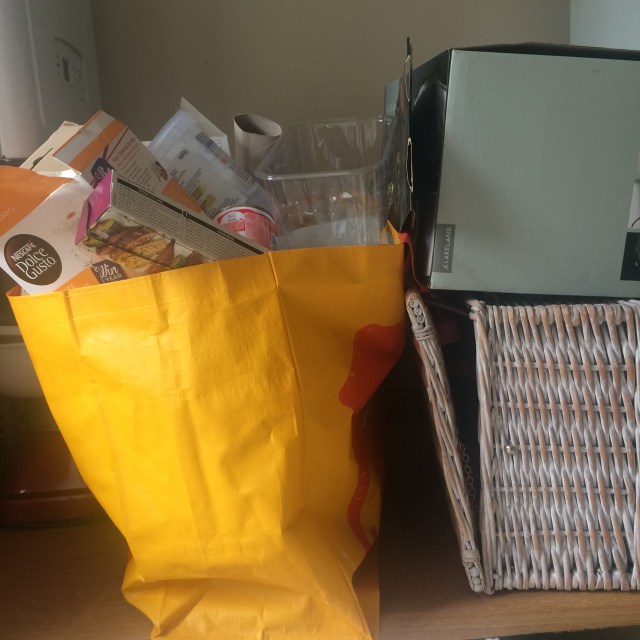
It doesn’t make them crazed tree-huggers (though what’s wrong with that? The world needs more tree-huggers in fact). Here’s an example. I was complaining to my daughter G that I hate all these packaging. We recycle with militant zeal and avoid as much packaging as possible, yet we end up with tonnes. It drives me crazy.

IMG_7437

G quipped, “Mum, have you thought about this? Manufacturers are not your enemy. They want to lower their packaging costs too, but they have to get their products to consumers undamaged. So be it strawberries or a television set, packaging is needed. I’d say they use the minimum they can get away with to save costs on their side.”

This debate raised another point for us to take onboard, which is buy local as much as possible. Apart from the need for less packaging, we are actually support the smallholders against big multinationals. We are saving local businesses and the environment when we buy local, even if the products cost slightly more.

I love this book that we are reading as a family this summer. It shows the interrelationships between all living things.

FullSizeRender-46

And here is a sweet little video G made when she was about six.

Love the world you live in, and share the love with your children, too. They are the inheritors of this planet.

Six ways of raising unfussy eaters

My childhood home had too much food. My Ma is addicted to food. She uses food to celebrate and she uses food to commiserate. Food, food, food. At 48, I still feel jumpy if there is no food in the house. I am suspicious of women who can’t cook. I don’t believe that people can be genuinely happy without proper home cooked food. Yeah, inherited prejudices. And oh, my kids can push my buttons so easily when it comes to food.

Many of us have an unhealthy relationship with food and we unconsciously pass that on to our children. To compound our inherited problem, small children are pretty smart creatures who learn from a very young age that they can use as a blackmail tool. Does ‘if you eat another mouthful, you’ll get ice cream’ sound familiar to you? I was guilt of saying this once to my eight year old son Kit, “If you don’t behave, you won’t get another cup of Ribena until you’re 20 years old.”

This is what I have learned from my 30 years of bringing up five children:

START THEM EARLY

I am a great believer that children should eat the same food as adults, with some modifications, of course, viz-a-viz salt and spices. Eating is a natural part of family life and I love this old adage, a family that eats together stay together.

EAT AS A FAMILY

Eating should be a celebration, not a battlefield. Even if you are eating simple takeaways (seen here), make it a lovely experience.

Screen Shot 2016-07-26 at 12.52.06.png

MAKE FOOD INTERESTING

Involve children in the food preparation process. Make it child-play. Even boring food can appear interesting if (1) they enjoyed making it and (2) it looks funky.

Screen Shot 2016-07-26 at 12.52.29.png

THEM ABOUT FOOD

There is so much to learn and it is all very fascinating. Even for parents. And learning about food is wonderful thing to do because you learn about staying healthy and taking responsibility for wellbeing. I think the best way is to actually grow something, even if you don’t have a garden. Container gardening works very well for growing herbs.

Screen Shot 2016-07-26 at 12.54.30.png

ALLOW THEM TO EXPERIMENT

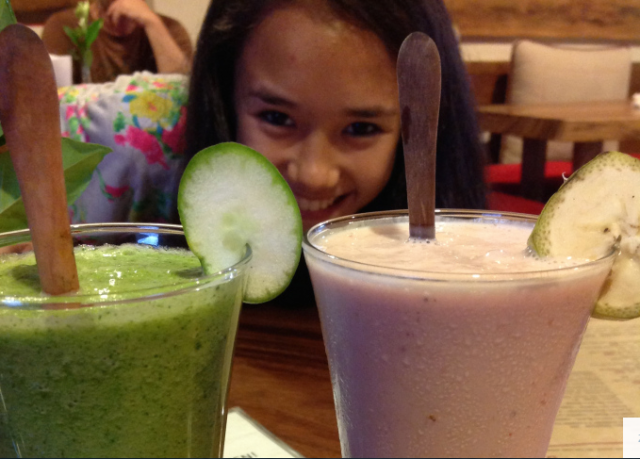
Sometimes it works, sometimes it doesn’t. But it gives children the opportunity of finding their own way to loving food. My daughter makes the most disgusting concoctions which she tries to get us to drink, expounding on the health benefits of her lethal sludges.

You could try new foods together, explore together. It is about you, too, after all.

Screen Shot 2016-07-26 at 12.56.41

TEACHING RESPECT

It’s about respect. If I respect your wish not to eat mushroom, you have to respect mine and eat carrots. I suggest having a “NO NO LIST” – allow your teenager to list six things that they have amnesty from. In return, they have to respect you back and eat what you painstakingly cook for them. It is a two way thing.

Bon apetit!


Magic stays with you

Part of the Waldorf curriculum is on fort-building with children. You might think it is all frivolity, but fort-building is about creating magic with your children as well as teaching them skills to be practical, safe, nurturing and creative. I am quite sad really that there are many grown-ups out there in the world who do not know how to build safe loving homes.

If you look at some photographs on Pinterest, you will see how magical forts are.

Screen Shot 2016-06-26 at 1.09.47.png

My children’s father and I used to build forts with our children when they were little. We would use bedsheets, cushions and torchlights to create magic – as I was working full-time in those days and did not have much time to spare, I just used glitter pen to draw stars on the sheets, but when shined with torches in a dark room, you see something magical. And we all felt that whenever we crawled into our little fort.

The magic stays with you forever. Today, I went shopping for a present for my beloved partner. He is a man who hated possessions so what could I get him? There is so much I want to give him but there is nothing he wants materially. So I decided to buy him materials to build a very grown-up fort – a teepee tent – so that I can create that magic with him on the cliff of our house. I think that is a very precious gift indeed ❤

Screen Shot 2016-06-26 at 1.22.46

F0r an article on how to build a fort, click here

A healthy Mediterranean breakfast

Almost all children love tomato ketchup, but most commercially produced ketchup have very little tomatoes in them: a well-known brand of ketchup is made up mostly of sugar, starch, artificial flavourings and artificial colours. Indeed, it is so loaded in high fructose corn syrup (sugar) that it is advisable not to consume too much tomato ketchup (or tinned tomato soup).

Thus, many children don’t know what real tomatoes taste like. Tomatoes are tasty! Is it a fruit or a vegetable? – we used to play this game with our kids when they were young. And here’s an interesting fact about tomatoes – they are from the deadly nightshade family. But we love tomatoes – fortunately, because they are a cheap form of super foods. They are rich in lycopene, phytonutrients, antioxidants and a whole host of vitamins. (Note: because tomatoes contain over 90% water, I strongly advocate organic tomatoes).

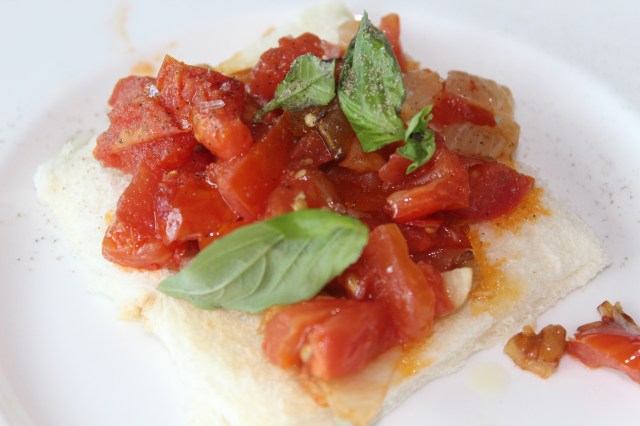
Here’s a simple but healthy and delicious Mediterranean breakfast:

  1. Saute finely chopped garlic in some olive oil (i se 2 cloves).
  2. Add 1/4 of a finely chopped onion. Saute until transparent.
  3. Add 1 cupful of ripe tomatoes, cubed. (Note: orange tomatoes are purportedly better for lycopene absorption).
  4. Saute until soft and all the flavours blended.
  5. Serve on toast.
  6. Drizzle with olive oil and season with sea salt and freshly ground black pepper.IMG_2435.JPG

Of fussy-eaters and two way respect

My 60 kg 16-year-old daughter is strictly a carnivore. She eats greens under sufferance, namely to neutralise the acidity of the meat she eats. She often blitzes these greens up into a smoothie, fibre and all, and chugs them down. I have her sports to thank for that. As a footballer playing in high level, demanding international tournaments, she has been taught how to pay close attention to her diet. She herself can see the consequences of not eating well.

Since commencing football training four days a week and following a professional programme, she has filled out nicely from a skinny 14-year-old into a powerfully built 16-year-old:

Screen Shot 2016-06-01 at 0.39.13.png

Georgina has an informed and healthy attitude towards food (she does not drink, do drugs, smoke or stay out late because of the strict Academy rules) though she eats more meat than I would like.

I, on the other hand, love my greens. I could eat salads all day, fresh greens with just a light, homemade dressing. I would rather my family just eats greens, no meat. Indeed, in my militant vegetarian days in my misguided youth, I used to enforce a no-meat policy in the house. Looking back with hindsight, I realised it was the wrong decision in my household as a family who values kindness and Self very highly. I should not have tried to impose my ‘right beliefs’ on my loved ones, in the mistaken belief that I know what is best for them.

These days, I honour my family’s tastes and choices, but at the same time, I integrate my own wishes and likes into the food I make. I strongly believe that food is a two-way respect thing, not a warring turf. Unfortunately it has been that way in many families for decades – food has been used as an emotional blackmail tool and we often have unhealthy relationships with food stemming from our childhood battles with our parents and from our parents’ unhealthy attitude towards food.

Georgina has several friends who suffer eating disorders in varying degrees of severity, a couple of them requiring hospitalisation. The biggest tragedy is one who lost her life to anorexia. I do not think good eating habits alone can prevent this, but I do believe that good eating habits fostered at a young age goes a long way towards keeping children healthy. Here are my tried-and-tested tips:

(1) Never fight over food. That’s why it is important to exert your authority in this matter when your children are still young.

(2) Introduce children to a wide variety of food at a very young age. I don’t believe in cooking special food for 1-year-olds. They do not need special porridge or special bland food. They can eat what we do and they jolly well should. Just be careful about fish bones and small things like peas and sweetcorn that are choking hazards, and ensure that there is not too much salt in foods.

(3) Terrible Twos is the stage when food battles begin. This is the time to manage it right. Never allow a toddler to win the battle of wills. Be firm (but not unkind or dramatic). When I was in my early twenties, I had three children under 5 years old and was a full time student at University. There was no way I had the time or the patience to pander to food squabbles. My children simply had to eat what was on the plate. No force-feeding and no chasing toddlers with food either. Make the dining table a fun and happy place to be and everybody will eat well.

(4) If they choose not to eat then they can go to bed hungry. They won’t die or suffer malnutrition overnight.

(5) Foster good eating habits in the home.

(6) No snacking in between meals.

(7) Ensure that children understand the consequences of their food choice but no empty threats (for example, if you don’t eat carrots, you will die).

(8) With older children, have a dialogue with them. No drama. I respect your food choices, now you have to respect mine. It is give and take always, as is everything in life.

Here’s my burger, loaded with nuts, seeds and vegetables:

IMG_2254.JPG


Stand like a winner

As a yoga teacher, I often say, “Your body is your emotional signature.”

It actually started from my wise eccentric grandmother who told me a long time ago, “Look at a man’s feet. If they are soft and namby-pamby, he is not to be relied on. He’d be off at the first sight of trouble.”

No truer words have ever been spoken, Granny.

It is so fundamental to yoga philosophy, too: you have to be firmly grounded to begin the practice. Life has not even begun if your standing leg is shaking. Do not proceed until you establish a strong base. Focus on your feet, spread your toes, engage your core, grow tall.

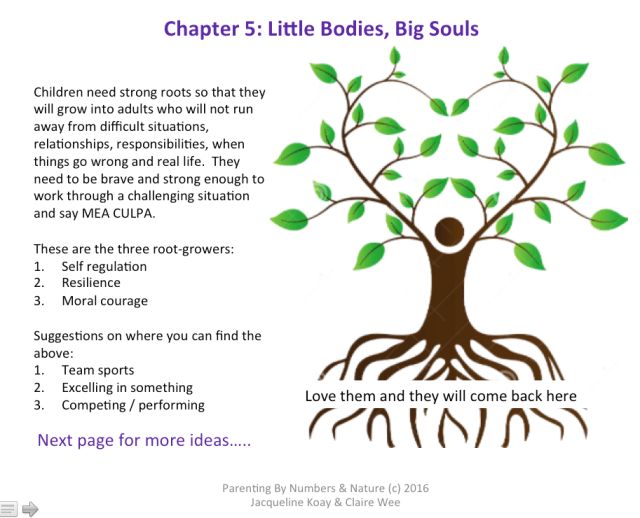
But here’s the piece: I notice students slouching in class, not because they are lazy, but because they have no core strength. Core strength is something that has to be cultivated because your journey cultivating it gives you the internal strength, fortitude and resilience that you need it life. You need to stick to a tough practice to get a strong core. In my forthcoming parenting book, I wrote that children need strong roots, not just tall branches because I have seen too many high flyers with no backbone and no moral fibre. Whatever their paper successes are, I would be ashamed to call them my children.

Screen Shot 2016-05-26 at 10.13.32.png

A recent University College London study involving 1,500 subjects found that small changes to a woman’s stance can have a big effect on how she is perceived, even when what she wears and says stay the same. People tend to take those who stand with feet wide apart and who used their hands to illustrate points were more widely believed, though they were saying the same thing and dressed in the same way as subjects in the control group.

The research, led by Professor Amy Cody showed that showed that standing in a powerful pose for just two minutes can re-set the body’s chemistry.

In the quest to produce wonder kids, many parents are missing this: growing inner strength in a child. Academic success and external achievements should be matched by a strong body, mind, heart, spirit and character, which is expressed in a person’s body language. Yes, your body language is your business card in both your professional and private lives.

Here’s a two minute a day yoga practice for adults and children: close your eyes. Stand with your feet apart, put your hands on your hips and mentally push your hips down, rooting the lower half of your body. Breathe deeply. Feel the life in your breath. Lengthen your spine, open up your chest, lift your heart upwards. Breathe. Grow strong in this pose.

My sixteen year old daughter and her teammate unconsciously standing in this ‘winner’ pose – team sports are good for children!

Untitled copy.jpg

Related articles: Do you stand like a man? and How Power Posing Can Boost Your Career