Packing for Life’s Journey

One thing you learn if you are a mother with many small children living in an expensive city like London: you always carry food and drinks in your bag even if it is for a short trip out. Last summer, though my youngest child is already 15 and we have sufficient money in the bank for the odd cup of tea and the odd packet of sandwiches, I still could not stop myself carrying food and drinks in my very uncool big handbag.

At church yesterday, it was a young Filipino priest who gave the homily. He said that in his culture, food for travelling is a big deal. And he asks, what do we carry in our hearts for the journey of life: all the good things like love, compassion, mercy, wisdom, hope…..or heaviness such as bitterness, anger, regret?

It struck a chord deep in me.

Many years ago, whilst I was teaching yoga in NYC, I had a young lady in my class. Her body was tight, tense. She never looked like she was enjoying my class. I largely ignored her, believing that people come to yoga to find their quiet space.

One day, she came to me after class and said “Thank you” for something I said during class. We were doing inversions, and I trotted out the usual yoga teacher dialogue: “Look at the world differently and let go of the rocks in your heart so that you are light enough to stand on your hands. Lose your fear and all the heavy stuff.”

Her story came tumbling out. She was abused as a child, and for 20 years, she had carried hatred for that person in her heart and it stopped her moving on. Inside the grown woman was a child stunted by hatred.

So she decided to try to let go, and fill her life with light things. I like the visualisation of starting today with an empty bag, and going through the day filling the bag up with goodness. The good stuff for life’s journey – big smile 🙂

Light begets light

“It’s ispirazione, not inspirazione, or do you mean inalare?” The man called Antonio Castellano said. I think he was smiling at the thought of my poor mastery of his mother tongue, though scarily enough, most of my outpourings in Italian are about him.

Whatever it is, he is my inspiration (ah, the English language is so much simpler!). And inspiration comes in many forms, at surprising stages of your life. I was a doctor, lacking passion for my job, when I met Antonio on an enchanted tropical island in the Javanese sea, sleeping in little eco-huts under mosquito nets. He had come to the island on his own, to ponder about life’s big questions but ended up inspiring me instead. He inspired me to go back to school to train as a surgeon, to discover my passion again.

He did it with his beautiful writings over the following months. He would type in his Blackberry, or scrawl on a piece of paper, and later, he would read his writings back to me. His writings are self-deprecatory, soul-searching and always honest, and they touched me ever so deeply. I loved the cadence and the silences in his words. Later, in Milan over a couple of winter evenings, he read to me the manuscript that his friend Ambrogio wrote about a war-time love story in Monte Rosa (or maybe Arosa). And in a sense, this is why I write a lot these days, even on my busy days – to continue the magic that I once discovered in faraway Jakarta. His writings certainly changed my life.

There is something about Antonio that struck a chord deep in me, not least because he is Italian, and I am 25% Italiana. That Italiana side of me never achieved full expression until Antonio. But more than that, it is the silence we both share that created something special between us – as young children, we both began speaking later compared to ‘normal’ children. As adults, we still do not speak much, but we began building a bridge into each other. He had always been more adept than I with words, so I began writing ‘Ten Most Beautiful Equations in the World’ for him. Those ten equations now form the basis of the novel I am writing.

Years later, I often asked myself, “Why am I continued to be inspired by Antonio, why could I not get his words out of my mind?” I miss him. I miss his light. And therein lies the answer. His light.

Before I knew him deeply, I wondered where his light came from. I found the answer when I visited him in Milan. On the first evening I arrived, I met all his childhood friends except one (we went to Verona a few days later to meet him). I was jetlagged and ever so slightly intimidated to be faced by a wall of Italian men who had known each other all their lives. But they were grinning at Antonio and I as soon as we walked into the restaurant.

I told them I suggested to Antonio that he coaches football at my children’s school on weekends. I told them that he began going for Ashtanga Yoga in Jakarta. I told them he cooked traditional Sicilian food for me from his uncle’s recipes. They roared with laughter. “What are you doing to our Tony?” One of them said, eyes sparkling, merriness pulling at his lips.

And then I saw it all at once. Antonio gets his light from his friends, from this band of brothers sitting in a closed circle which embraced me, warm and generous, and suddenly, I could picture the boys that they had once been, all innocent and a bit cheeky maybe, but full of openness, generosity and light nonetheless.

Light begets light, and my post today is about wishing you the opportunity to absorb light, so that you radiate it, touching other lives.

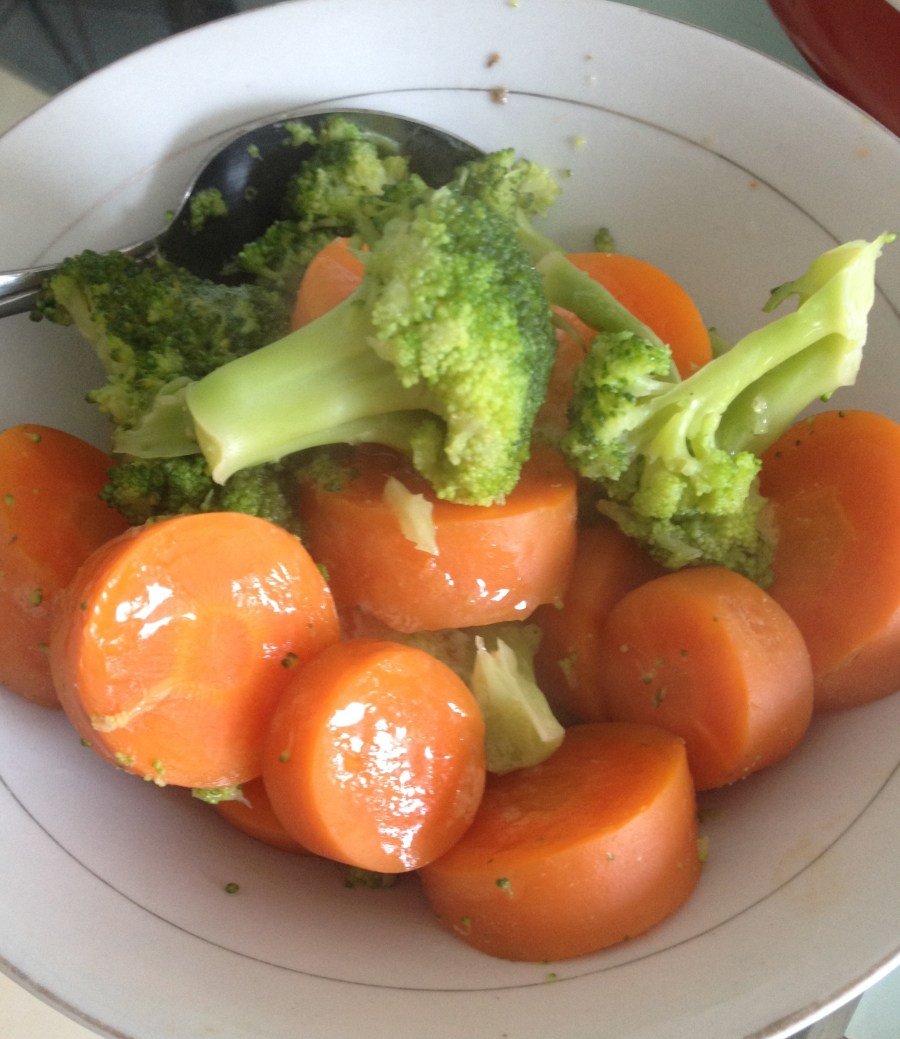
The Simple Steamed Vegetables

Dining table battles have been fought over the generations between exasperated parents and mutinous children about eating veggies.  What is it about veggies that some children absolutely loathe? Parents often resort to innovative methods such as ‘hiding’ veggies in meat or disguising the taste with lots of sauces or adding them to smoothies. Hmmm.

Here’s the thing: there is nothing like the goodness of lightly steamed vegetables.

Steaming vegetables preserves its nutrients, especially the water-soluble ones. Just steam lightly, to preserve the enzymes, too. Indulge yourself by adding a large dollop of butter to your steamed veggies.

Yes it is plain, yes it is bland, yes it is boring,  when pitted against kiddies’ favourites such as bolognaise or the ubiquitous shop-bought tomato ketchup. But I think it is good to teach children to enjoy the simple things, to be conscious of the subtle, and it starts with the tastebuds. Food does affect consciousness and behaviour. All part of awakened living ❤

Creamy Chicken & Capers

Food is cultural and has very deep roots.  I am into Soul Food because my mother brought me up on Soul Food (otherwise known as boring British food) and even now, at 47, whenever I feel battered and bruised by the world, I would curl up with some comfort food and hark back to those safe childhood days.

In my teens and twenties, my cooking evolved to embrace French (I went to a finishing school) and Italian (I am quarter italian) influences.  My twenties and thirties were largely dominated by nursery food as I struggled to feed my growing family on a shoestring and time-deficits. Lately, I have been exploring German food. This was taught to me by my German neighbour in Jakarta, and here it is, with some adaptation.

How to:

Boil organic chicken in water until par cooked (about 30 minutes). Remove from heat and shred the meat.  Reserve the stock. Saute some onions, button mushrooms and carrot chunks.  Add in the shredded meat. Pour cream into the mixture, add the reserved chicken stock until the liquid resembles a soup. Add a small jar of capers and its water.  Simmer until the liquid is reduced to think creamy consistency. Season to taste.

Served with potatoes and steamed vegetables, with a good dollop of butter. The ultimate comfort food ❤

Soul Food: Chicken Chasseur

Continuing from my previous week’s post on so-called Soul Food, here’s my adaptation of the french classic, Chicken Chasseur.  As a working mother when my kids were young, I have always been a fan of one-pot meals, especially those that I can put on in a slow-cooker before I leave for work, and et voila, all ready when we come home, tired and hungry.  As you can see from the photograph, my recipe here uses store-cupboard staples, such as passata, borlotti beans and sweet corn – and of course, frozen  homemade chicken stock that I always keep in the freezer.  If you can, use fresh ingredients, but this ’emergency’ food tastes yummy too.  It’s in the sauce and slow-cooking, I think, and of course, the love ❤

How to:

Brown chicken thighs in olive oil until golden on both sides.  Remove from pan, drain excess fat but leave about 2 tablespoons in the pan. Saute one large onion until transparent. Add 2 cloves of roughly chipped garlic and sauté until slightly softened.  Add button mushrooms and sauté.  Add whatever vegetables you are using.  Add passata or tomato puree, wine and chicken stock.  Bring to boil.  Add browned chicken thighs and black peppercorns. Simmer on the lowest heat for as long as you can (minimum 2 hours).  Keep adding stock to adjust the consistency.  Season to taste.

Soul Food: The Classic French Bourguignon

In the distant, halcyon days when the kids were young, and life was simple and good, we would painstakingly collect coupons from newspapers to enable us to travel to Paris on a shoestring. There, in the Capital of Love, we would subsist on fresh baguettes, cheeses and hams, washed down by cheap wine (for us parents), as we sat by the Seine or up in Montmatre, eating our cheap simple food.

The kids would press their noses against the window of Fauchon, and ooh-ed and aah-ed over the sumptuous and lavish food, but really, we were happy with what we had.

Our only luxury was popping into this local, traditional café that served only one type of casserole a day, be in coq au vin, poulet chasseur or boeuf bourguignon. The casseroles came in cute little individual dishes with unlimited supply of freshly-baked baguette. The stews were always hearty, rich and warmed the soul.

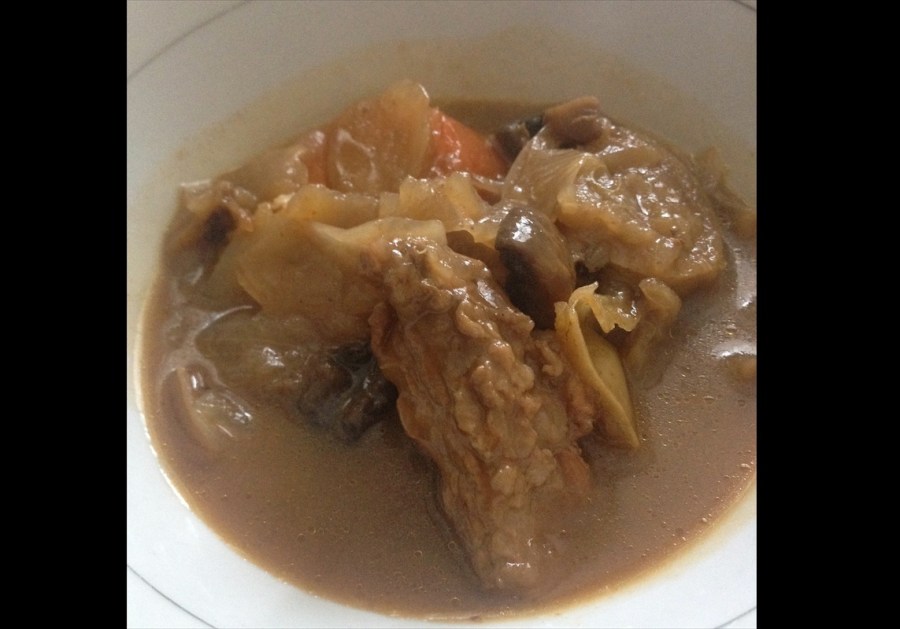
Here’s my version of the classic bourguignon:

Sauté chunks of braising steak (best ones are those with fat on it), chopped onions and whole garlic cloves in LOTS of butter until browned. Add in button mushrooms, carrot chunks and a large apple (or four small ones). Add more butter, homemade stock, one tablespoon of tomato puree and half a bottle of red wine. Throw in a bay leaf, bring to boil and transfer into a slow cooker or a rice cooker. Season to taste. Cook until the meat melts in your mouth (it could take hours, but that’s it about slow-food, not fast food).

Many years later, we returned to Paris. We could afford lunch at Fauchon by then, but we went looking instead for that sweet cafe. Sadly, it wasn’t there by then, but here’s my homage to Paris in the Nineties.

The Small, Happy Life

Here’s a long article in the New York Times.

What struck me is the truth in it. So many times, we agonised about making the big decisions in life (“the BIG one”), when really, at the end of the day, it doesn’t matter. It is the small, little ones that we make unconsciously, organically, every day that matter in the end.

Many women caught in the career-or-motherhood decision trap. BIG decision. But really, it is the small ones in your everyday life that lead you to the right decision for you. When I consciously tried to get pregnant with my third child, people around me told me to think carefully, because it would be difficult enough to manage a career with two young children. I am glad I did not listen to those well-meaning friends, because nobody should give advice on your life until they have walked in your shoes for at least a year. Fortunately, I was strong enough to realise that, and I made my decision on the day-to-day basis: what feels good and right today, and what works for our family? I never thought about it in terms of Motherhood Vs Career, but the daily happiness of our family life. Because the future is not known. And big decisions are based on theories and projections, whereas the small ones are real life.

Terence J. Tollaksen wrote that his purpose became clearer once he began to recognize the “decision trap”: “This trap is an amazingly consistent phenomena whereby ‘big’ decisions turn out to have much less impact on a life as a whole than the myriad of small seemingly insignificant ones.”

http://www.nytimes.com/2015/05/29/opinion/david-brooks-the-small-happy-life.html?_r=0

The Joy of Learning

The world is full of magic to be discovered, and it was my children’s library and laboratory during their childhood years.

I would like to begin by saying that I am not an educationalist, but my children’s father is. He has a Bachelor of Education degree from King Alfred’s College, Winchester, but the best of his education philosophy (in my humble belief) comes from his mother.

My mother-in-law was brought up in a poor part of South East London. Her mother was a Spanish immigrant who did not speak much English and went blind when my mother-in-law was 11. The war came soon after that, so my mother-in-law had a very low level of formal education. She worked as a cleaner, cleaning offices and schools. But she self-taught, despite her limited hours, to better herself. She finished her years of work as a clerk at London Electricity Board, a huge achievement for a girl who did not go to school and had a lot of responsibilities.

The great thing about my mother-in-law is, she did not harangue her blue-eyed boy to study, study, study. And so, my children’s father grew up cycling round the Kent countryside from the age of 4, played with the family pets, and later on, jammed away in a rock band in some mate’s garage. He is the most balanced, happiest person I know, and he learned a lot and earned enough to buy us a magical life.

When my kids were young, we did not have enough money to keep up with what other families were doing. Thus, my kids grew up without electronic toys or even a colour television. We had to ‘make do’. Pots, pans, wooden spoons when they were young, and later, family games of Pictionary and Charades. We built forts from blankets and sheets, collected interesting things from our walks for our Seasonal Nature Table, and from this way, we all learned about ourselves, the natural world, family values and the beginnings of language, literature, the sciences.

Later, when iPads became the rage, we could have afforded it but somehow never got around to buying it for our youngest child. Her former school had made it mandatory for each student to have an iPad, the much touted learning tool, but she did not do too badly without ever having owned an iPad.

We had to work harder as parents because we did not have the whizzy gizmos to educate our children. We don’t use the internet to babysit them either, so much as the temptation was there to allow them to passively learn from the ‘Net, we taught them the old fashioned way, namely by experiences in the real world.

My second son built a real-life go-kart with his father in the garden shed. He raced the go-kart, became quite good at racing, and then sold it for profit. He wasn’t an academic child, and he certainly did not leave school with a string of A’s, yet he managed to win a scholarship to study Mechanical Engineering & Electronics at Southampton University, and in a time where there are many unemployed graduates, he is second in command of all the weapons on a Royal Navy warship. He is 27, exuberant, boisterous, balanced, loves life.

His younger sister is enjoying the closing years of her very magical childhood, living in a land of aquamarine oceans, blue skies, winding island roads. She rides shotgun to school everyday with her father, chatting away happily, and often, with her mother too. She talks about her day, uncensored, with passion and heat. The teachers were sometimes unfair, there were bitches in her school and dumb boys. History and English Literature are confusing, Maths is boring, and the Sciences are easy. As for English Language… “don’t get me started” with a roll of her eyes.

Unbeknownst to her, as we soothed her, answered her, rebuked her, we are teaching her. Not only about the syllabus, but our family values, the ways of the world, humanity.

And because we limit the time she is allowed to spend studying, she dives on her books with great gusto. And because she is only allowed limited time on her subjects, she on her own accord brings them into her real world, in our car conversations and whenever she makes the connection with the real world. And her eyes and quicksilver brain are always searching to make the connection, sometimes between the most innocuous events and objects. A casual conversation about “those shoes” became the laws of Spanish grammar and ultimately, the trivium. She argues heatedly, sticking her head between her parents’, intent on getting her point across.

We see the joy of learning awakens in her, and it is a great feeling.

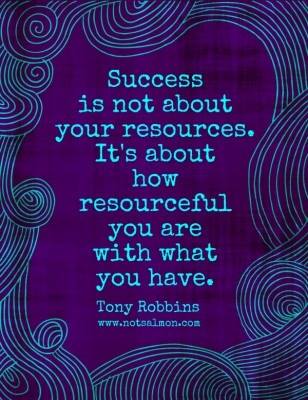
Resourceful kids

Too many parents are caught in the trap of using up their children’s childhoods to cram ‘knowledge’, facts and know-hows into young brains. Sure, there must be a certain amount of knowledge that needs to be accumulated, but more importantly, children should be taught how to think.
Here’s an analogy – we have unlimited knowledge in the public domain these days. So much. But are we ‘wiser’ as a race of people? Probably not. A lot of the information that is out there is useless.

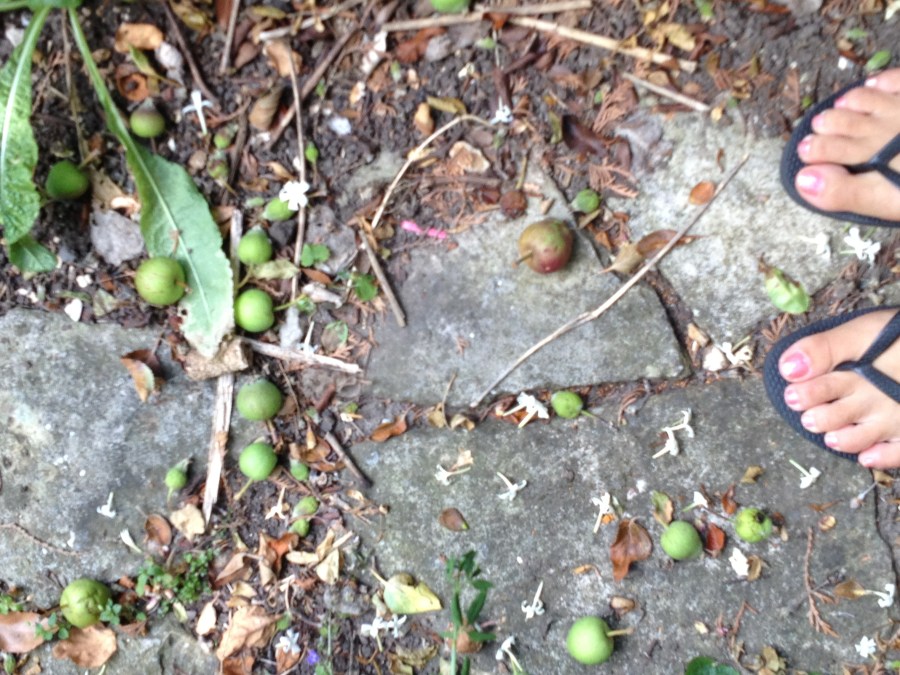
I believe that the best way to help a child accumulate knowledge is by showing him how to find that knowledge by himself. That way, he learns, whilst accumulating knowledge. And that learning has to be first-hand, in the real world. Because reading about planting bananas is not the same as actually doing it!
And it is only in the real world that children meet their boundaries, feel uncomfortable a bit – and this is the horizon of growth.

22381_1432700870370553_7321535340430737131_n

Six Ways of Raising Employable Kids

My mother didn’t do one part of parenting that well: she treated me as if I were too important for ‘real’ life. I never had to do any housework and she never brought me down a peg or two, which I sorely needed. She gave me the impression that jobs are something that shouldn’t concern me, on the grand scheme of things.

Fortunately, after flunking out of my private school with three measly O levels (in English, French and Maths), I continued my studies at my local community college. As it turned out, it was the best thing that ever happened to me.

It gave me the much-needed reality check.

First of all, I had to learn typing. Yes, freaking typing. But hey, I met my children’s father in Mrs. Jean Bushby’s typing class, when he wandered in, looking lost, needing someone to help him type something. Of course I volunteered, he was this Adonis-looking male in tiny football shorts and blazing blue eyes and impressive muscles. The rest, as they say, is history.

And then there was a Mr. Jim Crow. I was on the track to study Medicine at university, so Mr. Crow arranged for me to work once a week at St. Mary’s Hospital, Portsmouth. He and Sister Ayling at St. Mary’s became my torturers of sorts. I didn’t want to go back, after senile patients expected me to clean their bums and junior doctors treated me like an annoying kid that they were forced to babysit. The nurses, who were supposed to be angels, weren’t too kind with me either: I was told on many occasions that like all doctors, I was as thick as two short planks, just because I couldn’t find things and didn’t know what NG tubes were. I could sense Mr. Crow’s lips twitching under his bushy moustache as I retold my woes to him week after week, but he and Sister Ayling did not let up. The Princess had to relinquish her crown before either of them would endorse my university application.

But much as I hated the weekly come-down-to-earth sessions that lasted for the best part of two years, I must have known subconsciously, that the tough love is representative of the real world: my first job was at St Mary’s Hospital, and I still have my first paycheck framed up.

I was also fortunate that my mother-in-law came into my life when I was still a teen and thus still not too late to be reformed. I was pregnant with her precious son’s child. She was tough on me, in the way that my mother never was. And oh woes, we had to live with my in-laws when we were saving for the deposit for our first home.

“Why are you still in bed?” my mother-in-law would demand.

“I was up late last night studying,” I would bleat. My mum would have soothed my hair and run off to get me anything I wanted. Not so my mother-in-law.

“But you are not sick, are you,” she countered. “There’s nothing wrong with you at all, just lazy.”

I learned one very important thing about myself: that though I was smart and have a bright future, I was not very likeable.

I was arrogant and imperious. I had the entitlement mentality. In later years, I look back and count my blessings that I had come face to face with real life, though it was painful at that time. I am especially grateful that my children have never been anything like me, thanks to their down-to-earth father. My kids had always been ordinary, likeable folks, and this had served them well, and without all the heartache that I had to go through, without my baptism of fire into the real world.

What I have written here relates to something I have been reading about lately, namely the number of unemployed young people.

These unemployed youngsters often have the much-coveted, sometimes expensive degrees, yet employers are not beating a path to their front door trying to hire them. I am not an economist, so I cannot make pronouncements about government policies, the economy and other factors that may cause the situation.

But I want to put this to parents: are you raising employable kids?

Unless you have a business empire for your child to walk straight into immediately after graduation (is a degree that important, by the way), your child needs to get a job.

  1. The likeability factor

First of all, that means he has to be likeable. And I mean likeable to the outside world and not just to you and his grandparents. I read somewhere that the impression is made in the first few seconds after meeting someone: the following minutes and hours only serve to build evidence for or against the first impression.

  1. The art of conversation

Many over-schooled children cannot hold a conversation. Because believe it or not, children need to be taught how to verbally engage with others. And that, I mean ask relevant questions politely, listen to the answers, process the information, form own opinion, and discuss topics eloquently, in context, and in an age-appropriate fashion (a child discussing heavy topics that he or she does not have deep real knowledge of is like listening to a performing monkey parroting rubbish). 

I once asked a seven year old little girl in my yoga class, “What shall we order? A cheeseburger or a toffee ice cream?”

Her reply, “I got to ask my marder first.”

Yet this girl knew – or should I say, could parrot – the most impressive book knowledge ever.

  1. Service with a smile

Does your child have the right attitude? What I have learned, through my own experience, is that in the real world, everyone needs to start from the bottom rung. How does your Little Emperor / Little Princess cope with being an office junior? My mother didn’t do this part of raising me too well – I was so shocked that even after my degree from Oxford, I was expected to do menial tasks for my boss. Whaaat? Moi? Be your bag carrier? Are you serious? But that’s real life. Carry your boss’s bag, sharpen his pencil, bring him coffee and do it with a smile.


  1. It hurts but that’s life

Perhaps most important factor of all, can your child cope with criticisms? You spend his early years telling him that he is wonderful. What happens when someone out there in the world disagrees? You can bet your last dollar that someone out there will, and how then will he react?

I met a boy a few years back, who had a massive meltdown in public (he was about ten at that time) because a mother told him not to touch a display stand at a science exhibition. He screamed and pinched the lady who told him off, and his own mother’s rationale was, “All gifted children have some degree of social problems.” Well, Little Einstein is going to come in for a big shock, because like it or not, he has to be likeable enough, to be able to be social enough, to get a research post at some university, however gifted he is.

  1. Be alive

Is your child inspired? Does he have the fire within that makes him want to make something out of his life? Does his CV show initiative? I think my second son has one of the most interesting CVs for a schoolboy: he built and sold his racing go-kart for profit, he organised illegal boxing matches and he worked as a furniture removal man in a rough part of London during his summer holidays. And somehow, I wasn’t too surprised that it was this child of mine, the least academic one, who won a prestigious sponsorship for his bachelor and masters degrees, and a job immediately after graduation when many of his more academic peers were struggling to find jobs.

I didn’t have the best academic record, yet I was given a full scholarship for my second degree at Oxford. At the interview, I was asked about my terrible grades. My (truthful) answer: it was a beautiful spring that year, and I was sleeping on the beach with my children’s father on most nights, including the nights before my exams.

  1. Show commitment

Start something, stick to it, finish it. Chasing for bigger and brighter things every few months does not look good on the CV. A good way for small children to develop this quality is the humble jigsaw puzzle….and no moving on until the piece is finished.

Note: my four adult children are all gainfully employed: an investment banker, a naval officer, an interior designer and a property developer. I, however, am currently unemployed. I blame my mother for growing me with the belief that all a girl needs to get by is fresh air, sunshine and love.