Teaching children about the world

When my children were young, they used to make home videos about the environment, write plays about the natural world, climb, hike, swim and play with Nature, and people would often comment, “Wow, didn’t know you all are so green / into the environment / pro-Nature/ etc.”

Well, we are not exceptionally green / into the environment / pro Nature / etc. No more than we should, and we were merely passing on a love for our world to our children. Just for fun, whilst I was at University and juggling small babies (no nannies or helpers) I did a project with my young children in tow on paper recycling because it bothered me so much. I took my children to the paper mills and recycling plants, and told them never to waste paper. Published by my University, that academic work is still knocking about in the world. Here it is.

It is so important to begin teaching children environmental stewardship from a very young age. To know is to love, and whilst they are still tiny, children still have the eyes to see magic in its full glory. This is the best time to fall in love with Nature and understand its complexities. And once you understand Nature, you understand life.

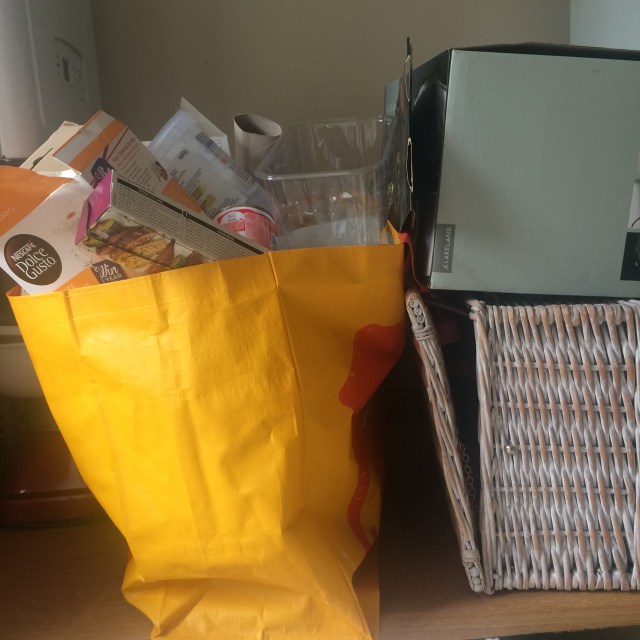
It doesn’t make them crazed tree-huggers (though what’s wrong with that? The world needs more tree-huggers in fact). Here’s an example. I was complaining to my daughter G that I hate all these packaging. We recycle with militant zeal and avoid as much packaging as possible, yet we end up with tonnes. It drives me crazy.
IMG_7437

G quipped, “Mum, have you thought about this? Manufacturers are not your enemy. They want to lower their packaging costs too, but they have to get their products to consumers undamaged. So be it strawberries or a television set, packaging is needed. I’d say they use the minimum they can get away with to save costs on their side.”

This debate raised another point for us to take onboard, which is buy local as much as possible. Apart from the need for less packaging, we are actually support the smallholders against big multinationals. We are saving local businesses and the environment when we buy local, even if the products cost slightly more.

I love this book that we are reading as a family this summer. It shows the interrelationships between all living things.

FullSizeRender-46

And here is a sweet little video G made when she was about six.

Love the world you live in, and share the love with your children, too. They are the inheritors of this planet.

Six ways of raising unfussy eaters

My childhood home had too much food. My Ma is addicted to food. She uses food to celebrate and she uses food to commiserate. Food, food, food. At 48, I still feel jumpy if there is no food in the house. I am suspicious of women who can’t cook. I don’t believe that people can be genuinely happy without proper home cooked food. Yeah, inherited prejudices. And oh, my kids can push my buttons so easily when it comes to food.

Many of us have an unhealthy relationship with food and we unconsciously pass that on to our children. To compound our inherited problem, small children are pretty smart creatures who learn from a very young age that they can use as a blackmail tool. Does ‘if you eat another mouthful, you’ll get ice cream’ sound familiar to you? I was guilt of saying this once to my eight year old son Kit, “If you don’t behave, you won’t get another cup of Ribena until you’re 20 years old.”

This is what I have learned from my 30 years of bringing up five children:

START THEM EARLY

I am a great believer that children should eat the same food as adults, with some modifications, of course, viz-a-viz salt and spices. Eating is a natural part of family life and I love this old adage, a family that eats together stay together.

EAT AS A FAMILY

Eating should be a celebration, not a battlefield. Even if you are eating simple takeaways (seen here), make it a lovely experience.

Screen Shot 2016-07-26 at 12.52.06.png

MAKE FOOD INTERESTING

Involve children in the food preparation process. Make it child-play. Even boring food can appear interesting if (1) they enjoyed making it and (2) it looks funky.

Screen Shot 2016-07-26 at 12.52.29.png

THEM ABOUT FOOD

There is so much to learn and it is all very fascinating. Even for parents. And learning about food is wonderful thing to do because you learn about staying healthy and taking responsibility for wellbeing. I think the best way is to actually grow something, even if you don’t have a garden. Container gardening works very well for growing herbs.

Screen Shot 2016-07-26 at 12.54.30.png

ALLOW THEM TO EXPERIMENT

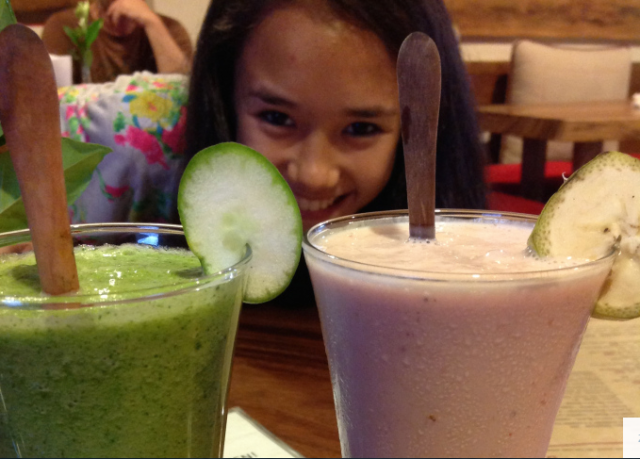
Sometimes it works, sometimes it doesn’t. But it gives children the opportunity of finding their own way to loving food. My daughter makes the most disgusting concoctions which she tries to get us to drink, expounding on the health benefits of her lethal sludges.

You could try new foods together, explore together. It is about you, too, after all.

Screen Shot 2016-07-26 at 12.56.41

TEACHING RESPECT

It’s about respect. If I respect your wish not to eat mushroom, you have to respect mine and eat carrots. I suggest having a “NO NO LIST” – allow your teenager to list six things that they have amnesty from. In return, they have to respect you back and eat what you painstakingly cook for them. It is a two way thing.

Bon apetit!


Magic stays with you

Part of the Waldorf curriculum is on fort-building with children. You might think it is all frivolity, but fort-building is about creating magic with your children as well as teaching them skills to be practical, safe, nurturing and creative. I am quite sad really that there are many grown-ups out there in the world who do not know how to build safe loving homes.

If you look at some photographs on Pinterest, you will see how magical forts are.

Screen Shot 2016-06-26 at 1.09.47.png

My children’s father and I used to build forts with our children when they were little. We would use bedsheets, cushions and torchlights to create magic – as I was working full-time in those days and did not have much time to spare, I just used glitter pen to draw stars on the sheets, but when shined with torches in a dark room, you see something magical. And we all felt that whenever we crawled into our little fort.

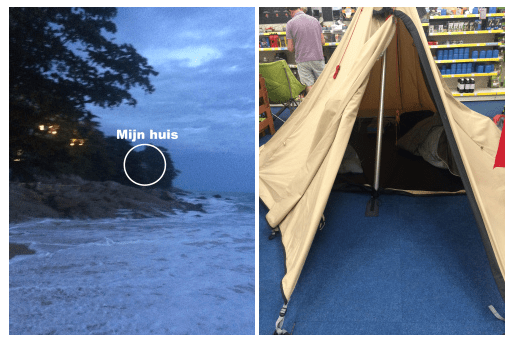
The magic stays with you forever. Today, I went shopping for a present for my beloved partner. He is a man who hated possessions so what could I get him? There is so much I want to give him but there is nothing he wants materially. So I decided to buy him materials to build a very grown-up fort – a teepee tent – so that I can create that magic with him on the cliff of our house. I think that is a very precious gift indeed ❤

Screen Shot 2016-06-26 at 1.22.46

F0r an article on how to build a fort, click here

A healthy Mediterranean breakfast

Almost all children love tomato ketchup, but most commercially produced ketchup have very little tomatoes in them: a well-known brand of ketchup is made up mostly of sugar, starch, artificial flavourings and artificial colours. Indeed, it is so loaded in high fructose corn syrup (sugar) that it is advisable not to consume too much tomato ketchup (or tinned tomato soup).

Thus, many children don’t know what real tomatoes taste like. Tomatoes are tasty! Is it a fruit or a vegetable? – we used to play this game with our kids when they were young. And here’s an interesting fact about tomatoes – they are from the deadly nightshade family. But we love tomatoes – fortunately, because they are a cheap form of super foods. They are rich in lycopene, phytonutrients, antioxidants and a whole host of vitamins. (Note: because tomatoes contain over 90% water, I strongly advocate organic tomatoes).

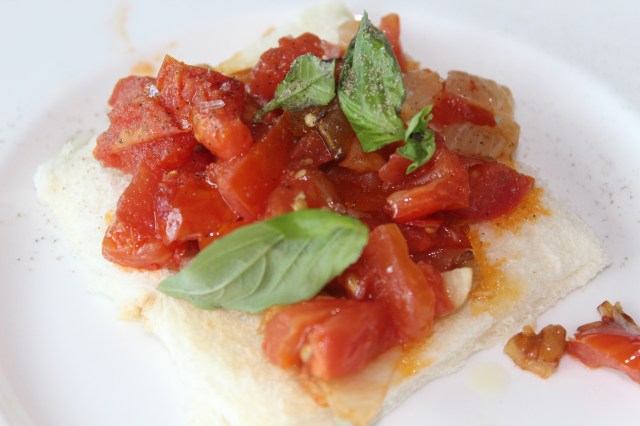
Here’s a simple but healthy and delicious Mediterranean breakfast:

  1. Saute finely chopped garlic in some olive oil (i se 2 cloves).
  2. Add 1/4 of a finely chopped onion. Saute until transparent.
  3. Add 1 cupful of ripe tomatoes, cubed. (Note: orange tomatoes are purportedly better for lycopene absorption).
  4. Saute until soft and all the flavours blended.
  5. Serve on toast.
  6. Drizzle with olive oil and season with sea salt and freshly ground black pepper.IMG_2435.JPG

Of fussy-eaters and two way respect

My 60 kg 16-year-old daughter is strictly a carnivore. She eats greens under sufferance, namely to neutralise the acidity of the meat she eats. She often blitzes these greens up into a smoothie, fibre and all, and chugs them down. I have her sports to thank for that. As a footballer playing in high level, demanding international tournaments, she has been taught how to pay close attention to her diet. She herself can see the consequences of not eating well.

Since commencing football training four days a week and following a professional programme, she has filled out nicely from a skinny 14-year-old into a powerfully built 16-year-old:

Screen Shot 2016-06-01 at 0.39.13.png

Georgina has an informed and healthy attitude towards food (she does not drink, do drugs, smoke or stay out late because of the strict Academy rules) though she eats more meat than I would like.

I, on the other hand, love my greens. I could eat salads all day, fresh greens with just a light, homemade dressing. I would rather my family just eats greens, no meat. Indeed, in my militant vegetarian days in my misguided youth, I used to enforce a no-meat policy in the house. Looking back with hindsight, I realised it was the wrong decision in my household as a family who values kindness and Self very highly. I should not have tried to impose my ‘right beliefs’ on my loved ones, in the mistaken belief that I know what is best for them.

These days, I honour my family’s tastes and choices, but at the same time, I integrate my own wishes and likes into the food I make. I strongly believe that food is a two-way respect thing, not a warring turf. Unfortunately it has been that way in many families for decades – food has been used as an emotional blackmail tool and we often have unhealthy relationships with food stemming from our childhood battles with our parents and from our parents’ unhealthy attitude towards food.

Georgina has several friends who suffer eating disorders in varying degrees of severity, a couple of them requiring hospitalisation. The biggest tragedy is one who lost her life to anorexia. I do not think good eating habits alone can prevent this, but I do believe that good eating habits fostered at a young age goes a long way towards keeping children healthy. Here are my tried-and-tested tips:

(1) Never fight over food. That’s why it is important to exert your authority in this matter when your children are still young.

(2) Introduce children to a wide variety of food at a very young age. I don’t believe in cooking special food for 1-year-olds. They do not need special porridge or special bland food. They can eat what we do and they jolly well should. Just be careful about fish bones and small things like peas and sweetcorn that are choking hazards, and ensure that there is not too much salt in foods.

(3) Terrible Twos is the stage when food battles begin. This is the time to manage it right. Never allow a toddler to win the battle of wills. Be firm (but not unkind or dramatic). When I was in my early twenties, I had three children under 5 years old and was a full time student at University. There was no way I had the time or the patience to pander to food squabbles. My children simply had to eat what was on the plate. No force-feeding and no chasing toddlers with food either. Make the dining table a fun and happy place to be and everybody will eat well.

(4) If they choose not to eat then they can go to bed hungry. They won’t die or suffer malnutrition overnight.

(5) Foster good eating habits in the home.

(6) No snacking in between meals.

(7) Ensure that children understand the consequences of their food choice but no empty threats (for example, if you don’t eat carrots, you will die).

(8) With older children, have a dialogue with them. No drama. I respect your food choices, now you have to respect mine. It is give and take always, as is everything in life.

Here’s my burger, loaded with nuts, seeds and vegetables:

IMG_2254.JPG


Stand like a winner

As a yoga teacher, I often say, “Your body is your emotional signature.”

It actually started from my wise eccentric grandmother who told me a long time ago, “Look at a man’s feet. If they are soft and namby-pamby, he is not to be relied on. He’d be off at the first sight of trouble.”

No truer words have ever been spoken, Granny.

It is so fundamental to yoga philosophy, too: you have to be firmly grounded to begin the practice. Life has not even begun if your standing leg is shaking. Do not proceed until you establish a strong base. Focus on your feet, spread your toes, engage your core, grow tall.

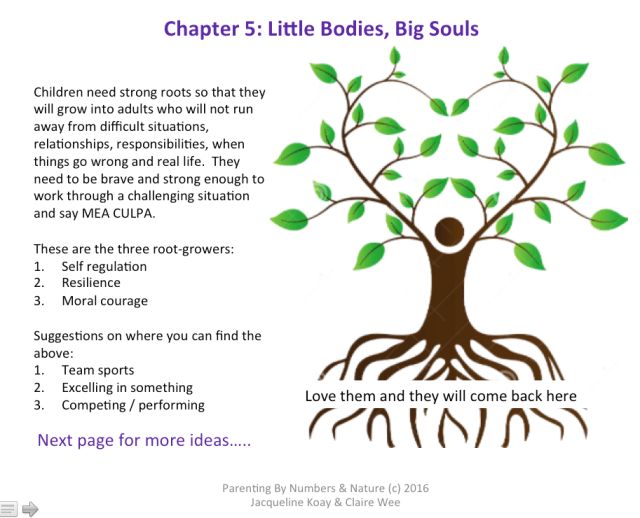
But here’s the piece: I notice students slouching in class, not because they are lazy, but because they have no core strength. Core strength is something that has to be cultivated because your journey cultivating it gives you the internal strength, fortitude and resilience that you need it life. You need to stick to a tough practice to get a strong core. In my forthcoming parenting book, I wrote that children need strong roots, not just tall branches because I have seen too many high flyers with no backbone and no moral fibre. Whatever their paper successes are, I would be ashamed to call them my children.

Screen Shot 2016-05-26 at 10.13.32.png

A recent University College London study involving 1,500 subjects found that small changes to a woman’s stance can have a big effect on how she is perceived, even when what she wears and says stay the same. People tend to take those who stand with feet wide apart and who used their hands to illustrate points were more widely believed, though they were saying the same thing and dressed in the same way as subjects in the control group.

The research, led by Professor Amy Cody showed that showed that standing in a powerful pose for just two minutes can re-set the body’s chemistry.

In the quest to produce wonder kids, many parents are missing this: growing inner strength in a child. Academic success and external achievements should be matched by a strong body, mind, heart, spirit and character, which is expressed in a person’s body language. Yes, your body language is your business card in both your professional and private lives.

Here’s a two minute a day yoga practice for adults and children: close your eyes. Stand with your feet apart, put your hands on your hips and mentally push your hips down, rooting the lower half of your body. Breathe deeply. Feel the life in your breath. Lengthen your spine, open up your chest, lift your heart upwards. Breathe. Grow strong in this pose.

My sixteen year old daughter and her teammate unconsciously standing in this ‘winner’ pose – team sports are good for children!

Untitled copy.jpg

Related articles: Do you stand like a man? and How Power Posing Can Boost Your Career


She conquers the world

My Ma expressed some concern that my youngest daughter Georgina, who is in the midst of her IGCSEs, is helping me with my new parenting book and that she has a full-on football training schedule. And a busy social life to boot. My Ma – who is a strong proponent of the theory that all human beings need to live happily is fresh air, love and sunshine – thinks that her youngest grandchild has too much on her plate.

“Oh, Jac, you weren’t brought up like this at all,” my Ma admonished me. “You were on the beach before your exams!”

But, Ma, I have a child who is wired differently. She has her snout in many pies, by her own free choice, and thrives on the pressure and challenges. What stress?

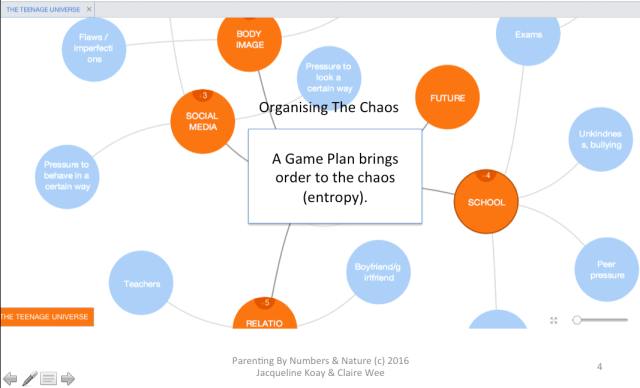
“With smart organisation, you remove stress,” Sixteen year old Georgina explained patiently. “A Game Plan brings order to the chaos.”

Screen Shot 2016-05-25 at 10.57.50.png

It is indeed true. I was at University with three young children and no helper. In those days, I had to be very organised. Monday was washing day, Wednesday was catching up with University work day and Saturday was house-cleaning day and preparing freezer bags of food for the following week. It was only by being super-organised that I managed to survive those years and get a degree to show for it.

But often, children and teenagers don’t know how to organise themselves. This is largely due to helicopter-parenting: control-freak parents micromanaging children to the extent that children stop thinking for themselves. What is the point? Mummy/Daddy has planned the day down to the last hour for them. They just have to show up for the free ride, no need to switch the brain on.

In the parenting book that Georgina and I are working on, I explored this issue of disempowered children. How to cultivate motivation and initiative in children?

“Get off our backs for starters!” Georgina exclaimed. “Give us space.”

Yes, we used to allow her to wear her mermaid outfit everywhere, even to bed. It got dirty and tatty, but she still wore it. And we allowed her to. Why not?

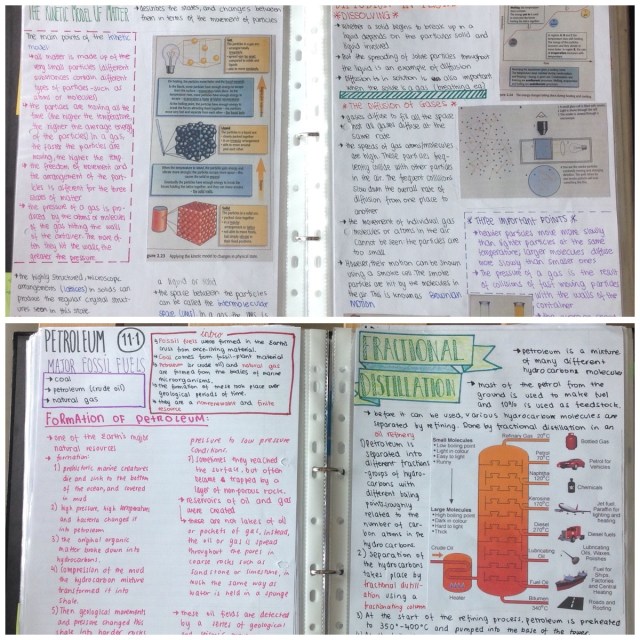
Georgina spends a lot of time making detailed notes. Though she has told me to get off her back, I could not help but ask, “Aren’t you wasting your time, spending hours making pretty notes instead of studying?”

IMG_9749.JPG

“I’m organising my brain, Mum!”

OK, point taken. But why don’t you just read it from textbooks?

“Because the act of writing down the concepts in my own way and in my own words forces me to understand, Mum. I write down notes in class too which I often don’t look at again, for the same reason: it forces me to understand.”

Maybe not having an iPad throughout the years helped her in developing a good relationship between her brain and pens, pencils and paper. She is actively engaged whenever she is faced with something rather than passively entertained, be it studying or her social life.

Recently, I interrupted her whilst she was studying. She was wearing headphones.

“Can you concentrate whilst listening to music?” I asked curiously.

“It’s white noise, Mum,” she said. “It helps me to concentrate better.”

I listened in. Yikes! I had a blinding headache coming on immediately!

She grinned. “You see now why it focuses the mind?”

Our children are not us. They are wired differently from us. This is also their world. The future is theirs. And I think we have to trust them to find their own way, even if their way seems illogical. Dig deeper and often, you will see beautiful logic emerging from the madness of a teenage brain.

Work hard for the right reason


It’s no secret – I detest work that requires sitting down and I detest work that requires using my brain. These two traits were the cause of my dismal exam results: I managed three ‘O’ levels despite going to an expensive private school and those three ‘O’ levels were in subjects that required literally no studying: English, French and Mathematics.

Though my Ma did not give me a hard time over it, in later years she confessed that she was shocked that I did not even manage a ‘C’ for Biology. “You knew so much,” my Ma said.

Well, the reason was, I never had the discipline to study.

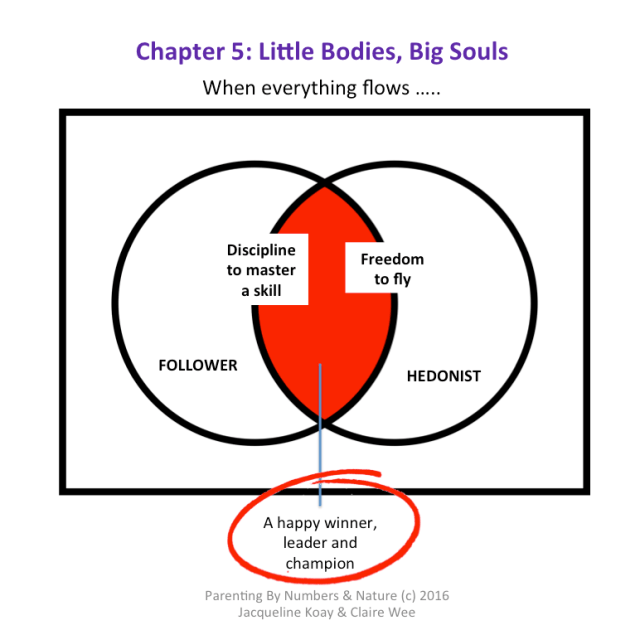
In my parenting books, I enclosed this diagram:

Screen Shot 2016-05-24 at 9.56.52

My Ma never forced us to do anything. She used to say cheerily, “Ooooh, when you are an adult, there will be so many people telling you the things that you can’t do, or things that you have to do. So enjoy what you have now, dearies.”

Thus, we had a magical time growing up. I will always remember the closing years of my childhood sitting on the beach with my younger brother when we were supposed to be studying for our ‘A’ levels, and going to the Polytechnic library to waste time instead of work.

Whatever issues that arose from my Ma’s magical ways were laughed off with her cheery, “Don’t worry, it will all come out in the wash.”

Maybe we were just plain lucky or maybe my Ma had been right all along, but all her children turned out just fine academically and in our careers.

Because you see, though my Ma was easy-going with us when it came to ‘unimportant things’, she taught us very strong work ethics, moral courage, inner strength and commitment where it matters. And where it matters is human relationships.

I began working fiendishly hard when I became a mother and my baby-daddy was a happy-go-lucky chap who did not earn that much (and who had no intention of climbing the career ladder). To the amazement of all who knew me, I won a scholarship to Oxford. Whilst at Oxford, apart from the burdens of studying and caring for three young children, I worked in part time jobs to supplement the family income. I worked hard in my career too, not for my own glory, but to provide for my family.


I write this post because very rarely do parents teach children the reason for working hard. These children grow into adults who work for the sake of working. “Can’t see the wood for the trees” as the old adage goes. I strongly believe that if we work hard for the sake of work alone, it is a very empty life. We might get bolstered by our colleagues’ accolades, the financial rewards or job satisfaction, but what is at home and in our hearts? Many true anecdotes abound about men who keel over and die the minute they retire or marriages breaking up when the husbands retire. And even more about driven careerists who did not place enough importance, commitment and hard work into the family, often causing pain to their partners and children.

I believe that we exist to love. Love is the Universal Law. In Mathematics, what an object is is not determined by what it is composed of, but rather, by how it behaves with respect to other objects.

I certainly find that I am more committed and more dedicated to work when there is a human element involved. For example, I am now working fiendishly hard on my forthcoming parenting book that I am co-authoring with someone. It will be her first book and I feel morally invested in making our book a success for her.

If you are looking for something to think about this morning, I would like to urge you to think about raising children to be firmly rooted in love for others, love for themselves, love for the world and love for the Universe.

Photo on 5-15-16 at 21.00.jpg

No need to move to Finland

It’s easier to think that the solution lies in the external rather than realise that you create your environment. Many people think that if they move house, move neighbourhood or move country, they will be happier. I have known people who complain about their houses, their neighbourhoods and their countries of residence, who then move and find out that the land-of-milk-and-honey is not what it is all cracked out to be. The streets of London are not paved with gold. Happiness and contentment starts with YOU.

The news and articles that had been making its rounds in recent times is how Finland tops the Global Education Ranking (as the US declines) by its daring and innovative education policies. Oh, the number of parents who tag their partners with the comment, “Let’s move to Finland.”

Uhm, can you stand the long hours of dark in the winter or the high cost of living? I strongly believe that we do not have to move to Finland to give our children the benefits. After all, school is only half the story. What you create in the home is every bit as important, if not more. A teacher once said, “A child who gets his education only from school is not educated.”

o, what’s so special about Finland’s education system that gets so many parents dream of packing their bags and relocating?

No homework. Shortest school day (20 hours a week for younger children including lunch hour) and shortest school year. You learn more by going to school less because your brain has to relax to be more effective.


13221004_664412977032698_3235170159808043950_n

OK, you cannot dictate the school hour and the school year. But aren’t you adding on to your child’s burden by tuition?Our policy in our house is, no more than 1 hour a day during the week for homework, project work and studying. 2 hours maximum at the weekend. She has to learn to work efficiently. And here she is on a Sunday morning, making use of her 2 hours. You know what is the surprising thing? She has an exam on Monday and here she is, working on something else not related to her exam.

“Shouldn’t you be studying?” I asked, playing the devil’s advocate.

“Finished,” she said. So yes, 9 hours a week is plenty.

Another thing about the success of Finland’s education system: children are given a voice (yes, they learn respect too). The children help to design the school playgrounds with the architects who consult them. Wow, great! But your child’s school is not progressive, right? Well, neither is my child’s. But hey, you know what? You can foster that same accountability and creativity by allowing your child to choose his/her own wardrobe and bedroom design. Allow some freedom of choice, relax parental control-freak tendencies – your child goes a long way.

Screen Shot 2016-03-23 at 17.00.28

Most of all, the implementors of Finland’s successful education system talked about happy, happy, happy. The Principal of my child’s school talks about happy, happy, happy, too. He said he told his staff to make sure that they have a good relationship with the students; learning comes second because a happy child learns more. So what does it take to make a child happy? I would say, it starts with happy parents and happy household. It’s not about moving but about you and what you create.

The things you don’t say…

Screen Shot 2016-05-13 at 9.45.12.png

My father took this photograph of me in October 2015. I remember it was a beautiful morning at home. We were staying in my parents’s house for a week or two, and had just come back from the Farmers Market in the town square. I had bought these organic curly kale.

Yet he harassed my Ma. “There’s something not right.”

I was outwardly normal but my Daddy knew that deep down, there was another picture. He and I fought viciously but he loves me very deeply, and with the depth of that love he has for me, he felt rather than heard. I was, and will always be, his little girl. My mind, body and heart were sick, and he knew. We sometimes communicate best when we say nothing at all, because we fight each time we use words.

10368217_10156669754695385_5167649366354385166_n.jpg

My normally docile Ma fought with him and ordered him to hold his tongue. My Ma with her infinite wisdom. “It shall come to pass”, she knew. Though she admitted it was difficult for her. She said she just trusted in a God that she does not believe in, but one that I believed in with all my heart.

In the mysterious way the world works, I went down to the depths of hell and arose again. I had six of the happiest months of my life. Just compare the photographs from October to April. The years and the cares fell off my as I live my best life. My partner says he could power a generator with my smile though he remembers a different me from November 2015 so very clearly.

Screen Shot 2016-05-13 at 10.11.53.png

So my point is, be happy. Especially if you are a parent. That is the subject of my parenting book. Because if you are not happy and content, your kids will sense it (like my father sensing my true feelings). And that is nothing more damaging than that, even if you provide your child with good food and good house.

Here’s a cheesy song: When you say nothing at all