Wonderland: Shapes & Illnesses

IMG_4917.jpg

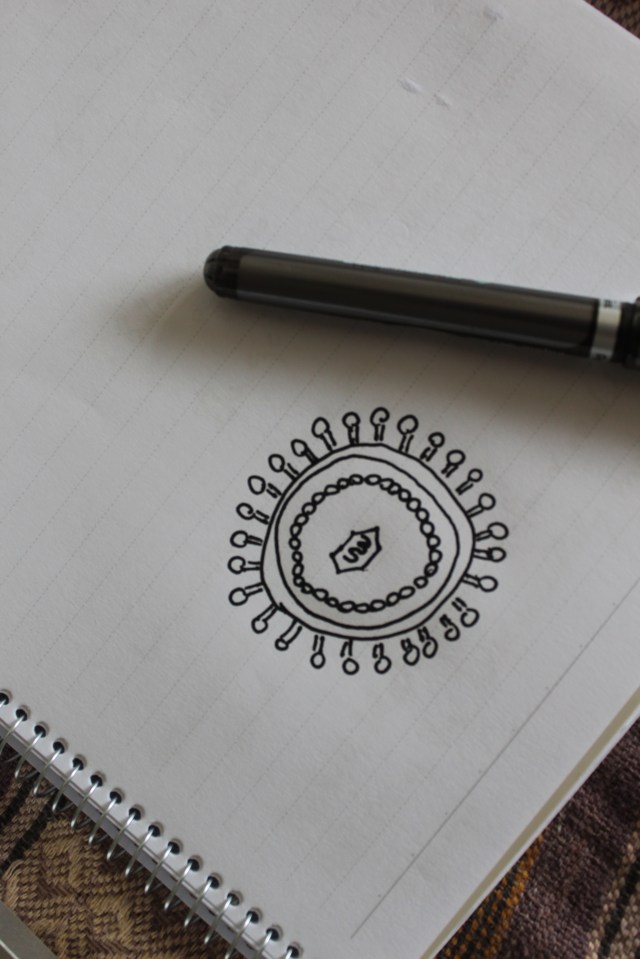
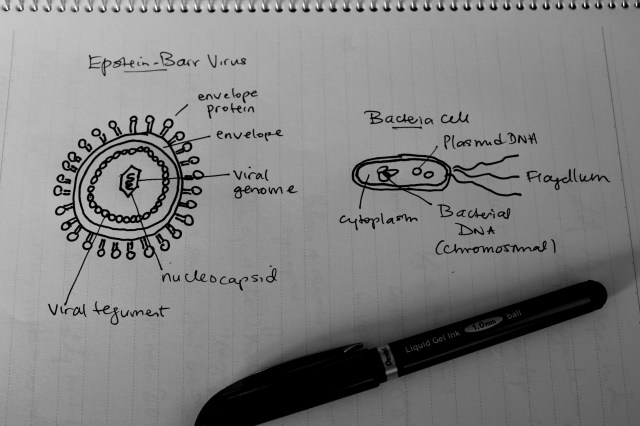
At first glance, you might think that this drawing is that of a mandala or some mathematical shape which I am so fond of. But actually, it is a diagrammatic representation of the Barr-Epstein virus.

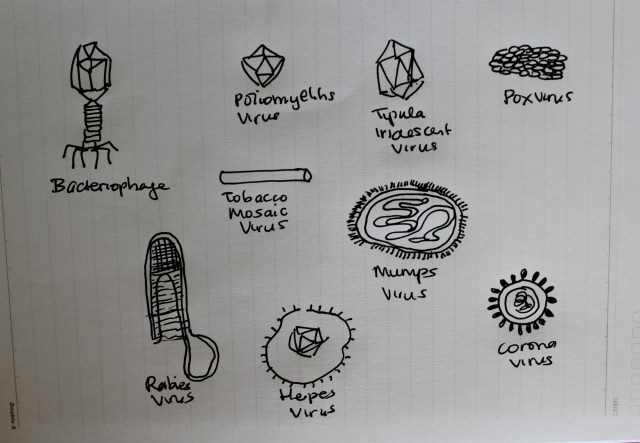
Virus symmetry is one of the most beautiful, naturally occurring structures of nature. Though incredibly tiny (the smallest animal virus is the one that causes foot-and-mouth disease at 20nm), viron symmetry is highly structured and falls into highly organised categories: helical, polyhedral (cubical) and binal symmetry.

Not so bacterium structures which sometimes look like primitive spaceship.
IMG_4918.JPG

My daughter who is studying Biology for her International Baccalaureate commented dourly that there is so much stuff to learn for this subject. I don’t want her to just memorise stuff, but to be excited by the knowledge (or else the three years of preclinical medical course would be hellishly long for her).

So relating virus and bacteria to us and our daily lives:

Virus and bacteria cause infection in the body. When their presence is detected, the body switches on its inflammatory response, which is its strategy for fighting infection. However, inflammation can kill, though it was meant to be our body’s lifesaving strategy.

But here’s the useful piece of information that you might not previously know: virus and bacteria cause different types of inflammatory responses. Studies done at Yale University by Ruslan Medzhitov showed that a body recovering from colds (often caused by viruses) benefit from feeding, whilst those suffering from fever (typically caused by bacteria) should be starved, especially of carbohydrates which breaks down into glucose. For me, this is a really exciting discovery because it means that Medicine can move forward from blanket prescription of antibiotics – which does not work in many cases anyway – to a wellbeing system of managing health through nutrition.
The old adage of feeding the cold and starving the fever seems to be on its way to be proven ‘true’ by modern scientific establishment.

In the meantime, I leave you with some viruses.
IMG_4928.JPG

Note: In my novella which will be published on the 21st November 2016, An Evening in Wonderland – A Brief Story of Maths, Physics & The Universe (suitable for young adults), the protagonist Alice Liddell urged her beloved Professor to close his eyes and look for the symmetries in the world within and also out there in the universe, for within the shapes lie the truth that he was seeking.

You can read an interview with Ruzlan Medzhitov in the New York Times by clicking on the link here.

“Let’s talk fractals, Mum!”

When my youngest child G was in primary school, the walls outside her classroom were display boards for pupils’ artwork. She wasn’t academic at that time (being a late reader), but with child-like enthusiasm and exuberance, she used to put a lot of work into art.

Yet somehow, her creations never quite made the grade compared to her peers’. A few pupils in her class were producing such amazing work that G’s efforts looked as if they had been done blindfolded and upside down, though G consistently scored higher than these pupils in classroom-based tests and exams.

Hmmm.

My hunch was proven when she was in Year Six. Her homework was to make a volcano. She built a very realistic-looking one out of cardboard cartons filched from coffee shops, which she soaked and moulded into a volcano before spending hours painting it. It took her hours! Proudly, she had trotted off to school with her creation.

But she was somewhat deflated when she saw her classmates’ productions: fibre glass, LED, computer-printed labels, and very professional-looking. It was very obvious that these were the work of adults. I was annoyed. I wanted to complain to the school about the pervasive issue of parents and tuition teachers doing their children’s homework, but G’s father had wisely told me, “It is not important, because there will come a time when ALL kids will be graded according to their own abilities.”

Six years later, he is proven right. G is now in the first year of her International Baccalaureate programme. One of the questions under the Theory Of Knowledge box for Mathematics was, ‘How many times does something have to be repeated before it becomes a pattern?’

The physicist in me, with the benefit of three years of postgraduate studies at Oxford, jumped in enthusiastically.  Non-Euclidean vs Euclidean shapes! Supersymmetry in Theoretical Physics! Fibonacci’s Sequence!

I would gladly answer that question for her, and do a good job, too.

But my child, too used to doing her own homework, grinned at me in challenge. “Let’s talk fractals, Mum!”

And at that moment, I realised, wow, this sixteen-year-old can think very well for herself, so totally independent of me, and if truth must be known, I am learning from her.

Photograph and article on fractals from New Scientist can be found by clicking this link.

(Note: Special thanks to our friend Gary Macaulay, who is an inspired maths teacher, for the afternoons messing around with G folding tetrahexaflaxagons instead of sitting at the table drilling in past papers or teaching her how to pass exams with 100%.)

Screen Shot 2016-09-22 at 12.41.35.png

Related article: The Scenic Route to 100%

The price of a happy child

Two years ago, we came to Phuket for Georgina’s football trials. We stayed for the weekend and had a lovely time. On the way back to the airport on Sunday night, we stopped at this beach, Nai Thon beach. We had an early dinner in a seafront cafe and watched the sunset. We were so happy.

Screen Shot 2016-09-09 at 12.40.33.png

She is our much-loved youngest child and her passion is football. So we took the momentous decision to move countries for her. Her father gave up his well-paid job, and we moved into a simple, sunny house near the beach in Phuket.

She is such a happy, sunny child. She wakes up excited about life. Today, Friday, she has football practice after school and then she is going to a girl pal’s house for dinner after that. But chatting animatedly to us, she said she might have dinner at school first because she loves the ‘free’ food – apple pie with real cream, yum! – and the boarders order in pizza every Friday night.

“Don’t drink too much!” Her father joked. “You have football practice tomorrow morning.”

“I don’t need alcohol to be happy,” she retorted.

She is indeed a happy child, sunny all the way through. Her first years were spent in Portsmouth, less than 500 metres from her grandparents’ home. Apart from her siblings, she had cousins around her. She went to Story Time Nursery, and the principal is Mrs. Janet Josephine Storey, seen here. I don’t think they did much reading and writing, just lots of French, playing outdoors (even in winter) and being read to endlessly.

Screen Shot 2016-09-09 at 12.40.43.png

She has a gift for maths, but we did not pursue that. In school, when she should have been in the Gifted & Talented programme, she was kicking a football around in the hot sun. She could have done much better at school, but for a girl who couldn’t read until she was eight, we were happy with where she was. She couldn’t draw and she couldn’t play musical instruments, though she occasionally strums the guitar alongside her rocker dad, but that’s OK. Those afternoons were filled with her howls of laughter, curious questions and sunny energy.

She played football in the midst of exams, she went on a little holiday with us and a little party here and there too; life went on as normal. But incredibly, she sailed through her IGCSEs with a very respectable number of A’s and A*’s. Even if she hadn’t, it wouldn’t have mattered, really. Her eternal sunshine and positivity would have seen her through the darkest days and highest mountains just fine.

IMG_4136.JPG

A syllabus for REAL learning

One of the luxuries that I am most grateful for is the opportunity to be a full-time, stay-at-home mum. Some might think it’s decadent, given that my youngest child is already 16 and her older siblings (eldest one is 31) all live abroad. But apart from my time at home with my other children and my parents, the rest of my time is wholly dedicated to Georgina, as is her father’s. She is our last offspring to cap off our long parenting journey and we are savouring every moment of our time with her. We both would be in the car together as much as possible when we ferry her round, be it to football practice or her boyfriend’s house or even just to a party down the road. During the car journeys, we talk non-stop about many things. I think her “real” education happens here. Below is an example.

******

So, what do you remember about Chemistry from your own school days? Many of you would say remembering chemical reactions (what colour when you mix A with B, etc). Many of you would say equations. Many of you would say test tubes.

I had a wonderful teacher called Cliff Haskins, an Oxford man. He would tell us, “Just remember the first 15 minutes. We can talk about other things after that.” Little did I know then, but dear Mr Haskins actually worked very hard before each class to put all we need to know for a particular topic into 15 minutes of teaching time. Because we had such a sweet deal with him, we always paid rapt attention for the first 15 minutes. The other 45 minutes, well, we spent talking. Either gossiping with each other (he never minded) or taking part in his interesting, offbeat discussions.

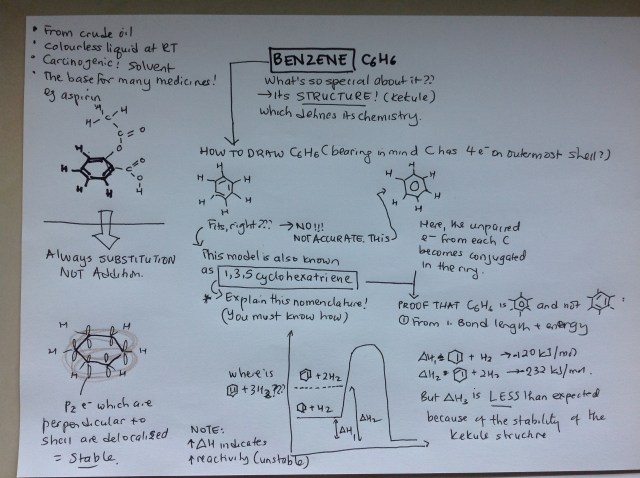
I decided to teach my child this way. She had to learn benzene in class today. but here is what I was preparing at home for us to have fun with.

Step 1: Getting excited about C6H6

What’s so special about benzene? Its structure, of course. Try drawing C6H6, taking into consideration the covalence of C and H. What did you get? Scientists couldn’t figure out what it looked like for a long time. Codswallop about dreams of snakes swallowing each other’s tails and 6 monkeys holding hands. Finally, it was proved by looking at the bond lengths and Delta H.

img_9827

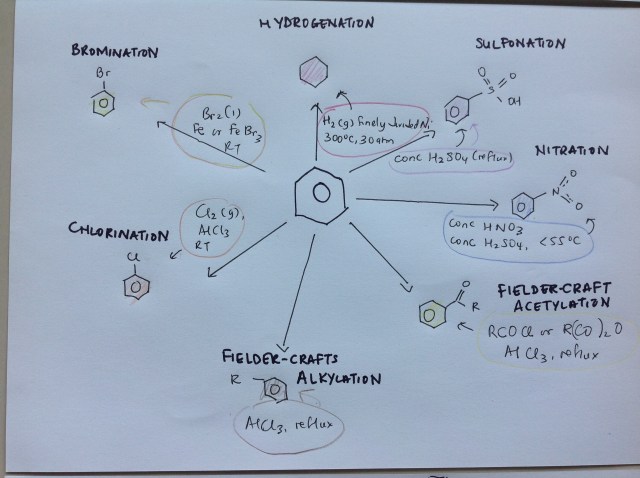
Step 2: So what?

Its shape gives it its special properties. It does not undergo addition, but substitution happens quite a lot. Aspirin, paracetomol, solvents. They are all benzene-based. Sorry dear child, you have to memorise the key reactions, but I have summarised the key points for you. It’s not too bad if you print this out and stick it on your wall. Look at it before you fall asleep at night instead of your boyfriend’s photograph.

img_9828

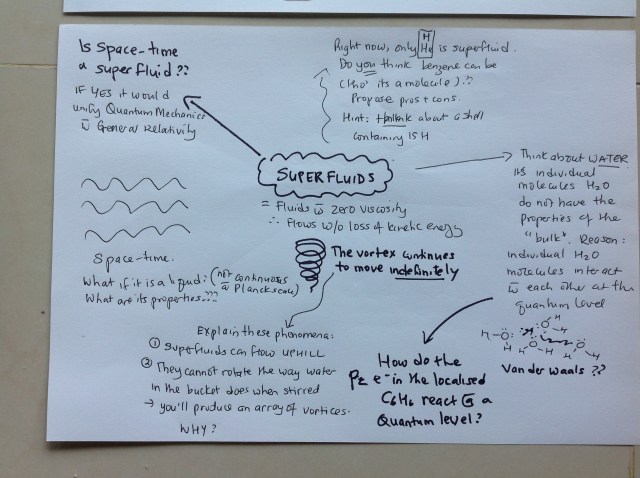
Step 3: Let the fun begin!

In my book, Catching Infinity, I wrote that exciting things happen at the boundaries. That’s why daredevils leap off tall buildings and biplanes. But we can do the same sitting in the comfort and safety of our homes IF we allow our brains to leap into the unknown. Real education after all is about exploring and thinking the improbable, rather than memorising. So I put this to my child: think about the extraordinary properties of benzene because of its delocalised pz electron cloud. Now think about superfluids. Can benzene possibly be a candidate for superfluids? And imagine what a world with a benzene-like spacetime feel like? Would it be like Alice In Wonderland’s treacle world?

img_9829

Yes, I was wrong to criticise the International Baccalaureate syllabus. After all, she goes to school to learn the rudiments to pass exams. It is up to me, her parent, to teach her about excitement and the boundless possibilities, and I am loving the journey.

Is this worth fighting over?

IMG_7706.JPG

Back home in the UK, I am less rigid about washing up. Because unlike in Asia, there are no cockroaches, ants, rats and other scavengers waiting for your unwashed plates. Also, because of the higher temperature in Asia, any bits of unwashed food also stink to high heaven if left in the sink overnight. Our family also uses the dishwasher less in Asia because there are only three of us at home here. Dishwashing tablets are expensive in Asia.

So, after the long summer holiday…..my child begins leaving dirty things unwashed in the sink. It is often just a glass, the blender, a side plate. It takes me just a few seconds to wash a plate or a cup up. It would be very easy to do when I am washing my own stuff up.

But I yelled at her to come and wash her own stuff up. “I will! In a minute,” she answered back. “I’m doing my homework now.”

Come now and wash up your stuff in the sink, please. No compromise. Reason for my tough stance: it is a habit that I don’t want her to fall into. This is laziness. It is lack of discipline. Because the one minute or so that it takes her to wash these up builds a way of being in her which teaches her not to expect someone to clean up after her.

And it is not just down to unwashed plates and cups in the sink. It is down to life. I have known a few people who expect others to clean up after them in life. They make a mess, walk away from their mess, leaving carnage behind insouciantly because they assume that it is the duty of others to clean up after them.

Apologies for being a Tiger Mum where this is concerned, but so long as there is breath in my body, none of my children will ever have that entitlement mentality because it is an awful way to be. It is never good to use and abuse others rather than automatically elect to do our bit for the world.

In the meantime, I came across this cute photograph on the Internet. My sentiments, exactly!

Screen Shot 2016-08-25 at 11.53.23


World Wide Web

The Internet is so pervasive in our lives, but do you ever stop to wonder about a greater, more magical network, one that is created entirely Nature?

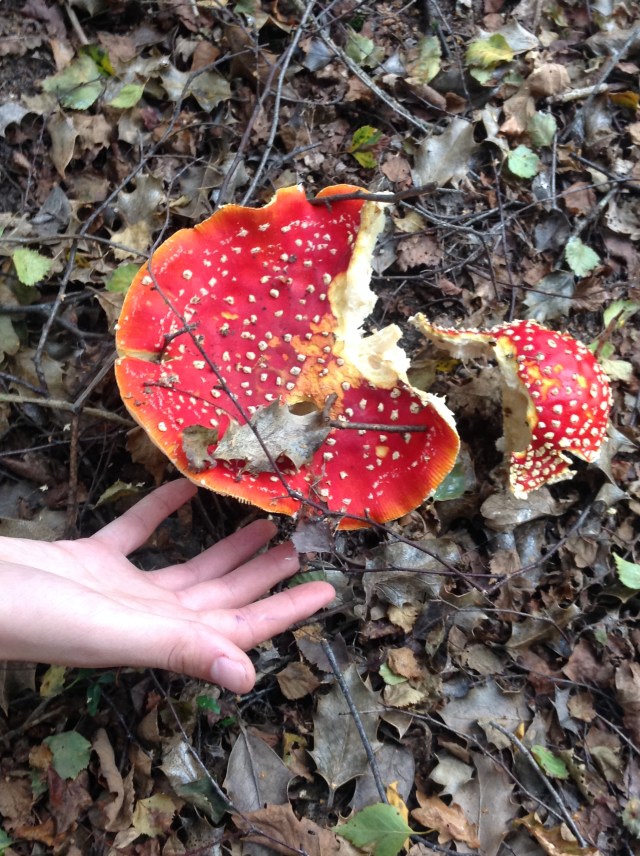
My parents are both passionate biologists, and they created that wonder in me that never dims. Their particular passion is fungi. Mushrooms to you and I. But what we see above ground are just the sex organs of these small but amazing organisms. Beneath these fungus are roots that nurture the whole forest through a beautiful mutualistic symbiotic relationship. A complexity far beyond the comprehension of the mere human brain exists below ground, connecting all living things. Indeed, the forest is far more than you can see.

So here’s a little practice in mindfulness: the next time to log on to the Internet, think about the magical network beneath your feet.

https://www.ted.com/talks/suzanne_simard_how_trees_talk_to_each_other?language=en#t-635181

Working on my next book, inspired by my parents, of course ❤

IMG_8835

Understanding the physical world

In conversations with my daughter, I became interested in how we learn maths (because my novel is maths/physics-based). She has many friends who does not understand maths, cannot do maths and are scared of maths. Unfortunately that fear and dislike persists till adulthood, possibly for the rest of someone’s lifetime. I hope my Catching Infinity will change that.

There are sociological theories about why maths holds terror for many students: thinking in abstract and in symbols is not ‘normal’ in the world we live in, and also the fact that it is a subject that a student is either right or wrong. Fear of failure often impedes progress in the subject. You have to be relaxed to be good at maths.

Yet maths is the foundations of so many things. Like physics.

Here’s something that came to my attention recently:

One thing that never fails to awe me is the fact that so much of the human brain is unknown despite the billions we have invested into its research. For example, do you know that there is a special part of the human brain that is responsible for comprehension of physics/physics-like subjects? Take away the maths and the scary equations, physics is just an inner intuitive sense for how things will bounce, wobble, or fall. We use it all the time unconsciously in our heads. So, my message to adults and children alike, learn to love physics.

To test the physics centre of your brain, go to:

Teaching children about the world

When my children were young, they used to make home videos about the environment, write plays about the natural world, climb, hike, swim and play with Nature, and people would often comment, “Wow, didn’t know you all are so green / into the environment / pro-Nature/ etc.”

Well, we are not exceptionally green / into the environment / pro Nature / etc. No more than we should, and we were merely passing on a love for our world to our children. Just for fun, whilst I was at University and juggling small babies (no nannies or helpers) I did a project with my young children in tow on paper recycling because it bothered me so much. I took my children to the paper mills and recycling plants, and told them never to waste paper. Published by my University, that academic work is still knocking about in the world. Here it is.

It is so important to begin teaching children environmental stewardship from a very young age. To know is to love, and whilst they are still tiny, children still have the eyes to see magic in its full glory. This is the best time to fall in love with Nature and understand its complexities. And once you understand Nature, you understand life.

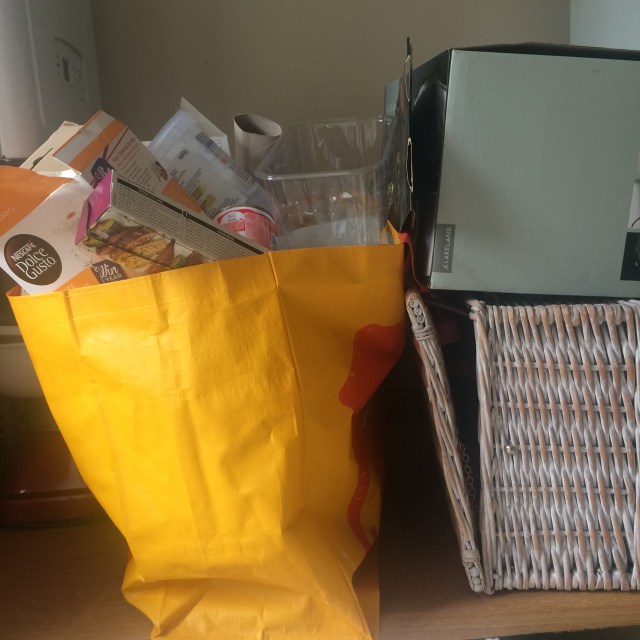
It doesn’t make them crazed tree-huggers (though what’s wrong with that? The world needs more tree-huggers in fact). Here’s an example. I was complaining to my daughter G that I hate all these packaging. We recycle with militant zeal and avoid as much packaging as possible, yet we end up with tonnes. It drives me crazy.

IMG_7437

G quipped, “Mum, have you thought about this? Manufacturers are not your enemy. They want to lower their packaging costs too, but they have to get their products to consumers undamaged. So be it strawberries or a television set, packaging is needed. I’d say they use the minimum they can get away with to save costs on their side.”

This debate raised another point for us to take onboard, which is buy local as much as possible. Apart from the need for less packaging, we are actually support the smallholders against big multinationals. We are saving local businesses and the environment when we buy local, even if the products cost slightly more.

I love this book that we are reading as a family this summer. It shows the interrelationships between all living things.

FullSizeRender-46

And here is a sweet little video G made when she was about six.

Love the world you live in, and share the love with your children, too. They are the inheritors of this planet.

Six ways of raising unfussy eaters

My childhood home had too much food. My Ma is addicted to food. She uses food to celebrate and she uses food to commiserate. Food, food, food. At 48, I still feel jumpy if there is no food in the house. I am suspicious of women who can’t cook. I don’t believe that people can be genuinely happy without proper home cooked food. Yeah, inherited prejudices. And oh, my kids can push my buttons so easily when it comes to food.

Many of us have an unhealthy relationship with food and we unconsciously pass that on to our children. To compound our inherited problem, small children are pretty smart creatures who learn from a very young age that they can use as a blackmail tool. Does ‘if you eat another mouthful, you’ll get ice cream’ sound familiar to you? I was guilt of saying this once to my eight year old son Kit, “If you don’t behave, you won’t get another cup of Ribena until you’re 20 years old.”

This is what I have learned from my 30 years of bringing up five children:

START THEM EARLY

I am a great believer that children should eat the same food as adults, with some modifications, of course, viz-a-viz salt and spices. Eating is a natural part of family life and I love this old adage, a family that eats together stay together.

EAT AS A FAMILY

Eating should be a celebration, not a battlefield. Even if you are eating simple takeaways (seen here), make it a lovely experience.

Screen Shot 2016-07-26 at 12.52.06.png

MAKE FOOD INTERESTING

Involve children in the food preparation process. Make it child-play. Even boring food can appear interesting if (1) they enjoyed making it and (2) it looks funky.

Screen Shot 2016-07-26 at 12.52.29.png

THEM ABOUT FOOD

There is so much to learn and it is all very fascinating. Even for parents. And learning about food is wonderful thing to do because you learn about staying healthy and taking responsibility for wellbeing. I think the best way is to actually grow something, even if you don’t have a garden. Container gardening works very well for growing herbs.

Screen Shot 2016-07-26 at 12.54.30.png

ALLOW THEM TO EXPERIMENT

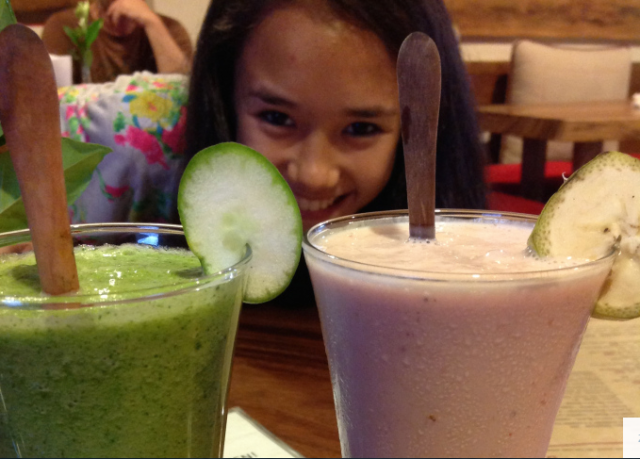
Sometimes it works, sometimes it doesn’t. But it gives children the opportunity of finding their own way to loving food. My daughter makes the most disgusting concoctions which she tries to get us to drink, expounding on the health benefits of her lethal sludges.

You could try new foods together, explore together. It is about you, too, after all.

Screen Shot 2016-07-26 at 12.56.41

TEACHING RESPECT

It’s about respect. If I respect your wish not to eat mushroom, you have to respect mine and eat carrots. I suggest having a “NO NO LIST” – allow your teenager to list six things that they have amnesty from. In return, they have to respect you back and eat what you painstakingly cook for them. It is a two way thing.

Bon apetit!


Magic stays with you

Part of the Waldorf curriculum is on fort-building with children. You might think it is all frivolity, but fort-building is about creating magic with your children as well as teaching them skills to be practical, safe, nurturing and creative. I am quite sad really that there are many grown-ups out there in the world who do not know how to build safe loving homes.

If you look at some photographs on Pinterest, you will see how magical forts are.

Screen Shot 2016-06-26 at 1.09.47.png

My children’s father and I used to build forts with our children when they were little. We would use bedsheets, cushions and torchlights to create magic – as I was working full-time in those days and did not have much time to spare, I just used glitter pen to draw stars on the sheets, but when shined with torches in a dark room, you see something magical. And we all felt that whenever we crawled into our little fort.

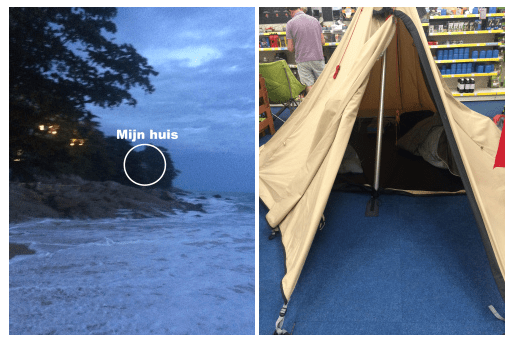
The magic stays with you forever. Today, I went shopping for a present for my beloved partner. He is a man who hated possessions so what could I get him? There is so much I want to give him but there is nothing he wants materially. So I decided to buy him materials to build a very grown-up fort – a teepee tent – so that I can create that magic with him on the cliff of our house. I think that is a very precious gift indeed ❤

Screen Shot 2016-06-26 at 1.22.46

F0r an article on how to build a fort, click here