Time-saving Tip: Frozen Food

In an ideal world, we eat fresh organic vegetables straight from the garden. But the real world is not ideal.

So here’s a time-saving tip:

Allocate a day where you have two hours to spare. Source fresh organic vegetables. Clean and chop. Then put in freezer boxes and freeze immediately. These are great for midweek dinners.

I use mine to make soups, and it takes 2 minutes – i.e. open the freezer, reach for a box and put in a soup pot.

Suggestions:

Onion, tomatoes, carrots, squash, marrow, brussel sprouts, sugar snap peas, herbs (lots of herbs like parsley, basil, rosemary, thyme).

Note: I vary the content of my freezer bags and use funky items. Dill and orange make delicious, unusual chicken soup, so delicate!

orange and dill

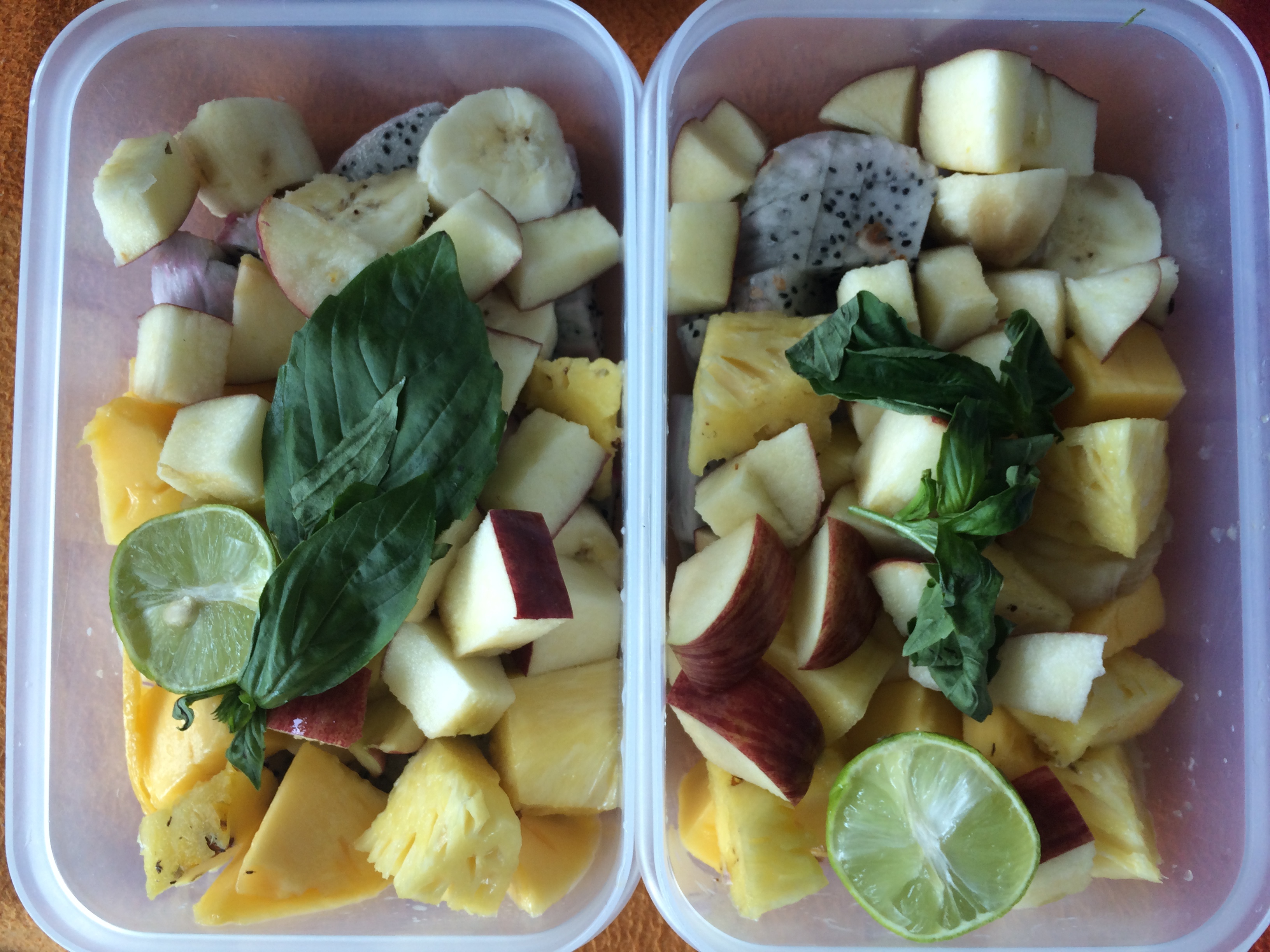
Note: You can do the same for frozen fruits too. Frozen fruit boxes are a great idea! You can:

  1. Add green to make green smoothies
  2. Add yoghurt to make lassi
  3. Or just blend it as it is!

fruit box

Homemade Tomato Sauce

Modern life is all about convenience and unconscious living because the world is so fast-paced. If you have children, I bet you have a bottle of tomato ketchup in the house. I do.

But yesterday, we can out of ketchup. Rather than drive down the shops in the rush hour to pick a bottle up, I decided to whizz up some ketchup with the ingredients I have at home.

My teenager wasn’t that impressed, but when I showed her what goes into the bottle of famous-brand ketchup that we normally have in the house, she decided that mum’s homemade ketchup was not so bad after all……….

The famous-brand ketchup contains, apart from sugar, pesticides and the neurotoxins HFCS. You can read about what’s in the famous-brands here:

http://www.realfarmacy.com/worst-food-lies/

It’s all rather scary.

How to make tomato sauce:

Roast about 10 ripe red tomatoes, 3 cloves of garlic, half an onion and a red capsicum (these are what I had at home)  drizzled with olive oil. I roasted the ingredients to give it that lovely smokey smell.

Blitz in a blender (I like it chunky) together with a small bunch of chopped basil

Transfer to a saucepan. Add a bay leaf, a splash of burgundy wine, a tablespoon of vinegar, salt and a pinch of sugar.  Simmer to desired consistency.

Store in a sterilised jar or use immediately. It’s not too bad. It’s quite good, actually. But  I may try a simpler version to make it more synthetic tasting so that it resembles something that comes out of a plastic bottle!

Natural soup thickeners

There is nothing more tempting than a thick, chunky soup on cold days. With winter coming, here’s an idea for you to try.

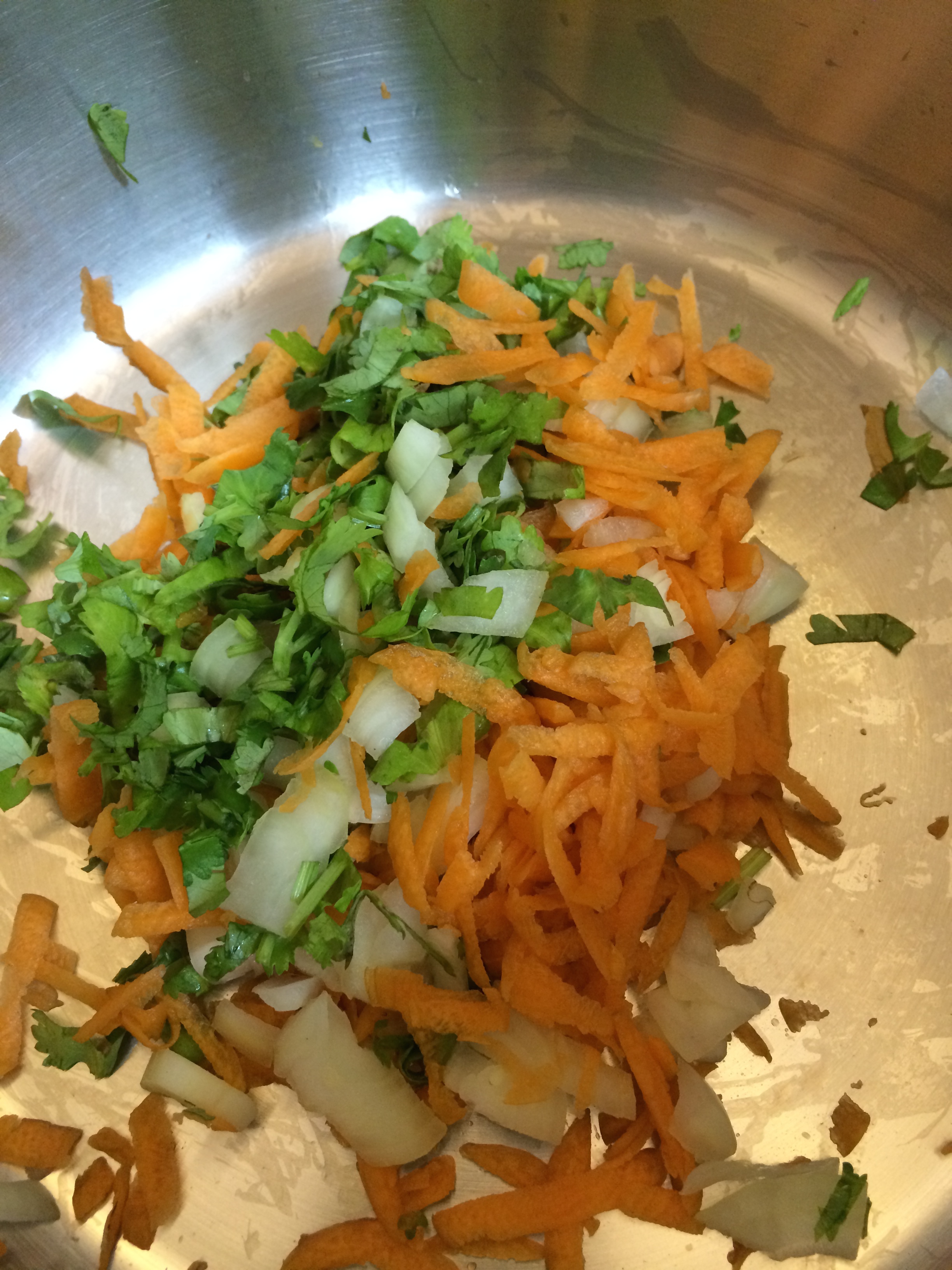
Normal soup thickeners are cornflour and ordinary flour, which are zero value nutritionally.  Try using grated carrots and perhaps half a potato if you like your soup super-thick. If you add other vegetables and herbs, and boil until those disintegrate, you end up with a rich, delicious soup.  There’s some very beautiful alchemy going on. Just perfect for winter or the rainy season.

soup thickeners

Food from my childhood: Beef Stew

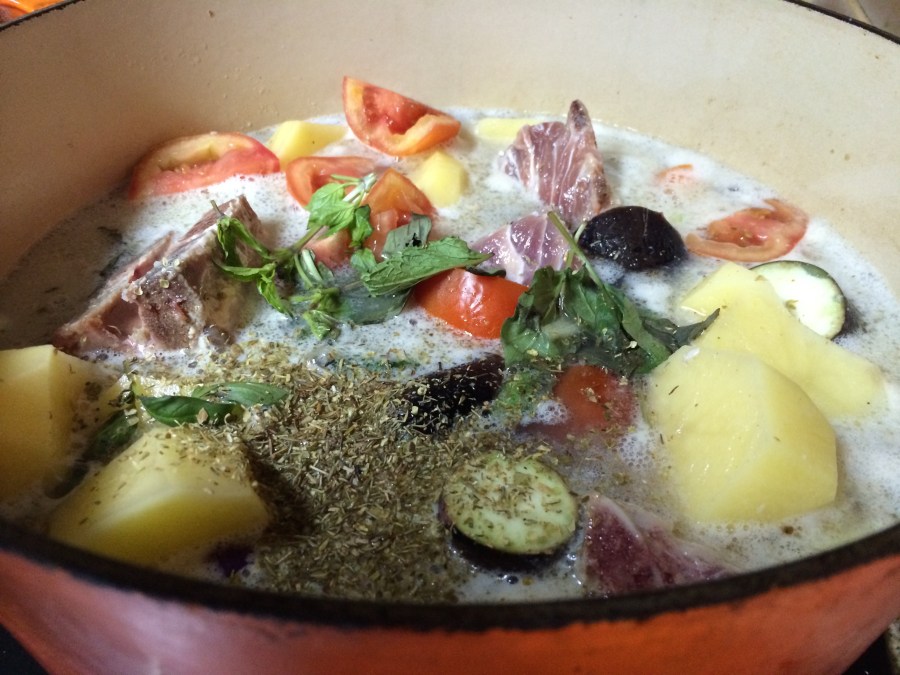
I love my mum’s beef stew and I don’t think mine ever tastes as good as hers.  But over the years, I have perfected it.  Here are my following tricks:

(1) Use two different types of meat: the nice stewing beef chunks coated in seasoned flour and lightly browned, and beef bones.

(2) Use herbs generously.  Tarragon, thyme, bay leaf. Bay is a must.  I use fresh basil too.

(3) Now, this is my magic touch. Collect ends of most unlikely vegetables, such as aubergine, capsicum, parsley stalks, celery heads, etc, freeze them, and just add them to the pot at the beginning of the cooking period.  Over the hours, it will disintegrate to leave behind the most unique taste!

(4) Use different types of root vegetables: carrots, marrow, squash, potatoes.

(5) I always add an onion, a few garlic cloves and a couple of tomatoes.

How to cook it:

Brown the seasoned meat. Add the onions. Add the magic touch (3), bones and half a cupful of apple cider vinegar.  Boil for a few hours then turn down to simmer. Two hours before you serve, add the root vegetables. Simmer for a further two hours until the root veggies are almost melting.  Serve piping hot.

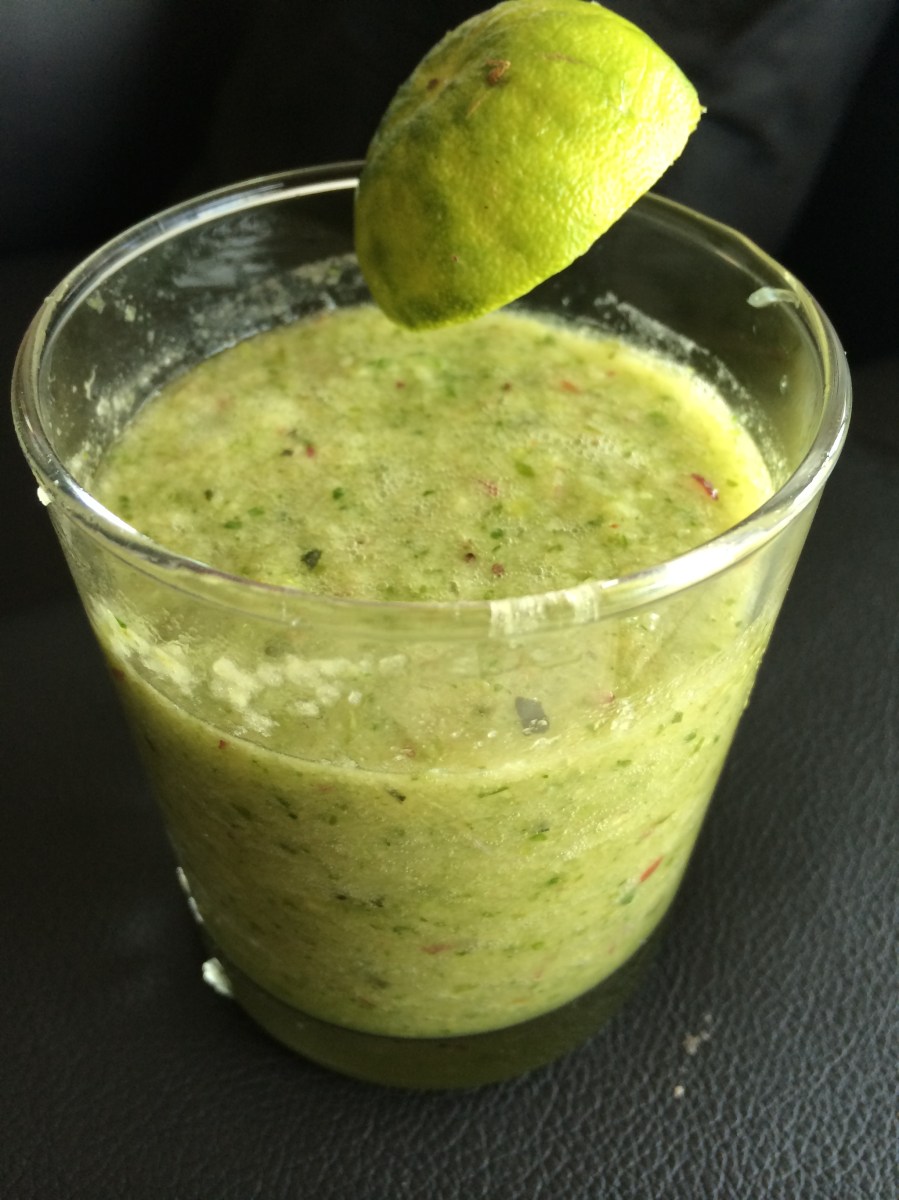
Asian Greens Smoothie

This is a first for me, and the combo tastes surprisingly delicious!

I used: kangkung (water spinach), pak choi and Thai basil. All three leaves are intensely green, which means laden with nutrients.

To make the taste palatable, I added an apple and a pineapple. Cheers!

Note: there are some contraindications to eating kangkung raw because of the parasite Fasciolopsiasis buski,  a large parasitic intestinal fluke that can be found as larval cysts laid on the water spinach (and other water vegetables).  However, I think if you have a strong immune system and undertake a parasite cleanse regularly, you will be protected when eating clean organic kangkung.

If you feel more reassured, replace kankung with ordinary spinach or other greens.

Towards Heart-Centred Capitalism

One of the most common regrets of parents in the developed world is the lack of time to spend with their children when the children were growing up. For these precious childhood years, when gone, are gone forever. You would have missed the most magical part of your children’s lives. And yours, too.

Yet not all parents who would like to spend the whole day baking or reading with their offspring are able to do so, because economics drives at least one parent out of the door into the world of work. If one chooses to live in an expensive city such as London, the household often requires two working parents to keep it afloat financially.

I would like to write a little piece on heart-centred capitalism. I am not trained in classical economics, though in my varied career, I once worked for an investment bank where I managed over U$800milion in equities for institutional clients. I, the scientist/medic, ended up working in an investment bank because I needed to pay the mortgage on my Knightsbridge flat. It cost me dear.

It led me to think, maybe economics in the capitalism-as-we-know-it framework does not work?

Many men – and I am being sexist here – work for big corporations. The so-called multinationals, which are often as large as a small country, proudly trumpeting their global reach as well as their ability to understand the local markets. But do these conglomerates practice what they preach when it comes to their employees, or are they proletarian in nature? In the olden days, these powerful large companies use their considerable assets to look after their employees, providing loyal staff with cradle-to-grave job security. The company was like one big, happy and close family where members look after each other.

I do not think that mentality exists now. The world is more dog-eat-dog, more competitive, and the job market is more fluid. Technology has changed a lot of things. Big structures have found to be unwieldy and unsteady, as the former Soviet Union proved, and as the current precarious state of the European Union shows. The economic crisis of 2008 was yet another indication that we have to rethink our current framework. I do not think global economy has fully recovered from 2008, and we are bearing the pain through a rising pension age for the workforce, privatisation of education and healthcare, and a huge burden of debt for many ordinary young people. For me, this smacks of a return to slave capitalism that predates industrial capitalism.

But if you look beneath the surface, you will find a thriving alternative economy based on collectivism and solidarity. If you are a parent, you would be familiar with carpooling. You would be familiar too, with babysitting arrangements with other parents. You might even do group-buys. Expand that into the world of work, and you get Wikipedia, which has $3billion in revenues, which put the encyclopedia business out of existence, which was built solely on collectivism. In 2006, Mohammad Yunus won the Nobel Peace Prize. He developed Grameen Bank. Grameen Bank lends to those that commercial lenders would not touch: the bank is founded on the belief that people have endless potential, and unleashing their creativity and initiative helps them end poverty. And despite never ever having any legal agreements with those whom it lends money to, there have been very few defaulters. Contrast that with the now defunct Lehman Brothers. We are still paying back Lehman’s fallout one way or another.

Isn’t it about time we rethink capitalism? Do we live to work until we are 70 years old, merely to buy the things that we do not need or a lifestyle that we do not want?

I am hoping to persuade my partner that after over a decade of serving as a loyal servant in the corporate world that he should step out of it and into this wonderful place with me where we will live on fresh air, sunshine and love. This is the time to abandon the sinking ship of slave capitalism and dissolve the punishing market forces to create a paradigm of parallel currencies, cooperatives, non-market products and shared resources of heart-centred capitalism. We will live well, and with meaning.

Legs Are For Walking

Parenting is a very personal journey, and I am sure I will be slated for this post. However, I will still post this, because I would like to see a shift in mindset towards raising healthy kids.

Each time your child whines, “Carry me” and you give in, you are not ‘spoiling’ your child emotionally. You are de-skilling your child. You are taking away his opportunity at that moment, to learn resilience. You are also not giving him the opportunity to work on his developing muscles.

Let us start from the scientific angle. Children need to develop muscle tone. It is that muscle tone that allows a flexible foetus to be curled up in the womb, to develop into a baby who could sit up, crawl and eventually walk upright. The primary muscles required for this is the group of muscles that are loosely referred to as the core muscles. The core muscles can be visualised as a broad belt encircling the human body. Weak core muscles are the cause of bad posture, which over time, can lead to chronic back pain. For a child with weak core muscles, you see slouchy sitting position (exacerbated by hours sitting down). A floppy child is also often tired, because in that suboptimal position, he is not breathing efficiently. Her internal circulation may also be compromised. She may not be as active as she should be for her age group. Having weak core muscles is certainly not a good foundation for a young body that still has many decades of living to get through.

As children do not go to the gym to strengthen their core muscles (and there is no need to), they need to walk at every opportunity. On the emotional development side, children also need to learn to be resilient and self-sufficient. By three – yes, during the Terrible Threes – they should be learning about their body and the world they live in. Walking is one of the fundamental movements in life, and it also moves a child towards being independent from the mother. It empowers them.

If a child has strong physicality, she feels empowered. She is not afraid of feeling breathless or hot or tired. She embraces the different experiences. She feels confident about exploring the world and confident of her place within it, once she is comfortable with her body and its many experiences. You are empowering your child, when you move her from whining “Carry me” to “Yes, I can, Mummy.”

Children need to move for their brain development, and being attached to a parent like a limp rag doll does not constitute moving.

It is also about learning boundaries. Children need to know that there are certain things in life that they have to do for themselves, which Mummy cannot do for them. And walking is one of them.

Teaching boundaries to children is one of the challenges of parenting, namely how to teach them with love so that they grow up joyous. For me, over the course of five children, I discovered that it is with love, laughter, firm rules, consistency, joy, forgiveness and unconditional love that we teach our children that they have to accept parental autonomy. Parenting is not about giving in all the time, but a healthy balance of meeting your child’s needs as well as teaching him the things he needs to learn.

So if you have a child who is older than three, I would like to suggest trying to do away with the pushchair/stroller and see the changes. You will thank me in a few months time … big smile.

Photograph: 2 year old Georgina trying to keep up with her parents and siblings in foot-high snow.

Grown-up Nursery Food: Spaghetti Pomodoro

I have quite a reputation amongst my friends for serving nursery food – they would show up at my house for dinner parties, and surprise surprise, the menu is exactly the same as what I feed my children.  This is because I do not believe in cooking separate meals for kids – a large part of helping a toddler to transition into becoming a child is teaching him how to integrate into our world.

Without much ado, here’s my recipe for an achingly glamorous spaghetti pomodoro.  The kick in this version is that it uses three different kinds of tomatoes:

  1.  Cherry tomatoes preserved in Cointreau – recipe is here
  2. Tomato pesto (see below)
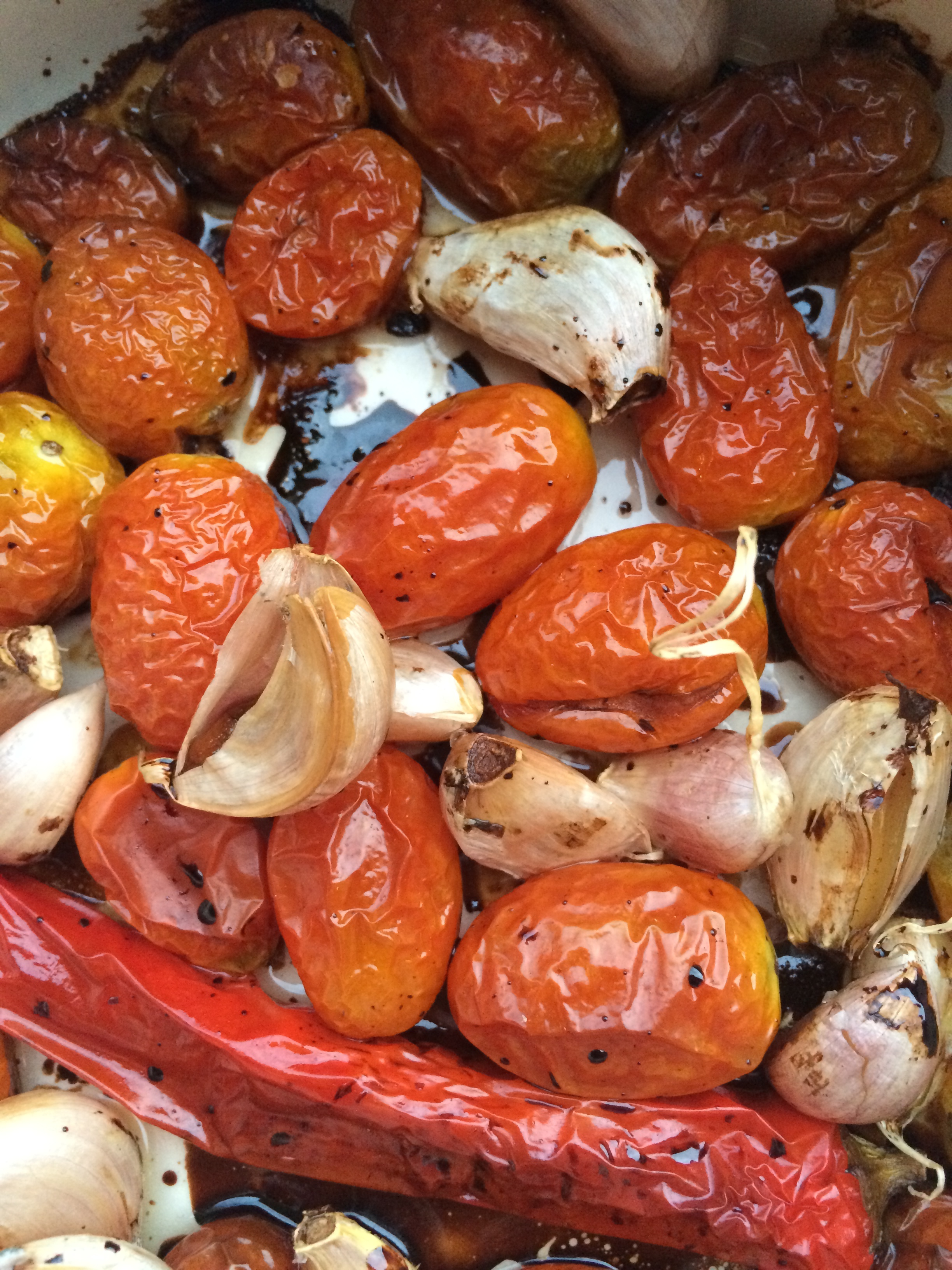
  3. Tomatoes, garlic and chilli roasted in balsamic vinegar and olive oil (as illustrated in the photo below)

roasted tomatoes

To make the tomato pesto, blitz together two ripe red organic tomatoes (for extra taste, roast these), a bunch of basil, half a cup of pine nuts (I used macadamia because I ran out of pine nuts), half a head of garlic and enough olive oil to turn the mix into the desired consistency. Season to taste.

Boil pasta according to packet instructions and assemble.  Serve piping hot, garnish with fresh basil leaves and parmesan cheese if desired.

Making Banana Flour At Home

Why am I making banana flour?

I love baking. Probably because my mother loves baking. Last week, over a three day period, I baked three cakes. It was then I thought to myself, ooops, my family is eating too much flour. Even though the flour I used is unbleached and organic, I felt that they were eating far too much flour.

Some time back, my friend Vivienne Webb gave me a bag of banana flour. I have never used it before, and was pleasantly surprised that the apple turnover cake I baked with banana flour tasted every bit as good as it would normally. And yayy, banana flour is gluten-free, so I baked an extra one for my friend Richard Boyle.

Feeling pleased with myself, I posted my recipe on Facebook. Then someone commented, banana flour is expensive. Sitting in lush Phuket looking out at banana trees, I can’t figure – nay, can’t accept – why banana flour should be expensive. It is five times more expensive than regular flour.

I don’t like economics that don’t make sense, so I googled. And made my own.

The goodies

As I am doing my diploma in Naturopathy, I took special interest in the dietary benefits of banana flour, apart from being gluten-free:

  1. Green (unripe) bananas are more nutritious
  2. The goodness is in the skin
  3. Green bananas’ starch is resistant starch, which means that they act more like fibre than starch
  4. Because bananas are sweet, you need less sugar when you use them instead of regular flour in baking

How to

Wash the bananas thoroughly. Top and tail each banana.

flour 1

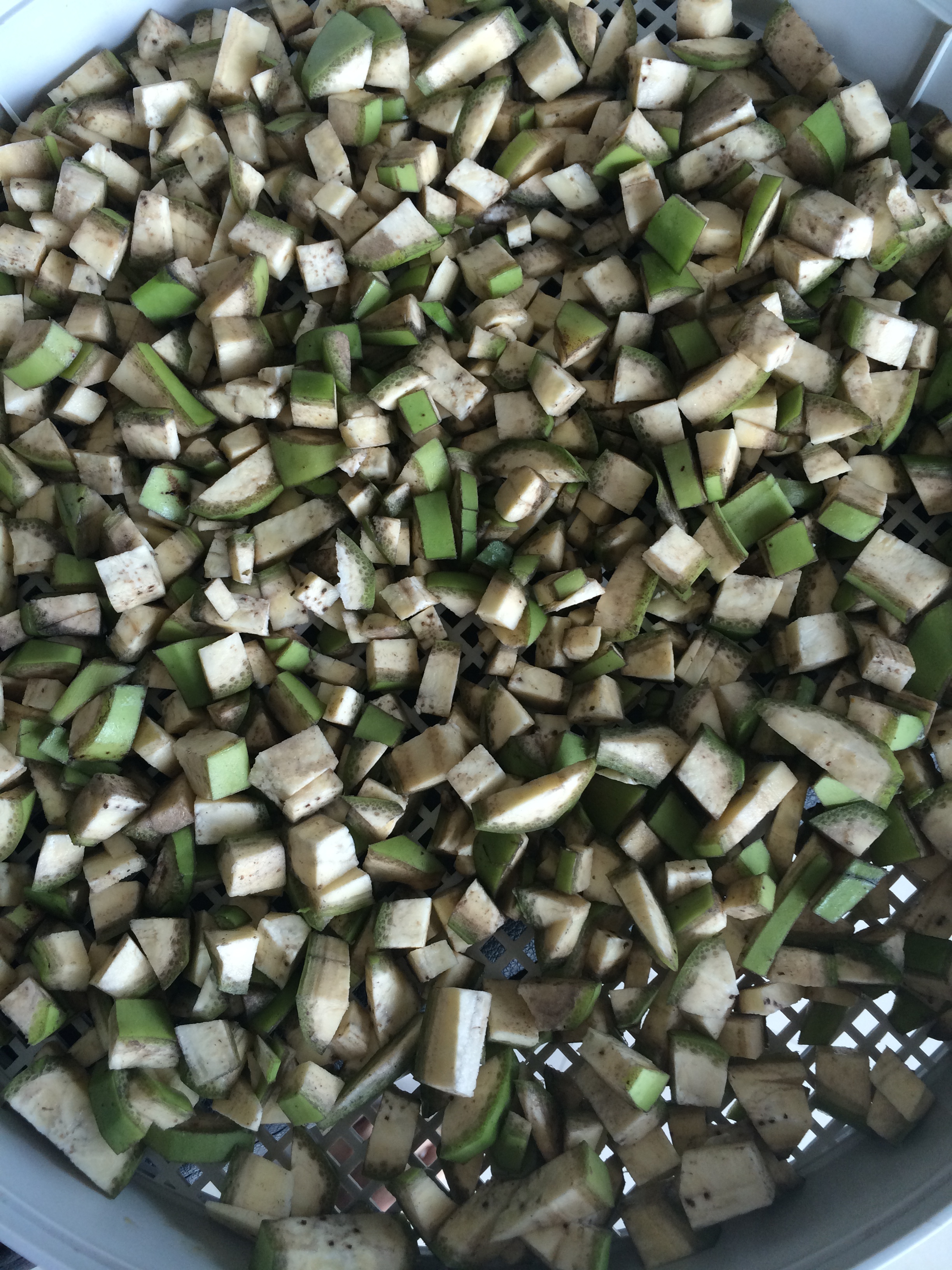
Cut them into wood chip size. Spread the chips out on a plastic tray. You could either dry them naturally in the sun (cover with muslin) or in a dehydrator.

flour 2

Grind the dried banana chips in a strong blender. As the blade of my blender was not that sharp, I sieved and reground the coarser grains. Store in an airtight container and use soon.

flour 4

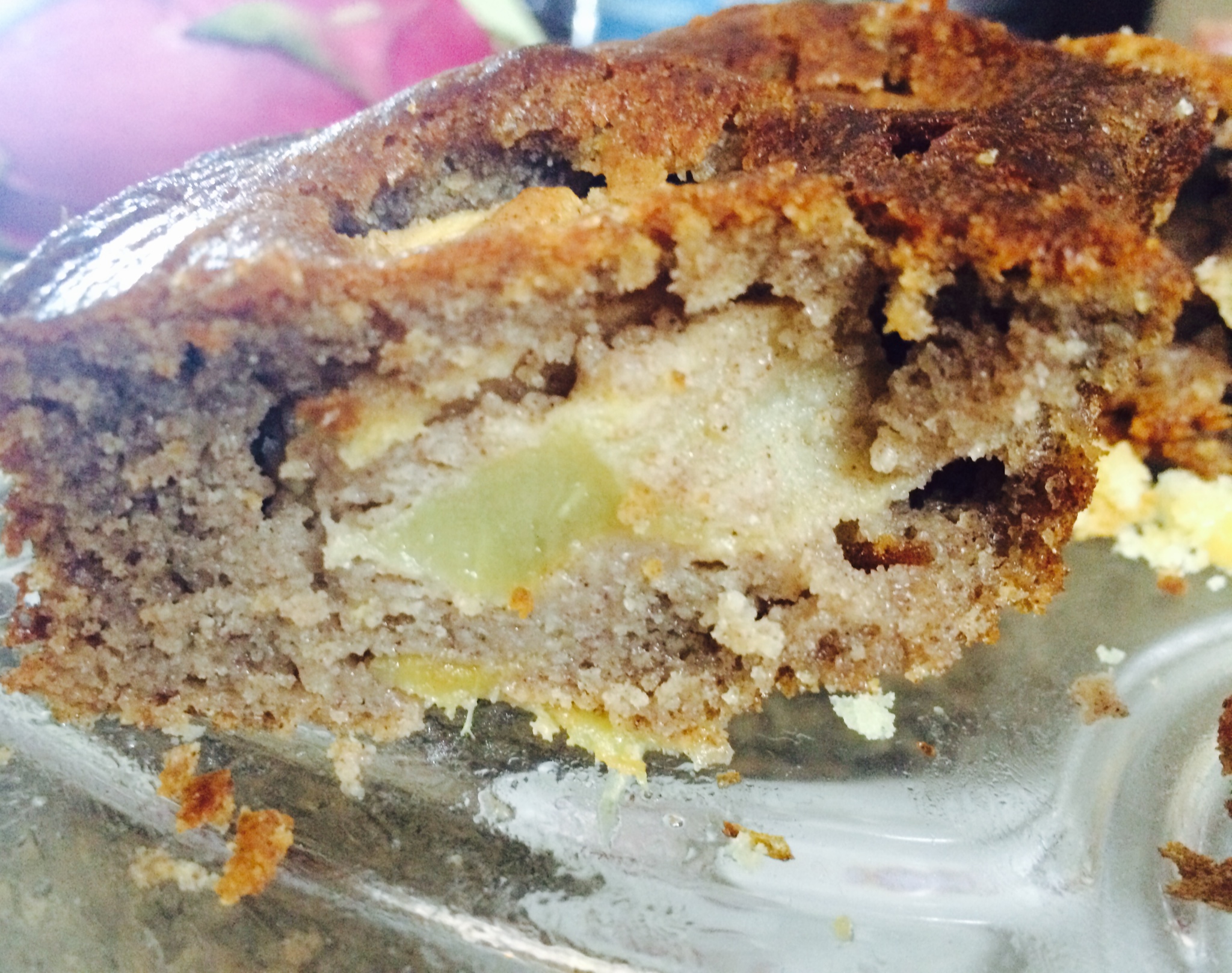
Just a reminder, this cake was the one which started it all 🙂  Recipe here.  It tastes really delicious!

apple turnover cake

Food From My Childhood – Apple Turnover Cake

Cake, cake, cake. More blooming cakes. I should rename this blog Cake A Day blog. But hey, it’s all tied up with my childhood programming – my mum loves cakes.

So here’s another one.  But aha, this one is 100% gluten free. I used banana flour. And it tastes better than I expected (after several tries).

Ingredients:

20g butter

6 large apples, peeled, cored and cut onto eighths

1 1/4 cup banana flour

2 tsp baking powder

Pinch of salt

3/4 tsp ground cinnamon or mixed spice

3/4 cups caster sugar

1 cup oil

1 cup full cream milk

2 large organic eggs

2 large egg yolks from organic eggs

zest from 1 orange

Preheat oven t0 180C. Grease the baking tin. Line the baking tin with the apple slices.

Beat butter and sugar until light and fluffy. Mixed the dry ingredients together – sieve into the butter-sugar mix. Slowly fold in the liquid ingredients.

Pour the mixture in.  Bake until it’s all nice and brown, and the fork comes out clean when poked into the cake.