Sourdough – it’s about the happy bugs in your house!

I used to remember waking up in my parents’ house to the smell of warm bread in the oven. Yes, sourdough. I love it. Because it is about the happy vibes in my mother’s kitchen.

But asking my mum for any recipe is a nightmare, because she cooks by feel rather than precise measurements – haha, pot calling the kettle black, I do the same too! So I told my friend I wanted to bake a simple sourdough and she laughed at me.

“You?” she said. “You need patience!”

Anyway, where I live at the moment, it costs a whopping £6 for a loaf. So I decided to make my own. OK, what’s beautiful about sourdough is that it does not use dried yeast but airborne microbes to ferment the flour, so you get this lovely, lively starter to bake your bread with. I have lots of happy bugs in the house. It is such a happy house. So why not? I decided to add apples for that lovely background taste to my sourdough (note: use organic apples!)

TO MAKE THE STARTER:

Chop up one apple and mix with 50g rye flour and 50ml cold water.
Mix well and store in a clean jar, covered on top with a clean towel.
FEEDING THE STARTER (5 days)

Everyday, add 1tbsp flour and 1 tbsp water. Mix well.
Cover mixture in jar as per day 1.
On Day 5, it must smell bubbly and doughy. If it smells alien, junk the whole mixture!

STAGE 1: STIFF STARTER

Add 50% of your starter (about 45g) to 85g of strong bread flour (up to you whether you throw away the other 50% or bake 2 loaves) and 45ml of cold water. Mix well.
Store for 8-12 hours.
STAGE 2: THE KNEADING

Put 145g of the starter above in 400mls of tepid water. Mix the starter into a colloidal form in the water.
Add 400g of strong bread flour, 50g of rye flour and 50g of wholemeal flour into the colloid and knead well. Knead for about 10 minutes and leave to rest for 20 minutes.
Then add 12g of sea salt and knead again, thoroughly mixing in the salt.
Put the dough in an oiled mixing bowl and leave to rest for 1 hour.
After 1 hour, knead it for a few minutes.
Repeat for 4 kneads and rest periods.
Then line a colander with a clean towel. Put the dough in it and cover with the other half of the towel.
Place in the dough in the fridge overnight.

STAGE 3: BAKING IT

Turn oven up to 250deg (max!)
Warm up a cast-iron casserole dish in the oven for 10 minutes.
Put the dough in there. Dust with semolina, and make two slashes with a knife.
Bake for 35 minutes with lid shut.
Remove lid and bake for another 25 minutes or until browned.
Cool, and leave for a few hours before slicing….though it tastes absolutely delicious when warm!!!!!

Note: I had a fun time with baking this. The whole family got involved with the multiple kneading stages, we sat around and enjoyed it with an Irish friend (with a glass of wine), gave half a loaf to another, and here’s my daughter’s faux pas which is part of our crazy happy household:

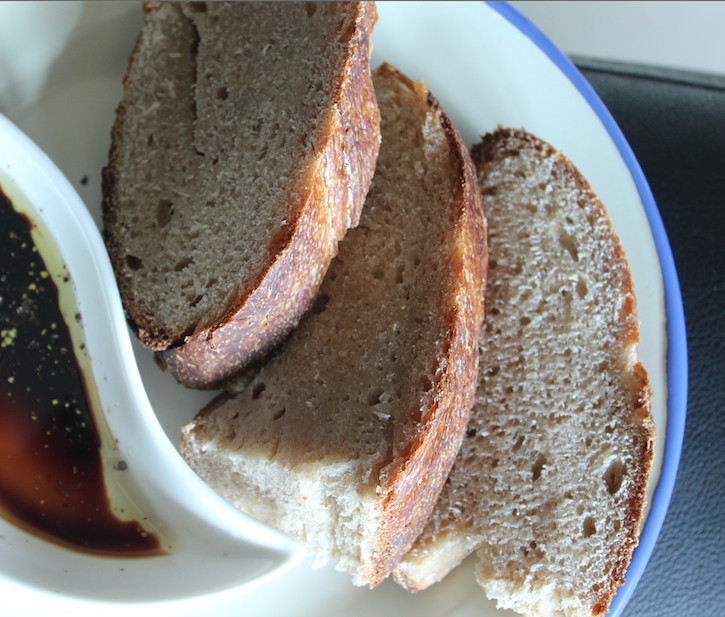
PS: The loaf was not perfect and the edges fell apart when I sliced it. But hey, they made a yummy simple aperitif !


Screen Shot 2017-09-04 at 17.48.56


How to cuddle your teens (and grown-up children)

I fight with my 17-year-old.  “Hellcats, both of you,” her father says in exasperation.  We fight about everything, like two feral cats in a paper bag, in her father’s colourful terminology.

Yet I hold her close always. I mean physically close. Especially when words fail me. Our physical closeness nullifies our meaningless fights:  immediately after a shouting match, she would huff at me and tell me I am annoying, but with that slant of a smile in her eyes, building up to a hug that makes everything better between us once again. I will worry the night she goes to sleep without hugging or touching me, or if I could not kiss her cheek, her hair, and feel her melt into me.

I notice this is an oddity, even in Western cultures, to be always touching and hugging one’s teenage child. Those who spout attachment parenting in early years are surprisingly non-tactile to their teens.  My psychologist friend tells me that there is this belief that the teenage years is about “individuating” a child, that is to say, force them to become self-sufficient.

‘Ah,” I said. “Be tough to a child in order to raise a tough adult who will be successful in a tough world.” I understood. I have seen, first hand, the destructive effect of the mindset that values self-sufficiency and independence above all.  I knew one woman who sneered at me, “You still run home to your parents, at your age?” She left her parents as soon as she could, never looked back and I suspect, she would not allow her son the luxury of this “weakness” of coming home to the family, of asking for softness. The son, a qualified pilot, is handsome, healthy and outwardly successful, but he is beset with something inside that made him break off a two year engagement because of fear of commitment rather than flaws in the relationship, have outbreaks on his youthful skin, and being unable to work in a career that he had trained so many years for.

From this example and others, I am convinced that emotional distance and lack of physical bond between grown-up children and parents is not healthy. Our adolescents and young adults still need to hear, feel, and know that we love them and enjoy being with them. Heck, I am almost fifty, and I blossom each time I hear those words! Thus, it feels good for me to be home in my first family’s home. I love the fact that sometimes, it seems as if my brothers and I have not yet left home.  The closeness remains, despite the miles and the passing time.

Hold your children close, and I mean physically, because sometimes, this matters more than words. But how? I hear many ask. Teens are especially prickly to close proximity, especially if they have not been brought up within a touchy-feely framework.

Six ways to cuddle your teen:

  1. Cook unhurriedly together with your teen/grown up child. With cooking, you stand close, work in concerted harmony, learn to anticipate each other’s moves and yes, touch.
  2. Rough and tumble. My children’s father still wrestles with his grown-up children – I have to remind the children not to be too rough with their old father! He is not 30-years-old anymore!
  3. Do things for each other, such as massage, manicure, reiki.
  4. Cuddle up together on a sofa watching a film. Slowly move closer.
  5. End each night with a goodnight kiss. I miss my mother’s “No star” (goodnight in Welsh), the way she touches me gently as she kisses me.
  6. Make time for each other. All of the above has to happen naturally.

IMG_1503.PNG

Healthy alternatives: apricot and cranberry flapjacks

I absolutely love homemade fudge, especially those sold in farmers markets in my county.  Unfortunately, fudges are chock-full of sugar, which research tells us is more harmful and more addictive than cocaine.  Indeed, Britain’s love of sugary stuff has plummeted drastically (spending on cake-making ingredients has slumped by £26.8 million) despite popular programs such as The Great British Bake Off (according to analysts Kantar Worldpanel).
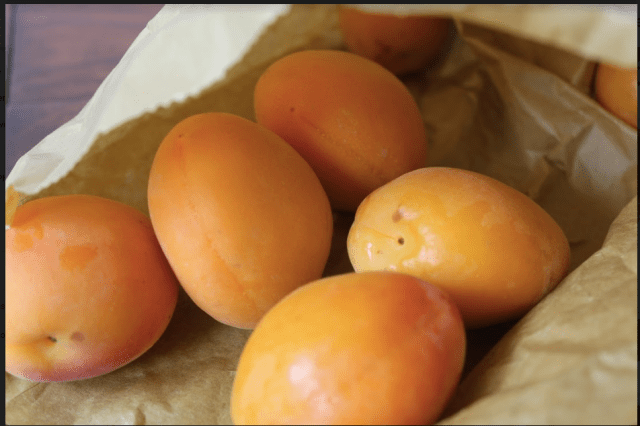
So when I was at a farmers market over the weekend, I bought a bag of sweet apricots instead and baked some yummy, healthy flapjacks instead.

Screen Shot 2017-07-30 at 9.43.34 PM

This was how I made my sugarless apricot and cranberry flapjacks:

  1. Toast 1 cupful of organic porridge oats and 1 cupful of nuts and seeds in a 200degree oven for 15 minutes. Sprinkle some coconut oil over the oats, nuts and seeds. Watch carefully to ensure that they do not burn.
  2. Blitz 1lb of apricot with 3 tablespoons of honey in a blender.
  3. Mix all together with 1 cupful of dried fruits. I used more cranberries proportionally but it is up to you.
  4. Bake in a greased tray for 20 minutes until firm but still spongy.
  5. Cool and cut into slices.
  6. For extra indulgence, you could top your flapjacks with melted chocolate.

Good for packed lunches!

Screen Shot 2017-07-30 at 9.44.10 PM

Screen Shot 2017-07-30 at 9.44.23 PM


Dairy-free, gluten-free breakfast

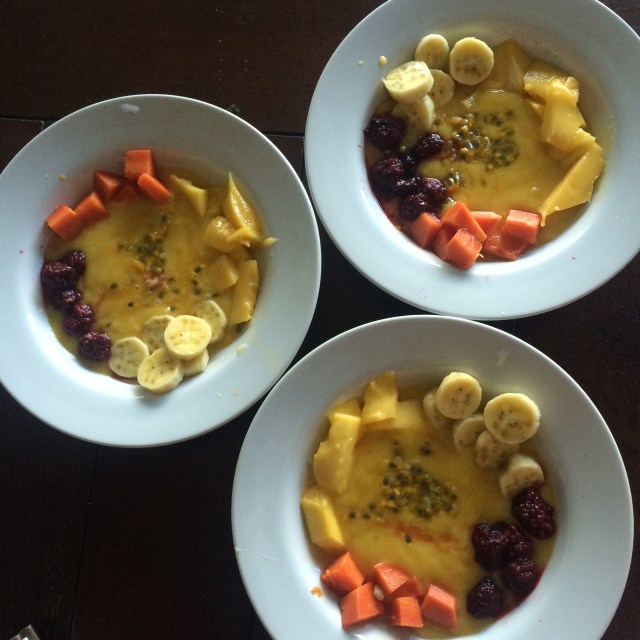
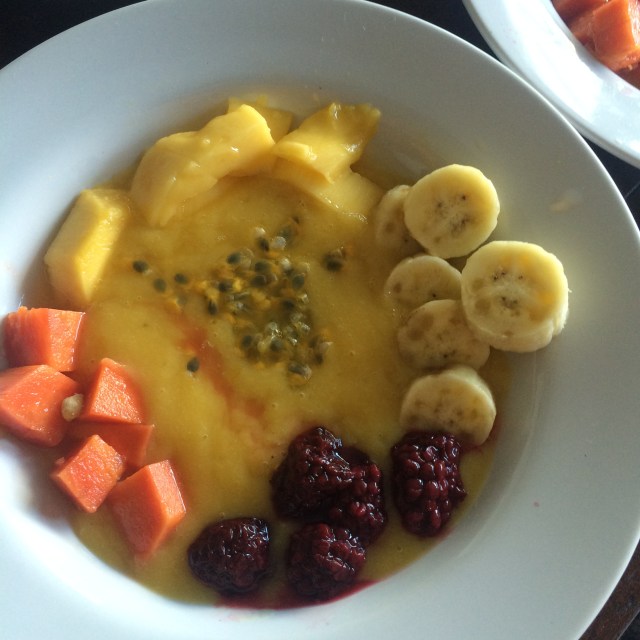
I was writing and photographing on the topic of healthy breakfasts to tempt small children for my new book Facebook page, and I thought this would make such a lovely dairy-free breakfast.

I love milk and dairy products, and know that perhaps I should just cut down a little.  This base of mango and banana puree is a wonderful alternative to milk for cereals.

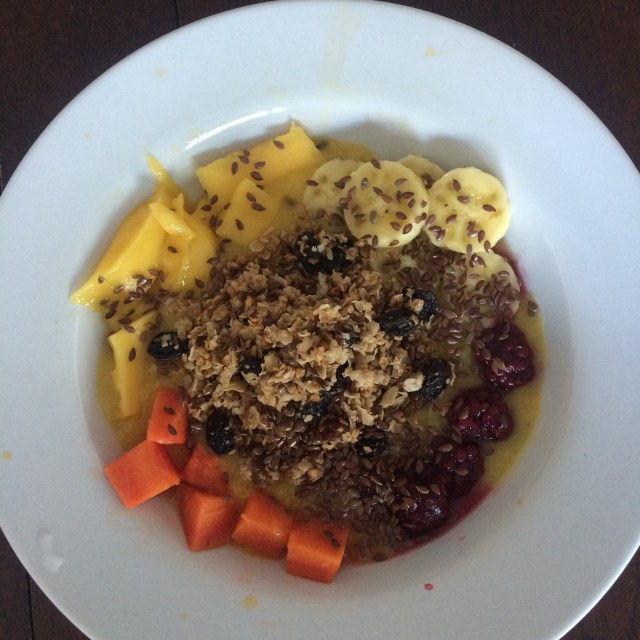
I served this with homemade granola, made from organic oats. According to many website sources (google gluten free oats), non-contaminated, pure oats are gluten-free. They are safe for most people with gluten-intolerance. The main problem with oats in gluten-free eating is contamination. Most commercial oats are processed in facilities that also process wheat, barley, and rye (this is from kitchn.com).

You can make all these the night before for a lovely, colourful breakfast.

IMG_0243.JPG

IMG_0244

IMG_0251

What to do when bombs fall and senseless killings happen

I am a stay-at-home mother. I have no political might to change the world. I don’t know how to change the world (if we are honest, there is no straightforward, easy answer). All I know is that we can evolve the world into a kinder place, one family at a time.

******

We live in a deeply polarised world. The bombs dropped in the Middle East. The senseless killings hit the streets of Jakarta, Manchester, London, so many places. Which side of the divide are you on?

The Irish statesman and writer Edmund Burke is credited for writing these words: “The only thing necessary for the triumph of evil is for good men to do nothing.”

The streets of my home country is under terror attack again. We are no strangers to it, in all honesty. Going back years ago, we lived in fear of the IRA. The streets of London were full or armed police and barricades. Now, the threat comes from another cause. I could get very angry about it. I could engage in long debates about the wrongs of taking innocent lives. I could debate UK foreign policies. What will I achieve? I will preach to the converted (namely those who are already sympathetic to my views) and by the same token, I will create more haters amongst the cadre of those whose beliefs conflict with mine. I will deepen the rift in our already split world. By putting angry words out there, or even words of reason, I will not get the peaceful resolution and healing I seek. I will only raise the anger quota in an already angry world.

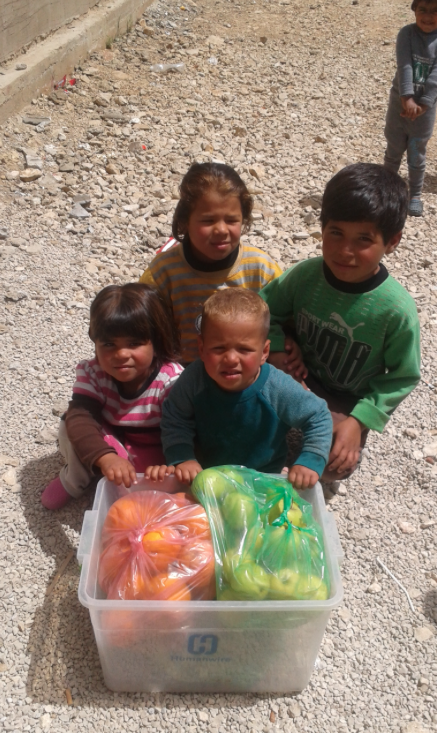
What I chose to do today, on the day after the night London came under another terrorist attack, is to feed these al-Rahman children who live in a refugee camp, young victims of the conflict. I have been sending them food parcels every few weeks. This is a photograph of them receiving my last consignment: since I blog so much about green smoothies, I think it is only right that I send them fresh fruits and vegetables (and eggs, too).

Screen Shot 2017-06-04 at 16.07.48

Screen Shot 2017-06-04 at 16.06.55

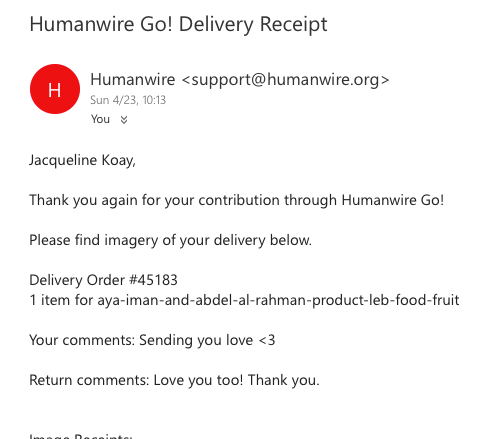
You might think that my little gift, given with love, is only a drop in the ocean, insignificant in the face of the huge ugly war raging in our world today. But imagine this: if every person who feels angry about world events just send a little love instead of putting more hatred out there in the world (in terms of thoughts and words), just think how great the effect will be. I always have tears in my eyes when I read their little messages, translated by volunteers at Humanwire. They are always short and sweet, “Love you too! Thank you.” Five words, and we are one, rather than British and Syrians.

A few weeks ago, I started an appeal on Humanwire (similar to the fruits I sent Aya, Iman and Adbel) for a Syrian young lady named Ayda. Ayda and her brothers were normal, hard-working university students whose lives had been torn apart by the similar conflict that tears our world apart today. My belief is that if we reach out to this family, we sow the seeds of love for the future.

Please join me and reach out to Ayda. Yes, you can Skype her, get to know her and together, we can build a better future even if bombs fall and senseless killings are going on today. With love, we can.

Click here to connect with Ayda. Every little click helps, even if it is just to share this message of love ❤

Screen Shot 2017-06-04 at 16.36.47


Georgina’s Gnocchi with sage and garlic butter

Gnocchi is so expensive in Asia, though it is made of nothing more than flour and potatoes. My daughter made this, and it was absolutely delicious. That’s with some modification to the traditional recipe (we added some pumpkin because we didn’t have enough potatoes).

INGREDIENTS:

Two cups of diced potato and pumpkin (she used 3/4 potato to 1/4 pumpkin)
2 cups of all-purpose flour
1 egg
Salt and pepper

For the butter:

1/2 a cup of butter
5/6 cloves garlic
A sprinkling of dried sage (or chopped fresh ones)

Boil the diced potato and pumpkin until tender (but still firm). This would take about 15-20 minutes. Mash them up and all the other ingredients. Roll the dough out into tubes and cut the tubes into bite-size portions.

Bring a large pot of lightly salted water to a boil. Drop in gnocchi and cook for 3 to 5 minutes or until gnocchi have risen to the top; drain and serve.

In the meantime, melt the butter in a small pan. Saute the garlic until soft but not browned. Add the sage. Pour over the gnocchi.

True soul food ❤

IMG_0108.JPG

Why Emotions Coaching should be on the school syllabus

At a certain stage in their lives, our young-adult children leave an institution of higher education (be in high school, college or university) with a piece of paper that declares them literate and numerate, and thus ready for the world of work.

Unfortunately, there is no syllabus, tests or qualifications on the very important subject called Emotions.

In a bygone era, it was kind of taken for granted that children learn that from the home. That was in a time where families lived close together and children had the luxury of playing with neighborhood friends after school. It is amazing how much children learn from unstructured play and from being outdoors; how to get on with others, how to make up rules, conflict resolution, self-regulation, handling playground politics, coping with losing, managing own safety and the world they live in, to name but a few.

When unstructured, outdoor play and the benefit of extended families are removed from children, the task of Emotions Coaching is left unfulfilled. To compound matters, growing up in emotionally cold households does not provide children with the opportunities to learn about Emotions – theirs and other people’s.

Emotions are living beings within our physical selves, vibrant and alive. We have to learn how to connect with the Emotions within us and to manage them, rather than control and suppress a part of the human being that is meant to live and breathe. Controlling and suppressing are the cornerstones of Discipline. I think a more positive coaching path is to teach children how to connect and deal with the entity within.

We tell children to stop crying, without finding out why they are crying. We tell them it is silly to be frightened, without knowing what their fears are.

If we don’t know the Emotions that live within us, we feed them the wrong diet. They either grow into beasts or they die. If they are unloved, they will someday rebel or they will simply stop breathing. Even if these worst-case scenarios don’t happen, isn’t it sad that we are strangers to our own Emotions?

I have known adults who have successfully built cages for their Emotions, but there are incidences when their caged Emotions break free – as they do when they grow too large or too strong to be successfully suppressed by will power.

In some cases, Emotions die from neglect or never had the chance to grow to their full maturity. I have known a successful professional, a very charming friend and an attractive looking individual. But peel back the layers and you find a hurt and frightened little boy who lashes out uncontrollably, who was never given the chance to mature into a grown-up lover, a strong husband, a tender father. No outward career success, long line of exciting lovers or big address book of acquaintances can ever compensate for not knowing the deep joys of really loving and being loved, that only comes when we are connected with our own Emotions.

Thus, we have to step up to the mark and implement Emotions Coaching, first on ourselves, then our spouses and children. Be literate in this subject, because you have to know love before you can love; you have to love yourself the way you want to be loved before you can teach someone how to love you in the same way. Yes, it is deep. Yes, the syllabus is arduous and can be complicated. But you can’t afford not to invest in Emotions Coaching. Leave no child (including yourself) stunted, silenced and dying.

Screen Shot 2017-05-02 at 5.06.19 PM.png

Why we should make a fuss over the birthday child

Ideally, we should make a fuss about our children everyday, but reality is that in the busy-ness of modern life, these tiny but very important people often get lost somewhere in between a rushed breakfast, sitting in a classroom, tired parents and every minute that is dedicated elsewhere just to keep the day afloat.

I have five children, and for a time, both their father and I had full-time jobs out of necessity. This was what we did to ensure that our children didn’t feel like they are not special:

SIX WAYS OF MAKING A CHILD FEEL SPECIAL

  1. Bedtime stories EVERY NIGHT with a parent (sometimes both parents). I swear by them. Having that time to lie down with them every night is something that is so special and precious;
  2. Make an effort to spend a day (or at least an afternoon) with a child. Arrange childcare for the others;
  3. Choose godparents who will make them feel special.
  4. Get to know each child.
  5. Do meaningful things.
  6. Take the opportunity to transform simple things into a memorable event – like picnic indoors (we recently did it though our youngest child is 17 and we live close to the beach).

BIRTHDAYS!!!

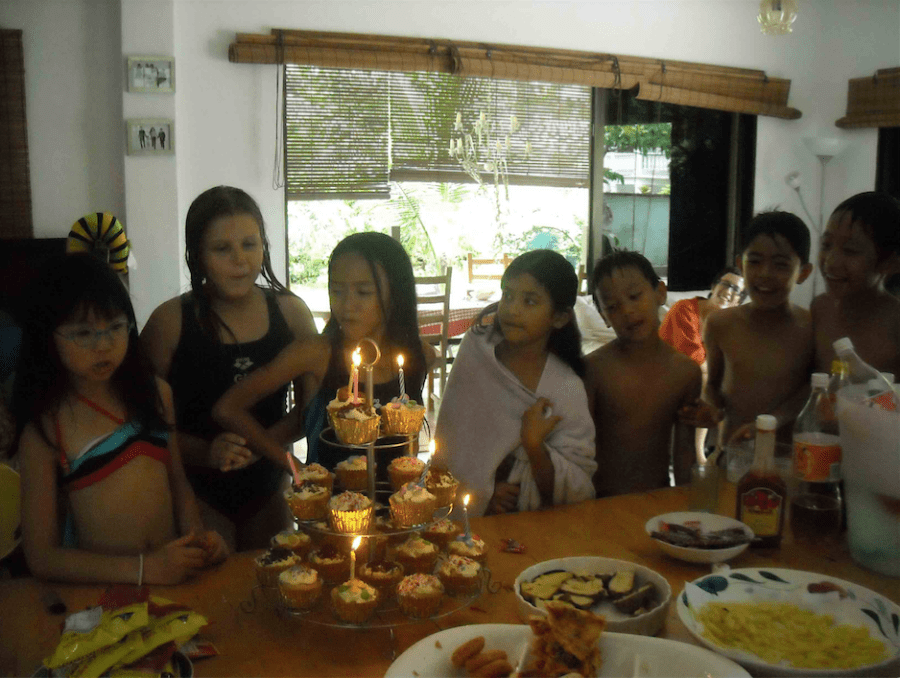
A Birthdays is that one day that a person (whatever the age) is supposed to be king or queen for the day. It’s not about the presents or the lavishness. Far from it. These are some snaps from my daughter’s birthday party ten years ago. It took place in our garden and the chief organisers were my older daughter and her boyfriend. As it was in our house rather than some fancy venue, we invited every child in the class. They played simple traditional games – no paid entertainer apart from the two teenagers who worked very hard to organise the special day.

Screen Shot 2017-05-02 at 7.14.48 AM.png

Screen Shot 2017-05-02 at 7.18.32 AM.png

Screen Shot 2017-05-02 at 7.20.44 AM.png

Here’s a simple party game: the children have to get on this day bed all together and burst the balloons by squashing them.

Screen Shot 2017-05-02 at 7.31.19 AM

Georgina recently turned 17 and she requested a quiet day (perhaps she has had too much birthday party fun all her life!). So she spent a quiet day which began with church the night before, the whole day with her boyfriend revising for their exams and a small family dinner in the evening in an Italian restaurant. As it was a Sunday night, she refused a glass of wine!!!!
But I wasn’t going to let her off so lightly. The following day, she was surprised in class with this ‘chemistry cake’ – BIG SMILE. Let’s make birthdays special, folks! ❤

Screen Shot 2017-05-02 at 7.32.22 AM.png

Screen Shot 2017-05-02 at 7.32.13 AM.png

A heart-warming tale about my family

My mother-in-law was married for over fifty years, and when her husband died, she was bereft. My son Jack took a month off school and moved in with her in her house in South East London.

Mum valiantly tried to pick her life up. She remained cheerful for her family, keeping up a brave front. Then her dog died.

It seemed that she had no more reason to get out every morning for a long walk in the park. It wasn’t sensible to get another dog, as she was over 80 years old by then, so she went to the pet shelter and got herself an old black cat.

The cat, Laika, was (is) a nasty cat. Laika never came whenever Mum called her, and she often scratched Mum when Mum was slow with her food. She fought with the neighborhood cats and killed birds and squirrels. She wrecked the sofa with her vicious claws, though Mum bought her a scratching post.

But Mum never gave up on Laika.

We had suggested many times to her to return Laika to the pet shelter and maybe get a tamer cat.

“No,” Mum said. “She reminded me of my old cat Satan.” Yeah, the name does say something, doesn’t it?

“And we don’t get rid of someone just because she is too much trouble, do we?” Mum said defiantly. “That wasn’t how I was brought up.”

Sadly, Mum sank into dementia very quickly, to the extent that she was unable to care for herself, let alone Laika. My daughter Kat, honouring her grandmother’s words, refused to send Laika back to the pet shelter.

Kat took Laika home to London, to the flat she shared with her brother, Jack. They both worked all day, and it was not unusual for them to come home to a wrecked home. Being used to living in a house with access to a beautiful garden, Laika did not like being locked up in a London flat.

In summer, when we were home, we would take Laika with us to our other son’s house in Southampton. “Laika’s summer holidays!” We would say cheerfully, despite the fact that it typically took us a lot of time and trickery to get her into the cat traveling box.

Then Kat and Jack moved to a garden flat. They thought Laika liked it better at the new place, but one day, Laika ran away from home.

Jack and Kat’s boyfriend roamed the neighborhood looking for Laika. Late at night, Kat’s boyfriend came home triumphantly, carrying Laika in his arms.

“That’s not Laika,” Kat said immediately.

“How do you know?” He asked.

“Well, for starters, she hasn’t scratched you.”

It wasn’t Laika after all. They kept an eye out for her, sad that perhaps she had been run over.

Then one day, Laika came back. She was wearing a collar! It meant that someone had given her a home! She looked well-fed and fine.

I think Kat was secretly relieved.

Laika still comes to visit Kat and Jack – she leaves shit on their doorstep each time she visits, as if to stick her finger up at the Perry family who kidnapped her from her happy house in the suburbs to live in a small flat in London.

Our last photo of Laika at the end of summer, ready for transportation back to London from her summer house in Southampton:

IMG_4701.JPG