No Such Thing As A Bad Mother

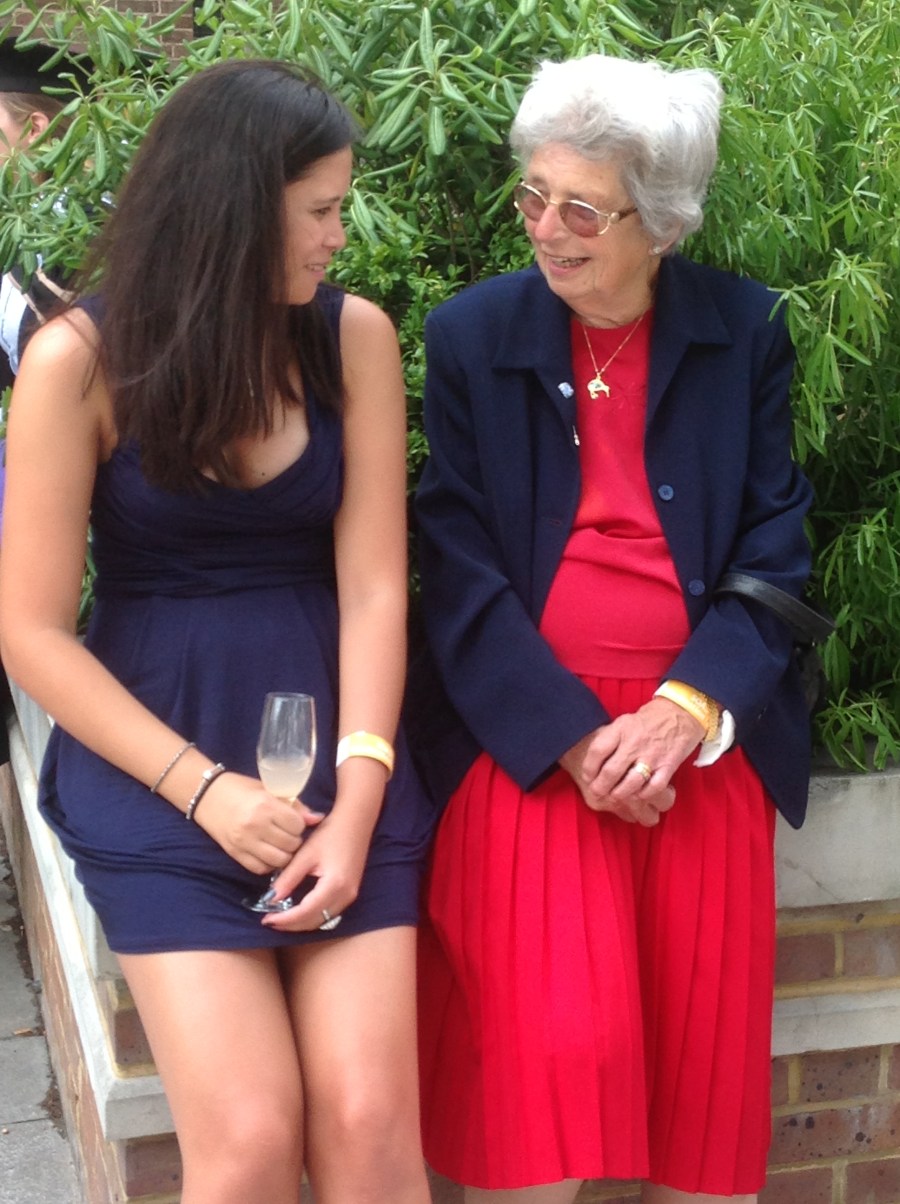
I watched my mum bustling round her kitchen, a contented beam on her face, happiness radiating from her. She is in her element, here in this sunny kitchen somewhere in leafy Hampshire. This is her whole world – for her, the world beyond these walls means very little. She never had any desire to conquer the world, to achieve or to leave a mark other than quietly and gently through her children and grandchildren. She had no ambition beyond us. She had always been like this.

Yet she was the brightest star in her village. She was the first girl to go to university (Aberystwyth) and whilst at university, she was in the rowing team, winning medals. She even kicked the bar on several occasions (as per the tradition at her university).

When the children came, that all stopped immediately. My mum had a sweet little job teaching Biology in a local school, but it had always been clear that her focus was her children. She devoted her every waking hour to us, and did her mothering duties with a big smile even when under duress.

I was 16 when I first fell pregnant (accidentally, of course), and again at 20.  I didn’t want my first two children.

“Daddy, I have changed my mind,” I cried big tears when I was being wheeled into the delivery room. “I don’t want a baby!”

In the beginning, I never felt that I was a good mother. In fact, I have always believed that I was a bad mother, blaming my youth for my shortcomings.  I was saddled with babies at a very young age, at a time when my peers were out there in the world doing exciting things. I, in the meantime, was stuck at home with squalling brats, and the father of my child was a penniless man who lived an itinerant life.

We were both so not ready to be parents.  The day I told him that I was carrying his child, he was about to set off for the British Olympics Sailing Trials. He wasn’t expecting to be daddy, not for a long while at least. Moreover, I was just the one-night stand on a careless, enchanted summer evening.

The animal passion we had for each other counted for little when it came to raising children or building a home. Our differences as people were beginning to show when we had to throw our lot in together.  I was ambitious and hyper, whilst he was laidback and chilled. I was permanently stressed and exhausted as we had more babies whilst I was at university, hundreds of miles from my soothing south coast life in my parents’ peaceful home. Life was a flurry of dropping the babies off to the university nursery, then lectures, then burning the midnight oil completing assignments and studying for exams.

Though there was lots of love in our household, it was chaotic, messy and haphazard. The children were not always cleanly dressed (in summer months, they ran round naked in their wellies) and meals were not always on time. I was often impatient with them, as my nerves were frayed from university studies, household chores and the stress of raising young children without practical help and financial support.

Later, when I started working (out of necessity), I was occasionally an absent mum. The conflict raging within me was savage. On the one hand, I wanted to stay at home with my babies; on the other hand, I wanted to run towards the exciting opportunities with my arms outstretched. To live and to experience so that I live a life of no regrets was my mantra. I wanted to experience more than the confines of my family life.

And so, on my precious older daughter’s ninth birthday, I was on the plane circling over Heathrow, not being able to land because of the snow. I arrived home the day after her birthday, and I disappeared for weeks on end to the Occupied Territories, armed with the mistaken belief that I was saving lives. I undertook a 1000km Sahara trek for a dare.

My children had a successful mother who often made it into newspapers and glossy magazines. But inside, for the longest period of time, I believed that I was a bad mother, and in my thirties, when the real value of life dawned upon me, I scrabbled frantically to rearrange my priorities so that my children became the centre of my universe. Our family life took a dramatic turn for the better, when I realised that career success, exciting adventures and even friends could not warm your heart the way only your children and the father of your children can. Only they can put their arms round you, and transform a mediocre day into one worth being alive for, and that the love is constant, eternal.

At 46, I am contemplating another two children. I know my future children will have a different mother than the seventeen year old one that I had been:  I no longer have the pressures to live my life, to prove myself, to achieve my ambitions and to earn money. I had done all that.

I mentioned this to my mother.  “I will be a good mum this time, Ma, like you.”

 She stopped bustling. She stopped smiling. She fixed me with a strong stare.  “Darling, you have never been a bad mother. There is no such thing as a bad mother. All women give birth wanting to do their best for their children. We just have different ways, that’s all. Now don’t go beating yourself up for what you did or did not do in the past. Good or bad is subjective, but love is absolute.”

 Yes, Ma, I loved my children more than life itself, even when I did not know how to express it. And I love you, my wise mother, for always healing the cuts in my heart.
The Journey Home

My parents do not come up to London anymore, though it is  less than 90 minutes from where they live. They used to have a vibrant life here. My mother would always be there on the first day of the Chelsea Flower Show with her big hat on, and went to museums, galleries and operas. We had a big party at the Serpentine Gallery for my children’s christenings. We did so much here, once upon a time. Now, my parents rarely venture out of the sleepy little Hampshire town that they call home. I think the bustle and the fast-paced city life became too much for them.

I couldn’t lure them up to London, I had to go home.

Home is Portsmouth, where I spent some of the happiest years of my life. I have such a huge emotional investment in this town, yet most my life is in London. There always seem to be 101 things I had to do that are London-based, such as buy a hat, go to the Passport office, meet up with a friend, medical check-up, family business. It does seem like a chore, an obligation, to make the trek home.

It shouldn’t be. It should never be.

When the train pulled into Portsmouth Harbour, my parents were standing there on the platform. They stood there side by side, married for 52 years against the odds, radiant smiles on their faces. It hit me with a sudden pang that they have aged in the last few years: my father still carries his proud bearing but his ramrod-straight back is now stooped and my mother is visibly slower on her feet. But it didn’t seem that long ago that my mother was taking my many children to the town square, indulging them, running after them energetically.

And it didn’t seem all that long ago, too, that she drove all the way to Chichester to fetch my younger brother and I home at some ungodly hour of the morning, after we had too much to drink. That night, as we hovered on the cusp of alcoholic poisoning, my mother sat up with us, patiently urging us to drink water all night long, holding our heads up when we vomited into the washing up bowl that she unflinchingly held. Oh Mummy, how you proved your love that night!

And again in 2001, when I received the shock diagnosis that I had 2nd/3rd stage cervical cancer. My first impulse, which I followed, was to run straight home. I left my children’s father and took my children home to this sleepy little town that I couldn’t wait to leave when I was a restless teen. My children and I moved into a house 100 metres from my parents’ home. Here, my family nursed me back to health, and paradoxically, it was some of the most precious times for us, despite my illness. During that time, my mother nurtured me once more with her imitable devotion. My father and I found time to have deep philosophical discussions, which were the missing pieces in my early life. My brother looked in on me every evening after work. My nephew and niece became my own children, and they rallied round my children. My new best friends were Mrs. Tomlinson and Mrs. Foster, both in their eighties then, who provided the warm, gentle company I so badly needed then. I opted out of ‘real’ life in London to come back here, only for me to question myself, what is real life? A glittering existence in the exciting capital, peopled by folks who make the news, paying exorbitant prices for a pint of milk, or this sweet and unchanging life in this hamlet, my hometown, where my parents still live? Where will I choose to be, as the years close in on me? Would I wish to spend my final years at dinner parties with friends, or would I go for long walks along the seafront, remembering the days when I was still young, when my parents were still here?

I think of the sunny kitchen in my mum’s house, where I used to sit at the table doing my homework whilst she cooked with a big smile always on her face. How much she loved us, and food was her way of showing her love. I know she would have been cooking all morning, anticipating my return.

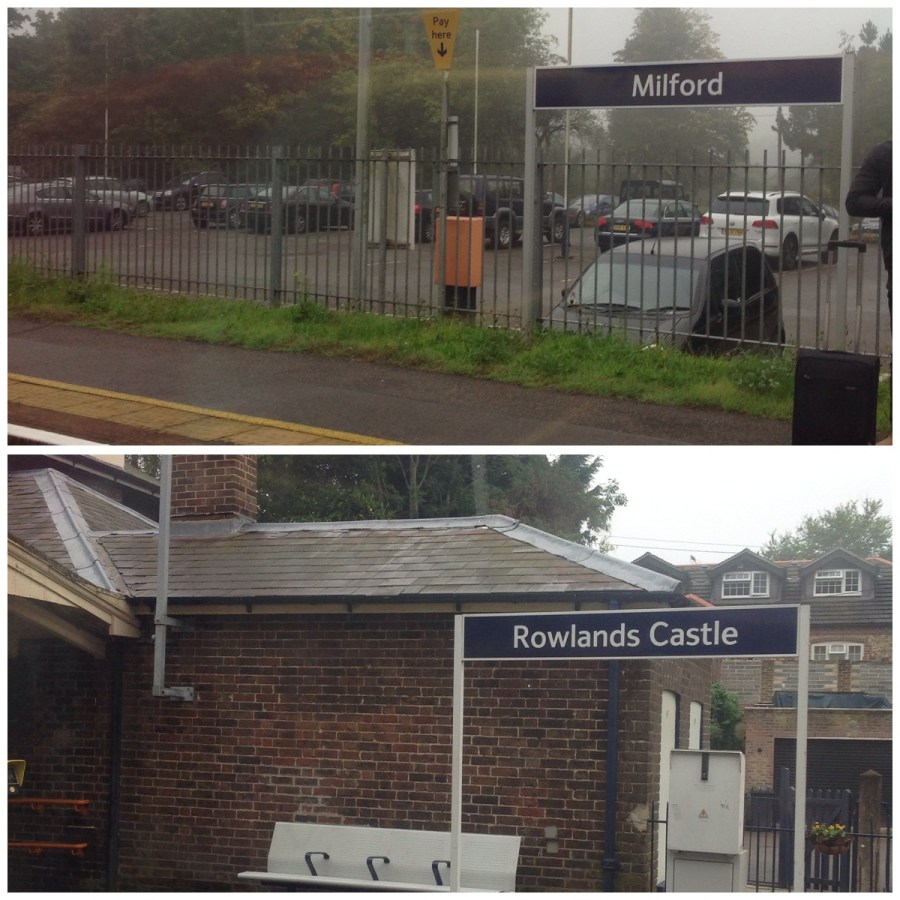
As my train slowly trundled past the stations on the way home, I felt a strong sense of homecoming. All my early life, my roots, came back to me, most notably, taking the train to school everyday with my younger brother.

“Darling,” my father said formally, but there is such a wealth of love in that one word.

“Oh, look at you!” My mum enthused, enveloping me into her arms, the only place I have ever felt truly safe in. “You don’t look a day older than when you were a schoolgirl!”

I have not been home for four months, and that is four months too long. So please join me in my intention to spend more time with parents. They won’t be here forever.home


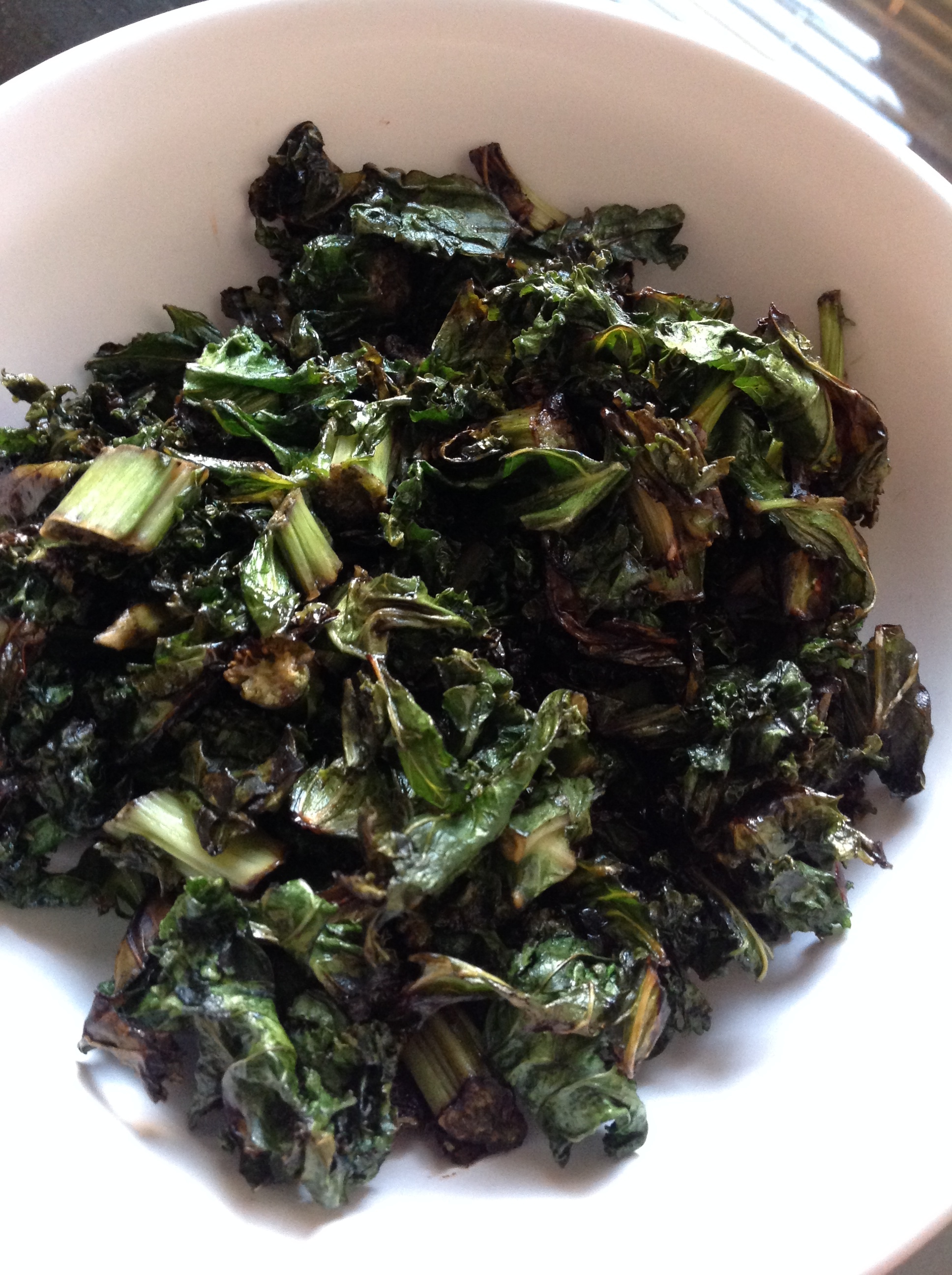
Superfood Snack – Kale Scratchings

kale

At this time of the year, kale (Brassica oleracea Acephala Group) is plentiful and cheap in England. Until the end of the Middle Ages, kale was one of the most common green vegetables in all of Europe. It is a relative of the wild cabbage, and my Welsh mother said it is used to feed cattle.  But it is also a superfood – only 3 tablespoons of this dark green leafy veg make up one fifth of your 5-a-day requirement.

Here’s my simple and quick recipe to get children and adults munching kale:

INGREDIENTS:
1 bag kale
5 tablespoons olive oil
2 teaspoon Braggs Liquid Aminos
Chili flakes
Sea salt

Preheat the oven to 100 deg. You want the oven to be on lowest possible heat to slow-roast the kale, so that it gets crispy and loses none of its nutrients.

Combine the olive oil, Braggs, chilli flakes and sea salt. Pour it into the bag containing the kale and give it a good shake. When the kale is evenly coated, pour onto a baking tray. Slow-roast for an hour, or until it’s crispy.

kale 2

My Much-Loved Mother-in-Law

I had one last thing to do in London before going home to my parents in Hampshire, and that one thing is to visit my mother-in-law. My MiL is in the grips of Alzheimer’s disease. She does not recognise me. She lives in a world where her parents are still very much alive, where she still goes to work. I no longer exist in her world.

Oh, Mum! I don’t have a husband but I have a much-loved MiL. Mum brought me up, because I joined her family when I was a spoilt, screwed-up teenager. She wasn’t going to put up with my nonsense, the way my family had. Her son and I used to sneak into bed in the afternoons, and she would knock hard on the door. “Get up, the pair of you,” she would holler. “Why are you in bed? You are not sick!”

We fought. Because I was lazy and spoilt and did not know the value of money that she had to work so hard for, firstly as a cleaner and then as an office clerk for London Electricity Board. She scrimped and saved all her life, whilst I did the opposite. My parents’ pleasure principle did not sit well with her.

She showed me how to clean the shower cubicle. With a toothbrush. And told me that I have to clean behind refrigerators. “Mrs. Lumkin does that at home,” I told her haughtily. “Surely you can get someone in to do this?”

We fought over sausages. I refused to let my children eat the cheap ones she bought from the local butcher. “Mum, 99p for six! What rubbish goes in there!” I would exclaim. ‘No way will I feed my kids that!”

“Nothing wrong with my kids,” she would retort heatedly. “And they were brought up on these sausages.”

“We’ll bring our own food for the kids when we visit your parents,” I said firmly to the poor man caught in the middle between his warring mother and the mother of his children.

“How do those poor children of yours ever survive?” my MiL would say, half in disgust.

There were always faults she could find with my parenting. Babies being breastfed on demand, no set mealtimes, clothes smelling of mildew, late potty training, kids jumping on the bed, parents sneaking off to bed in the afternoon, oh you name it, and you can bet your last penny that I had transgressed.

I was the daughter-in-law from hell, but Mum never gave up on me. She taught me to sew and knit with varying degree of success. She taught me to cook and clean, of course. In the process, she learned how to love me. We grew especially close despite the tempestuous nature of our relationship when we had to move in with the in-laws whilst saving up for the deposit for our first house.

“Oh, Jack, you didn’t have to go through all this trouble for me!” she would exclaim each time I brought her fresh flowers or a little cake that I had baked. She never wanted to trouble anyone. She was a carer for her mother who went blind when she was 11. Her father died when she was still in her teens. Mum never had anyone looking after her. She never had any frivolities. I loved treating her and see the light in her eyes  miraculously switching on.

“Oh, you didn’t have to!” she would exclaim each time, with my every little gesture.

Over the years, as the children grew, she could see that my extravagances and strange values had not marred her grandchildren at all. My children are still ‘salt of the earth’, equally happy in a rough working class neighbourhood as they were in Knightsbridge or the country. My second son especially did them proud. This boy had always been close to his father’s roots: during his school summer holidays, he would come home to this working class neighbourhood and worked as a furniture removals man. I know that through this son of mine, his father’s race continues. And through my youngest child Georgina, who fights in the same fight club in Woolwich that her grandfather had all those years ago.

My MiL used to come and watch G fight. She would take the front row seat. I could see the dreaminess in her eyes, as she reminisced about her late husband fighting in this same club.

“Nanny, I have beaten up all the English boys,” G would say proudly, sliding her little hand into her grandmother’s.

Children are indeed a wonder, because they are the source of my MiL’s love for me, and mine for her. I have a lot to be thankful for. My children’s strong Spanish genes, for example, and their physical beauty. The tough love my MiL had given me, that was the making of me. My strong relationship with God. A sense of belonging to the bedrock of England. My love for her grows forevermore.

Today, I hugged her close, glad I made this journey. ‘I had to,” I whispered. “Because you are my Mum.”

I hope somewhere, deep within her Alzheimer’s diminished brain, she knows just how much I needed to make this journey to tell her I love her.

Of Mothers and Sexuality

My 81 year old aunt took me aside at lunch one fine day, and said to me firmly, “Girl, you need to update your boudoir skills, you have been with the same bedfellow for far too long. It gets stagnant, you know?”

I opened and shut my mouth like a goldfish, for want of something to say. Bedroom advice from an octogenarian? Golly, am I such a sad case?

But she was right. I was becoming complacent, or to self-justify, ‘comfortable’. Lovemaking was still active and regular, but nonetheless comfortable. I am 46 and have had 5 children. A quick mental run through my lingerie drawer revealed sports bras, an assortment of bikinis, cotton blacks and the occasional Santa-inspired ones from Christmas crackers. Fortunately, there are no granny-pants there yet. And no boudoir wear.

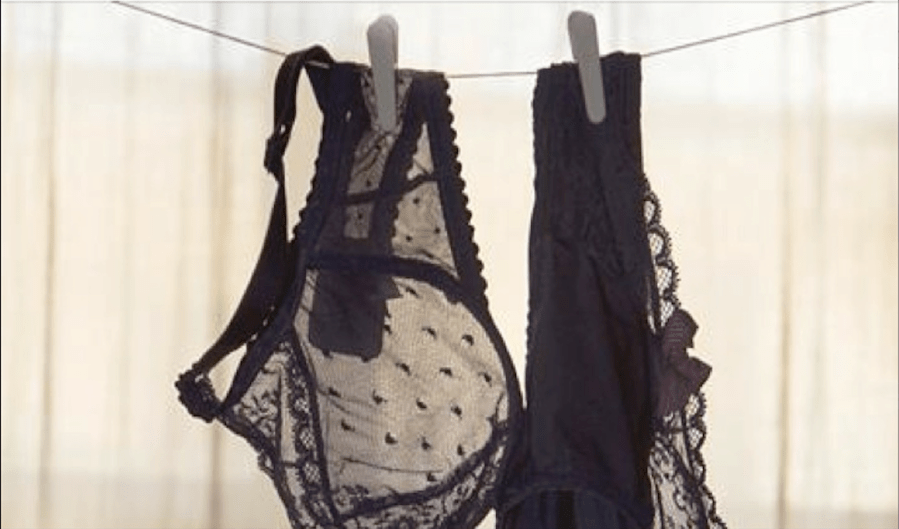
Being the obedient sort of person, I decided to obey my aunt. On a recent trip to the Czech Republic, I splurged out on some naughty, classy undies made of Bohemian lace. I still have not worked out the conversion rate, but my purchases ran to four figures, and since it was not Thai or Indonesian paper money I was dealing with, I know the credit card bill will be severe. And the worse thing is, I know too that I would wreck my lavish purchases in a space of a few washes – I still have not mastered the art of laundry, and the washing machine always seems to get the better of me.

But get those frivolities I must, though they are completely out of sync with my life and who I am now.

Because those little pieces of Bohemian lace remind me of my younger self. My younger self would spend my hard-earned cash on Janet Reger and Agent Provocateur. My children’s father was perplexed why he was allowed to rip some knickers off in the heat of passion, whilst others were strictly on a see-no-touch basis. He could never figure labels out.

Oh, I remember the delicious guilt, knowing that in the little bag contained two tiny pairs of lace that cost as much as one riding class at the Hyde Park Barracks for my daughter. And of course, I remember the sensual pleasure of wearing them. It was like a naughty secret.

Like marriage, sex in a long-term relationship needs investment. In an ideal world, love will see you bound to each other for life, even if sex ceases to be exciting after a while, because after a certain age, companionship trumps over a roll in the sack. You look for the connection and the comfort, squeezed in between children’s homework and 6am football practices, and forsake the occasion and the drama. It is beautiful, deep and reassuring, but the other dimension is missing, probably lost forever.

And indeed, over the years, as I aged (and in particular, after suffering from cervical cancer), my mindset shifted towards becoming healthy and functional instead of naughty, sexual, a little irresponsible, coquettish. I am proud of my body, but it is almost in a clinical way. I glorify my taut muscles and toned skin, but I forget that once, there was a playful, sexual being within me. The teenager who seduced the man who would become the father of her children by inviting him to a party that never was, and who wore delicate French lace. In black. Oh, the fun and headiness!  Clothes, or underwear in this case, does maketh one.

It took an 81 year old to remind me of that. Thank you, Auntie.

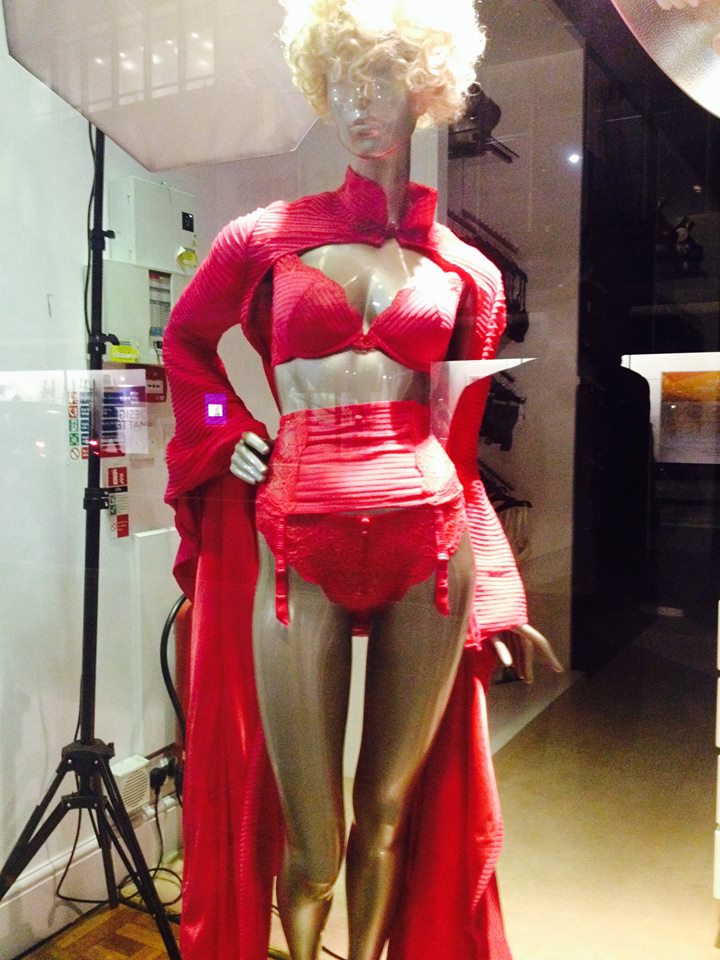
Undies

Window display at Rigby & Peller, holder of the Royal Warrant. I wonder if the Queen wears this?

The Importance of Family Support

On the second day after my second son was born, post-natal depression hit me. I was sitting in the bath at home, door locked, and Kit was screaming at the top of his lungs. My mother-in-law had come down from London to help, and I could hear her saying to OAB, “She’s not producing enough milk, the poor little soul is hungry, bless him.” I looked down at my leaky breasts and still-huge belly, and felt a right failure. All my friends were at University; I had to take another year out. We lived in a little house with no central heating except those run by the 50p meter, and my bedroom in my parents’ house is larger than this whole sodding house. I was stuck here with a penniless man, his disapproving mother and his screaming brat. I felt like my whole life was over.

I got out of the bath, got dressed, and announced with deadly calm to OAB and my MiL: “I am leaving.”

He was shocked and tried to stop me. His mother, in her infinite wisdom, said, “Let the silly girl go.”

The silly girl went straight home like a bat out of hell to her parents.
Obviously, I went back to the penniless man and his screaming brat. That was 25 years ago. I left him many times since, to move back to my parents’ house, albeit for a few hours, a few days, and even a few weeks. And here’s the thing: no matter how old we are, there is always traces of the silly girl/silly boy in all of us. Who do you take your drama, heartbreak, depression and neediness out on? Your long-suffering partner or do you burden outsiders with your woes? Or do you just bottle those up?

I am blessed that I never had to go beyond my family to seek help. I don’t expect the father of my children to be the solver for all my problems; after all, I am not his child and he has enough children to deal with. I don’t expect my friends to accommodate my occasional neediness; after all, they all have their own lives. There is nothing more unattractive than a needy, desperate clingy grown-up. Fortunately, I have brothers to deal with that unattractive side of me, that I bet you have too, hidden somewhere in your grown-up self.

Here’s my article on family closeness for Huffington Post: http://www.huffingtonpost.co.uk/jacqueline-koay/six-ways-of-growing-sibli_b_5871482.html

If you need someone to talk through your problems (don’t go through it alone), these are the people who are there for you:

The Samaritans

Pre and Post Natal Depression Support

Miscarriage Support


Anorexia Kills

I received the sad news that my friend’s 16 year old daughter died of anorexia-related complications. She was 16, pretty, lots to live for, and certainly not fat at all.

Yet she believed she was. And media tells us that women have to be thin to be successful/beautiful. Giorgio Armani used anorexic-looking models this year, for example, the so-called heroin-chic. There are many websites that promote this dangerous propaganda too.

One of G’s friend in her previous school was hospitalized for eating disorders. A 13 year old should not be worried about being fat. Some of the bitchy girls commented behind G’s back that she is fat.

But does G care? Heck, no.

I post a lot about her because one of the things I want to propagate is “healthy and strong is beautiful”. Like her million dollar legs. They are not thin legs, but do you want a thin pair over G’s powerful pair? Girls should be taught to feel empowered by their femininity, not enslaved.

I get infuriated when people compliment me on my ‘slimness’ (especially in Asia). No, I don’t aim to be slim. In certain stages of my life, I was unfortunately slim because I was bereaved, or I was going through chemo, or I could not eat. There is nothing to celebrate, yet that farking word “slim” is so celebrated in Asia. Please think, and use that word responsibly. Don’t propagate the slim culture, because at best, it will give girls stupid useless targets to aim for; at worse, it kills.

Beauty is an inner thing.

Six Ways of Growing Sibling Closeness

In the past week, I have had more emotional turmoil than I did in the last ten years of my life. But it took just one phone call, and my big brother Huw was there. In fact, he had always been there, silent and watchful, looking out for me.

“Fix you,” he would say. Like in the Coldplay song.

Even though we live in different continents now, the bond between us never snagged. I am closer to him than I am to the father of my children, whom I have slept with for almost three decades.

“Everything OK at home?” Huw would ask whenever we spoke. At family gatherings, he would try to get me on my own to ask those pressing questions. “Walk to the shop with me,” he would say. ‘We need to get more milk.”

Funnily enough, I have always thought I am closer to my younger brother Al, whom I used to take the train to school with everyday. Al and I fought like cats and dogs. Huw, on the other hand, had always been the big brother, serious and stoic, to be respected but not played with. Though he is only a year older than I, it had always felt as if he was much older and much more sorted out.

I could tell him anything, even my deepest secrets. I thought I had none, until I unburden myself to Huw. If I told anybody else about the darkness that lurks in my heart, they might stop loving me. But never Huw.

“History,” Huw would say. “We have history.”

And so it dawned upon me again, just how important sibling closeness is. You might have differences and angsts where your siblings are concerned, but at the end of the day, you rise from the same bedrock. When the chips are down and the whole world is against you, it is often your siblings that you can count on to shore you up. Thus, I am very thankful that my children enjoy the same closeness with each other that I enjoy with both my brothers. In fact, their father and I often bemoan the fact that they are closer to each other – with their first loyalties to each other – than they are to us, their parents. They have a shorthand way of speaking to each other, so that family news gets disseminated efficiently and discussed thoroughly, and decisions come to. One voice will speak on behalf of others. Even if there are disagreements within the group, they will speak with one voice.

This sibling cohesion made it difficult for their father and I to enforce anything against their will, because it had always been a collective will. Five voices speaking as one against “the management” aka the parents, either pleading for clemency on behalf of a wrongdoer, vetoing parental plans or pushing forward their agenda. When it comes to our kids, we could never divide and rule. Though that made it challenging to parent them especially in their teenage years, we are glad and relieved that they have this closeness with each other. Because we the parents will not be here forever to support, guide and comfort them. It is good that they have each other to turn to in times of need, and goodness knows, that need could hit anytime, as I have found out in the last week.

My six ways of growing sibling closeness:

 1. Model it first

Children learn best by copying. If you are close to your siblings, your children would naturally be (even if they fight like cats and dogs). It makes sense, because if your children can see the benefits you derive from your close relationship, they would want a piece of the action, too. Having sold this to them on emotional and psychological grounds, you can move on to the implementation as outlined in the next steps:


 2. Make time for family

It is a fallacy that if you live in the same house, you have a close relationship. I have seen sad incidences where parents and children are sitting round the table in a restaurant, each engrossed in their iPads and smart phones, rather than have conversations with each other. So set the first rule: talk to each other and make mealtimes family times.


3. Teach your children about your family history

Children love stories, so use this opportunity of telling them about your parents, grandparents, siblings, cousins. Give them a sense of belonging. Create that glue that binds the family together.


4. Teach your children to love each other

Many parents have the mistaken belief that because of biology, siblings will automatically love each other. This couldn’t be further than the truth. Children need to be taught love, and also taught to express that love so that it becomes richness in their lives. Simple ways to teach them to love each other:

If one sibling has done something selfless for the other, highlight that (in a casual way);

Encourage them to do nice things for each other;

Play team games where siblings are in the same team versus the parents;

Give them presents that they have to share with each other;

Encourage them to spend time together;

Devise a system where the older one helps his/her younger siblings as part of household chores that all children have to do (but do not overburden the older child with too much).


 5. Create the environment

Love does not grow easily in hostile environments. Have lots of love and laughter in the house. A golden rule of my mum’s is never go to bed angry with each other. From personal experience, I discovered that having fresh flowers in the house helps with creating a happy environment. These can be flowers that you and your children pick on your walks.


 6. Enjoy each other

There is a lot to be said about having good times together. Even when we struggled in the early days as cash-strapped young parents, we endeavored to put time aside to enjoy each other.   The weekends were for the parks in summer and free indoor events in winter (the museums in London were free after 5pm). We took long road trips to visit grandparents, we collected coupons from newspapers for free trips and we read bedtime stories every night. From enjoyment comes warmth and open hearts.


Note: if your child is an only child, use this model with their cousins.

 Song: Fix You by Coldplay

Raising self-sufficient kids

My mother always made excuses for me to absolve me from doing chores and even from thinking.  She always had the perfect excuse: I had homework to do, I was tired, it was faster if she did it herself anyway and a whole host of other excuses, when it came to washing up, taking the rubbish out, cleaning my own room, right down to fetching myself a cup of tea. In her simple, generous and selfless mind, I always had other more important things to do.  I was going to be an important person in the future, destined for greater things, and thus, my every moment should not be wasted on menial tasks and mundane things.

It may sound idyllic, but my mother had robbed me of learning opportunities. I never learned to be self-sufficient. All I needed to do was use my voice.

The career paths I had chosen did not help me either. From my twenties onwards (apart from my short PhD years), I had nurses, secretaries and maids running at my every bidding. I always had people to file things away, sweep up my crumbs, wash up after me, run my errands, open jars and load syringes. As I grew older, I morphed from a pampered kid into an arrogant adult who hid her insufficiencies behind her successes. My excuse – nay, make that self-justification – was, I was earning a six figure salary, why should I know how to change car tyres? I needed hired help, to free me to do the ‘more important’ things in life, such as playing with my children, cooking wholesome food, reading, partying.  That was all good at the headline level, but filter that down to day-to-day living, it became a crippling shortcoming. Examples: because I no longer have a personal assistant, I have missed the same flight three times in the week, I am always going overdrawn in my accounts because I am bad at keeping track on my spendings, I do not know how to operate household appliances, I leave my kitchen mess for others to tidy up, I can never find my own things … need I go on?

In the beginning, I tried on this ruling class mentality with my children’s father, but got nowhere. He was the only one who was not prepared to jump over hoops at my bidding. Indeed, I often credit him for teaching me life’s lessons, including one in self-sufficiency.

Kicking and screaming, he had dragged me into the real world. I had learned how to change fuses and clean our house (on the first night I slept over! I am still reeling with shock about it). But almost thirty years of unsympathetic lessons from this taskmaster, I still have the occasional bad habit, like handing a banana on auto-pilot for him to peel.

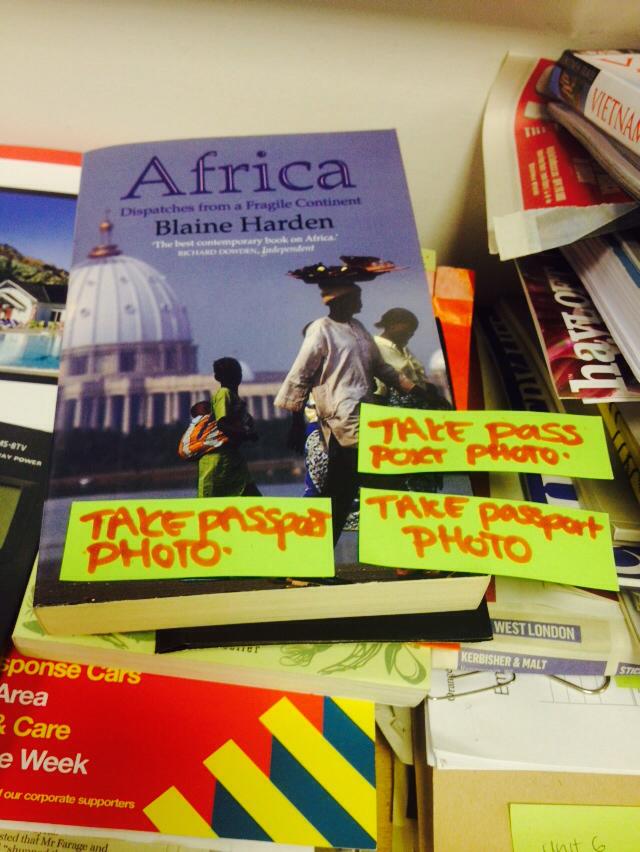
I arrived home in England and all the old-time bad habits surfaced once more. My passport. It was out of date. Can you imagine, I managed to get through immigration with an out-of-date passport, but fortunately, Border Control in the UK side allowed me in. My family’s office scrambled into action.  The appropriate forms were miraculously pushed into my hands, appointment for Priority Service made, proxy letter written and printed (for someone to go and get my new passport), directions to the local photographer given … all I had to do is walk the 200metres to the photo shop.

But see the post-it stickers? Yes, I am that incapable.

And having learned from the previous generation’s mistake, my girls were brought up very differently. Oh yes, their father made sure of that.  Despite her delicacy, Kat could change car tyres and U-tubes (kitchen sink). Despite her lack of domesticity, G could fix herself a nutritious meal and self-medicate (at 14!). And even though she spends a lot of time on the football field, she stays on top of her schoolwork with zero interference from us. As she often comments, “I brought myself up.” That’s what happens when you have a mother with a disability in the real-life department.

10626604_430910057049659_1422669222916429186_n

Education: What Are We Paying For?

My youngest child attends the British International School, Phuket. I must admit, I gulped a bit when I paid the school fees. But so far, I am fine with what I am paying for. It costs a lot to run this little piece of Great Britain in the tropical paradise of Phuket, and the money has to come from somewhere. Simple economics. It makes me feel better that it is a trust school, meaning that there are no greedy shareholders trying to fleece parents through turning education into a big money-spinner, putting profit before altruistic goals. My elder daughter attended a trust school as well, and yes, I did balked then when the invoices from Portsmouth High School arrived with ominous regularity.

But what exactly are we, the parents, paying for?

I had an unsuccessful academic career in private schools. I left with four mediocre ‘O’ levels instead of the standard seven that most half-wits in most half-decent non fee-paying schools can aspire to. Perhaps I was too excited about riding horses on the beach in the mornings to get rid of the hangovers obtained the night before than I was about getting the grades. I doodled during prep, dreamed about flying hovercrafts, greasy food at Trevor’s Caff and Snakebites at Smugglers’ Inn.

I applied to Havant Sixth Form College because I did not have that many options. The then Principal decided to give me a chance, despite my dismal ‘O’ level grades. And so I began my ‘A’ levels in this non fee-paying school.

I succeeded.

In the second year of my ‘A’ levels, I received an unconditional offer from Southampton, my home university, to read Medicine. I also received an offer from Cambridge.

Thus I must state the obvious: Havant Sixth Form College was the making of me. Somehow, this little school had everything just right. I will attempt to list down what I think the key success factors were:

(1) A proactive and ‘real’ careers guidance department
Secondary students need personal guidance, because the adult world with its seemingly infinite number of choices is a baffling place. Moreover, how could one possibly know at 17 what one will be at 27, 37, 47, 57? Throw in parental pressure and false representations from the media, and the poor students are lost in the uncharted waters.

The careers guidance department at Havant worked well for its students, because it was located on the corridor that all students had to walk past at some stage of the day. There were big posters to attract the eye, and over-zealous staff were always on the quick to pull unsuspecting students in.

Even the teachers got proactively involved. Mr. Jim Crow, in my case. I had a lot to thank (and blame) him for. He got me work experience at St Mary’s Hospital. I thought it was for a week when I signed up, but it turned out to be longer than I feared. For two days a week for a whole year, I had to show up at the hospital to do menial jobs, get insulted by patients and run foul of the matron. I vomited on my first day. Straight into the laundry basket. Things got progressively worse. I complained to Mr. Crow and told him that I no longer wanted to be a doctor. I wanted to study nuclear physics instead and be an astronaut. I could still remember his moustache twitching in amusement as he admonished me with a straight face.

But my work experience meant that I leap-frogged past the dreamers and fantasists and predicted grade A swots. Because I proved that I could hack working as an unpaid lackey in a busy hospital for one whole year. If members of the selection committee at Southampton University were privy to the tearful rants I had with Mr. Crow, life could have been very different for me indeed.

(2) Useful subjects
I did Mathematics, Chemistry and Biology. I loved Mathematics with Mrs. Balthazar because I found Mathematics easy; I enjoyed Chemistry with Mr. Haskins because he was not fazed out when we exploded things in the lab (I think he was secretly a bigger pyromaniac than all of us put together); I tolerated Biology with Mrs. Woods because she was sweet.

But I had to do Typing. I mean, come on! Mrs. Jean Bushby with her stiff grey helmet for hair took no hostages. She shot from the hip. Fearfully, I learned to type.

It served me well when I went up to Oxford and had copious amount of data to process. And hey, I have written four books to date without the help of any professional typist.

(3) Real people
There was a large population of ex private school students like my brother and I. There was also a big group of students who came from state school backgrounds. Folks who lived in council estates, who wanted to do well, and children of liberals who did not subscribe to private school elitism. It wasn’t all rich kids, but a mix that worked well, not only academically but preparation for life in the real world.
I had a fabulous two years at Havant. Among some of my most precious memories is taking the train to school every morning with my brother Al. There was always enough going on in school to occupy us, or we would hang out either in the town centre or on the beach near my house. Yes, we drank and partied, but never with the frenetic debauchery of my private school years. I skipped school often (for good reasons), and my three A level teachers helped, rather than hindered, my progress.

It is a testament to their abilities as teachers and to the school for its ethos that I managed to do passably well for my A levels, despite sleeping on the beach at the end of Woodgason Lane with the father of my children right up to the night before my exams.

So in conclusion, there is such a thing as free lunch, and free (high quality) education. I am the proof of that, and I guess this is why I wrote this article.

http://www.havant.ac.uk