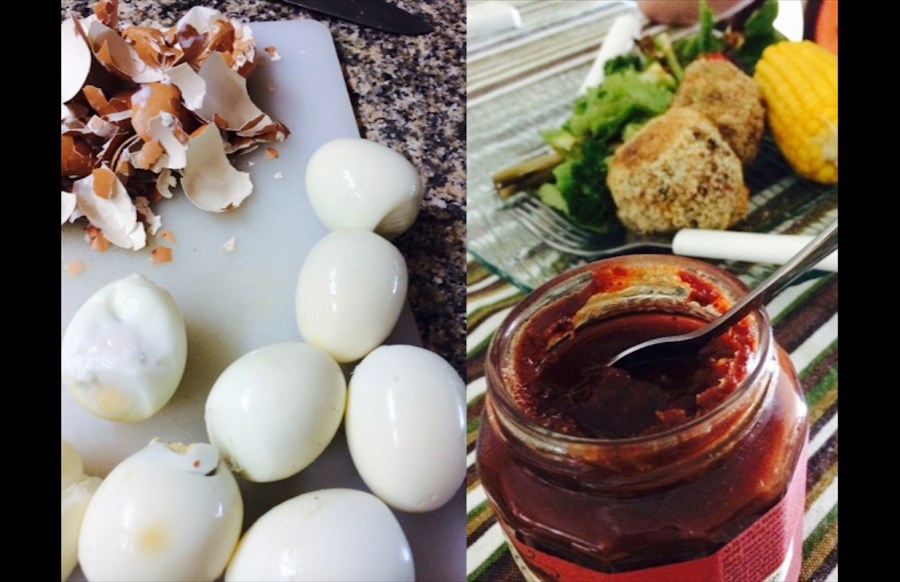
“Gratitude Eggs”

When my children were young, we used to say a little prayer of gratitude whenever we were peeling eggs.  We would say, “Thank you, Mrs. Hens, for laying these lovely eggs for us. We really appreciate it.”

Cheesy, i know, but it teaches children gratitude.  It teaches them that nothing in the world is ever truly without cost – someone somewhere had sacrificed something selflessly to give you the gift. It also teaches them not to waste food.

Scotch eggs were our favourite food. It was our kind of food because we could easily take them on picnics, and children loved making them.

Here’s my recipe for a vegetarian version.  Please don’t ask for exact measurements – part of the delight with cooking with children is exploring and experimenting, and loving the outcome. There is no perfection in nursery food, only love.

How to make these eggs:

Soak about 400g of dried organic chickpeas overnight.  Boil until soft.  Boil six eggs and peel their shells off.

Mash up the cooked chickpeas with one finely chopped onion, two cloves minced garlic, half a grated carrot and a small bunch of finely chopped coriander.  Divide into six patties.

Dust the cooled eggs in flour.  Mould the chickpeas patties around each egg. Dip in beaten egg and roll in breadcrumbs.  Bake for 20 minutes.

And enjoy 🙂

“Don’t rush me, Mummy, Daddy”

My youngest daughter Georgina could not read properly until she was eight, and fortunately, she went to a school where she was not pressured to. So we took it nice and easy. Her father read to her every night, because though she could not read, she loved stories.

We still have a whole library of her Fairies books. He would read to her every night, snuggled up in bed with his youngest child under the pink fairy duvet, reading about Ballet Fairy, Pumpkin Fairy, Horse Fairy, you name it, there was a book written about it, and we have the book.

Later, she progressed to Jacqueline Wilson, and he continued to read to her every night, about bitchy girls and teenage heartthrobs and difficult boyfriends. He read almost every single book that Jacqueline Wilson wrote, and I was touched when I went to his office two days ago to see a hardback copy of Candy Floss sitting on his bookshelf, totally out of place. It had been four years since he read the last Jacqueline Wilson to his youngest child.

Many schools demand that children must be able to read at a ridiculously young age, and parents stress over it. I don’t think it is right that children are put under needless pressure at such a young age. Reading, and learning, should be fun, pleasurable and a lifelong passion. Some critics would say that we are lucky, we have the money, thus we can afford to be cavalier about our child not being able to read until she was ready to. What if we had no money for progressive private schools, what if she had been a child in the school system that forces her to achieve awful, outdated targets?

We would simply remove her from a school and kept her at home. And no, I am not making grand but  meaningless statements here. We have lived though the difficult consequences of our choice.  In the past, in the UK, we had to remove our children a certain Catholic school because we were not married or the kids were vaccinated. It would have been easier to walk into a Registry Office to register a marriage or to walk into a doctor’s clinic to vaccinate our children.

But we have always chosen to stick to our ideologies. This is something we passionately believe in:  we are 100% committed to giving our children a joyful, carefree childhood, even though sticking to our ideologies caused difficulties.  But nonetheless, we think it is important to defend the quality of our children’s childhood – they only have one, and once lost, those years will never come back again in this lifetime.

I am not saying that early reading is bad for your child, but pressure on young children is. What I am advocating is: do not be afraid of taking the road less travelled. In taking that road, Georgina had precious years of being read to by her beloved father, a priceless legacy, because instead of hurrying her, her went with her flow. In her sweet time, she grows. Beautiful and strong, with love and joy in her heart. She had not known ugliness.

In later years, Georgina would say, “I could read since I was four. I was only pretending.”

It didn’t matter whether she could or could not read when she was four. Today, at 15, she regularly achieves high grades. Unsurprisingly, however, English Language remains one of her weaker subject, despite being a native English speaker. She still comes up with howlers.

A few months ago, as we were heading to the airport to pick her older brother Kit up, she commented, “I hope the storm stays away until the plane lands, or the turbans will get Kit.”

Turbans?

“Yeah, turbans. The whatnots in the air that makes planes go bump in the sky,” she explained confidently. ‘Surely you know what turbans are?”

She may not know how to pronounce and hence spell ‘turbulence’ according to the dictates of the English Language, but she has such a deep love for learning. She asks questions all the time (“Why are there isotopes in the world if the heavy ones are less stable?”) and is always reaching out, searching, exploring. Fearlessly. She has a huge hunger for knowledge, and for life.

Her inability to read early did not handicap her at all. It just made her into a different child.

This reminded me of an article I read a few days ago, about a man who was turned down for a job as an office boy because he did not have a computer. Rather than panicking about not having one, he simply used the last $10 in his pocket to buy a crate of tomatoes, which he sold knocking door-to-door. By sheer hard work, his tomato business grew into a sizeable retailer. He engaged a service of a broker to plan his finances, and his broker was surprised that the successful businessman did not have email. “You don’t have an email, and yet have succeeded in building an empire. Can you imagine what position you could have if you had an email?” To which the successful businessman replied, “Yes, an office boy.”

Whether it is true of fictitious, it highlights a very important message: there is more than one path. Choose the one that works for your child, and this one is often the one that makes her happy.

Raising a Child: The Success-Happiness Correlation

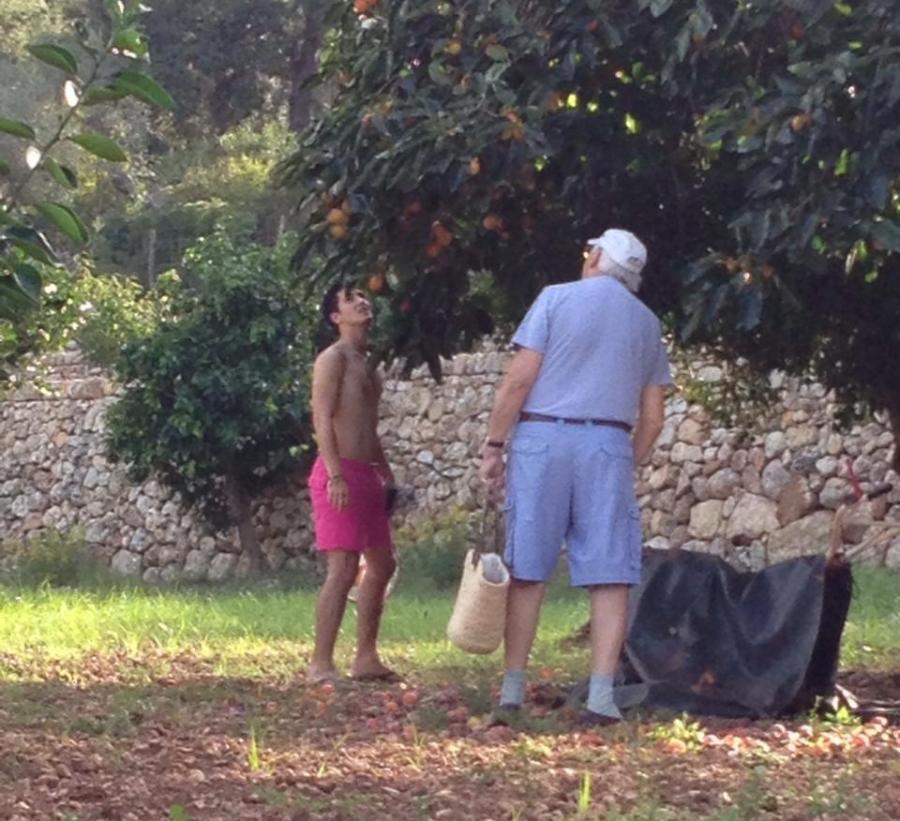
(Photograph: my youngest son Jack and his grandfather (mine). This photograph defines success to me).

We have brought up five kids, my children’s father and I. I had my first child whilst I was still at school, and the others came in rapid succession when I was at University (our last child, Georgina, was a luxury, she came much later).

Of course, we didn’t have maids.

Our family became something of a minor celebrity in Asia, where we moved to ten years ago. My youngest child couldn’t read properly until she was 8, and I was anti tuition. It was an alien concept to me, these hours of additional studying, just to make sure our kids get higher marks in exams than other similarly hothoused (but not necessarily smarter) kids. What in the blazes for??

So we opted out of the gold rush and taught our kids how to plant bananas instead.

My children’s father did not come from a rich background, so we were not insouciant because of the privilege of wealth. His father was a bus-driver who had to hold down three jobs at one stage to keep the family housed, clothed and fed. My mother-in-law was a cleaner. They lived in a house that was sub-divided and rented out. Not many boys from my children’s father’s school went on to further education. He was one of those who did.

I am glad he did not push our children to succeed academically, despite having his life changed because he passed exams and had opportunities that he would not otherwise have had. I am glad he did not think that there is anything wrong in his children becoming a bus driver, because his father was one. I am glad that he emerged from his financially poor childhood with the realisation that one can be financially poor, but still be happy and fulfilled. He often says, the best prize to him about having the opportunity was that he met me.

So we brought our children up against the tide. I am sure many people think we are insane, thus it is nice to read a new research and listen to a TED talk that corroborates what we have always believed in (http://www.bakadesuyo.com/2014/09/be-more-successful/). In a nutshell, it is about a child’s happiness. This thesis is by Shawn Anchor, on the subject of happiness and success. This happiness thing is a big deal these days – prominent professors of economics have published research on it. Check out the Centre for Economics Performance at London School of Economics – lots of research here on the subject of happiness.

Happiness? Eh? Shouldn’t parents be more worried about good exam results to lead to that place in that prestigious university, so that big-name employers chase Ah Boy/Ah Girl with that important job that guarantees success for life?

Happiness brings success. Not my words, but Shawn Anchor’s (a view shared by various psychologists in the field). Shawn looked at a low socio-economic school in Chicago where academic grades were below average, yet a couple of students have skyrocketing grades. That was enough to pull my interest, as my children’s father went to a similar school.

So are these students genetically more intelligent? I can’t comment, as I do not know them personally but one thing I know for sure, my children’s father is not that intelligent. Anchor believes that intelligence and technical skills only predict 25% of success. The other 75% is optimism, social connection and the way you perceive stress. Bingo!

Optimism

Anchor’s definition: the belief that your behaviour matters in the midst of challenge. Yes, it is the mindset. Does your kid crumple into a heap and is paralysed when life deals him with a blow?

My children’s father always tells our kids, “Don’t worry, be happy.”

I have to rein in the Asian Tiger Mum in me sometimes. “Waaah, doan worry??? Got Chemistry exam tomorrow, wor, Ah Beng!”

As proof that mums are always right, the afore-mentioned child dropped a grade or two for entry to the degree course of his choice. But with his father’s eternal sunshine burning forever bright in him, he took the train to Southampton and asked for his place on the highly competitive engineering degree course.

“You will drop out,” his pessimistic mum predicted. “It’s a tough course, and I won’t be around to nag you. The bottom line is, you have to convince me that you really want it before I help you financially.”

Now, I hate to be the sort of person who rains on others’ parade, but I believe that it is my duty to provide this second son of mine with reality check and ask for some sort of insurance before I spend my money.

He did provide it, in his own way and on his own terms: he went out to get a sponsorship for the three years of his degree course. And his masters degree.

Was this child of mine super-intelligent? In one word, No. Much as I, like all parents, would like to believe that my children are superhumanbeings.

Social connection

Anchor’s definition: whether or not you have depth and breadth in your social relationships.

The first thing I thought about when I read this sentence was oh no, networking and all that rubbish. But no, the author of this study actually meant one’s ability to form meaningful relationships.

It reminded me of the tale that my children’s father often tells. He left South East London and went for his further education in my hometown. He shared digs with a mad Greek called Georges Tsimoupoulous, who he is still pals with almost 40 years later. That was bad enough, but at that time, by coincidence, a bunch of Gibraltarian boys from his hometown was also at the polytechnic. So they did very little studying, a lot of drinking and even more womanising. His enduring memory is throwing someone’s final thesis out of the window from the third floor of the Engineering building in Anglessey Road.

“How did you pass your exams?” I was aghast.

“Oh, we bought notes from the Chinese students who spent the full three years in their rooms swotting and eating instant noodles,” he said winsomely.

Note: I do not condone that sort of behaviour, but this man became very good at what he does – he won a coveted place to do research at the National Maritime Museum, despite his high jinks, and interestingly, Anchor found that students who live in the library and eat meals in their rooms do not perform better. They are more likely to suffer burnout.

Hmm, I don’t know about burnouts, but one thing I know (by logical extension) – these students suffer from personality deficit disorder or some sort of a zombie affliction. Nah, I wouldn’t employ them.

Stress

Basically, what you see as stress is a block to success.

What I see is parents (and often school) adding on to a kid’s stress.

I do find it hard to say “Don’t worry, be happy” about weak exam grades, but I am glad I have a partner who grins about it and makes comments such as “Isn’t she magnificent” irrespective of what she achieves or not achieves on a piece of paper (and here is the surprising piece, she achieves, more often than not).

This is one thing I have observed: some stress is good, but if you get the ingredients right, that sort of organic stress comes from within a child who wants to do well, rather than out of fear of letting the parents down.

Pleasingly, the author of this quoted study mentioned that those who perceives stress as enhancing, ‘a challenge instead of threat’, are more likely to see an improvement in their levels of engagement at work.

Now, this is the piece in the study that pleases the yogi in me: the author found that by providing social support to others, his students at Harvard are doing better for themselves too.

So teaching your child to genuinely help others rather than view their peers as competition is a good thing. Strange as it may sound. It starts with teaching your child how to make friends, and how to appreciate those friends, especially those who are different and annoying.

In conclusion, it ain’t that difficult to raise a child. What that is difficult is getting rid of parental ego and unrealistic expectations. Now everybody, please download the song “Don’t worry, be happy” and sing it at the top of your voice with your children. It works 😉


My six ways of raising a happy child:

  1. Enjoy your child – find things to do with them that are not goal-related

  2. Talk to each other on car journeys

  3. Find time to do nothing

  4. Play the yogi laughter game – lie on each other’s tummies and laugh non-stop for 1 minute – at least once a fortnight

  5. Thank your child for the small things he/she does for you

  6. Spend time outdoors in nature, much as you may dislike it.

https://www.youtube.com/watch?v=Oo4OnQpwjkc

Education for Tomorrow

People are often confused about my education philosophies.  My children’s father and I are both unapologetic beach bums living on the paradise island of Phuket, with no ambition beyond walking the beach each day. Our older children have all grown and flown the nest, back to our home country (UK) and making strides in their adult lives. Now, there is only Georgina left. She is our last child, and her father and I are living the last years of our parenting journey with her (or should I say, through her).

We both have seen a lot, as one does with over a decade of travelling, living in foreign lands, meeting unusual people and raising five kids. Oh, the wisdom we have acquired from the road, it is nothing like what the books tell you. Of course, as parents, we want to impart the real-life wisdom to her – after all, what parents don’t.

A couple of the important things that we have learned: happiness is internal (therefore don’t go chasing big job titles) and in a world that has become increasingly fast-paced, we have to hold on to good old-fashioned values. And thus, we tell our child, you get the best learning at home (well, on the beach) and in church.

But here’s our dilemma – we have a child who is gifted (I hate the word) and who storms ahead, propelled by her curiosity of the world around her, her impatience at not knowing answers, and her desire to rule the world and see her name in lights.

With the benefit of hindsight, experience and years on the road, we want to tell her this:  a lot of what you obsess about is not important, anymore than exam grades are.

Fortunately, we live on a holiday island and she attends a progressive British international school, so the focus on exams is missing from her psyche. Thank goodness.  I could not have coped with exam stress for the second time in my life (coping with my own was bad enough), and exams say nothing about a person’s capabilities anyway.  I give you an example: despite her tender years, Georgina is one of the most erudite, vocal and critical thinkers I know, and English is her mother tongue. Yet English Language is one of the subjects that she consistently scores lowest in exams.

But dear parents, it does not mean that we just let our child’s fertile brain just rot. We teach her. Teach as in giving her the building blocks to build her own framework, rather than telling her what she has to know. Because a lot of what we know is rubbish anyway, come tomorrow, but the learning process remains and paves the way for future, yet-to-be-known experiences.

Here’s what I mean: whilst I was at Oxford, the superstar of the Astrophysics department was a young scientist called George Efstathiou, who was heavily lauded for discovering cold dark matter. A few years later, his theory was found to be flawed and cold dark matter was dead. And then, it revived again….it goes to show that nobody really knows The Truth, not even parents.

Georgina’s father has a Bachelor in Education degree, so I derive some degree of comfort in the fact that at least one of us know what he/she is doing when it comes to educating this child. We want to educate her for a better world (she, and all the other youngsters, are our world). It sounds rather pompous, so in company, I always say, “Education for tomorrow”.

And this is it about education for the new world: our children are going to grow up to be someone’s husband/wife, parent, employee, employer, leader, friend, helper, and a whole gamut of unofficial occupations. Look around you at these people in your life – what do you love and cherish about them? What do you admire about them? What is it about that special person that makes the world better?

Now turn the mirror inwards to your parenting self. Are you raising that wonderful person, or are you too obsessed trying to create a genius out of a moderately clever child?

I often post on social media about the challenges of raising a child who does not want to follow her parents’ footsteps and live on the beach, existing solely on love, fresh air and sunshine.  I post about her asking questions on isotopes, grammar rules, marine plywood, universal proof and a whole lot of other things that are quite frankly beyond my rusted brain. I often struggle to find the answers and have invested hours rereading my old books and doctoral thesis to bring myself up to date.

However, my intention is not to create a monster – sorry, I mean genius. I have no ambition whatsoever of raising a scholarship student either. And there is nothing I find more irritating than a precocious child spouting rubbish that he/she had picked up from the Internet or from reading unsuitable books – the saying ‘empty vessel makes the most noise’ springs immediately to mind.

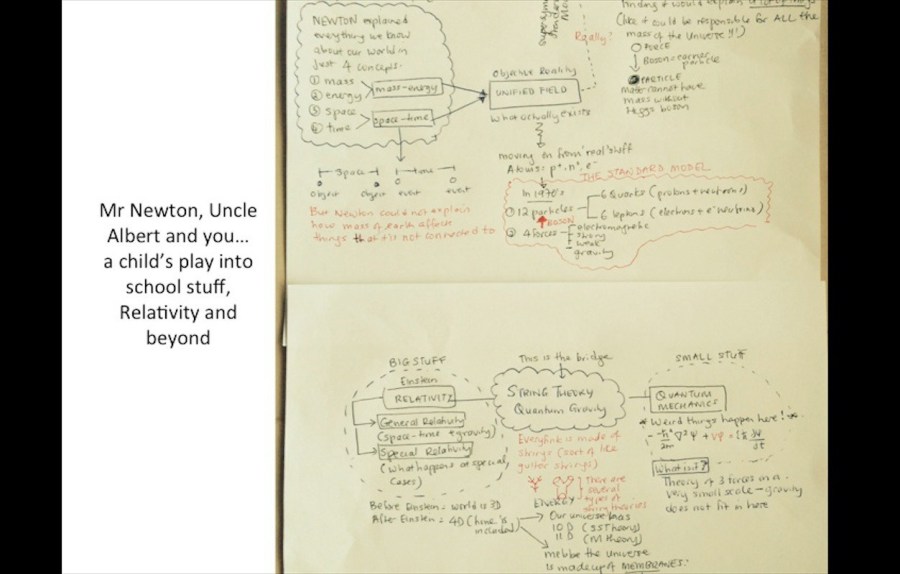
No, we teach our child to learn. Relativity, Quantum Theory and other big-ticket topics that fire the imagination are merely tools for learning, and not the actual Holy Grail. These subjects teach a child that the world is not known, much as we like to think it is, and orders are rapidly changing.  This is why Ptolemy is proven wrong, whilst Einstein’s legacies are work in progress. Learning how to think is expansionist and cannot be converted from textbook learning.  It is from a different branch all together.

For background, Claudius Ptolemy was an influential mathematician, astronomer, astrologer, geographer and poet. Ptolemy was famous for a number of discoveries, out of which the most famous was a theory that expounded that the earth was the centre of the universe (though some might argue that Ptolemic system holds true for some isolated cases). We now know that the earth is not at the centre of the universe, and nor is the universe the centre of other universes. There is no centre, though no one knows for sure, not even the ‘experts’ with their space-age, multi-billion dollar toys. And this is what I answered to a mother today who suggested that I seek experts to help my daughter with her maths: there is no expert, and the best teacher for a 15 year old child is her parents. Maths knowledge – or any non-contextual knowledge for that matter – will not make her a better person, or a happier one, or a successful one, if your definition of success is a balanced, productive adult with a fulfilling personal life.

I was once asked, when I was giving a talk at the Science Museum London, what I thought about Einstein’s Relativity equations.  Thinking on my feet, I responded immediately, “They kind of work, because Einstein left gaps in it for things that he did not yet know.” I was terrified of being misquoted afterwards, as it was a high profile event and I shared the stage with Professor Michael Rowan-Robinson and A.S. Byatt. To compound my worries over my unscripted grandiose statement, the ultimate head of my department at that time was Professor Christopher Llewellyn Smith, who was the Director General of CERN, the European multi-billion pound research facility in Geneva. The dressing down never came (maybe I was correct, but who knows), and a few weeks later, I won the Department of Trade & Industry’s SMART Award.

I don’t use any of it. Except maybe to win arguments with my child.

But this is the important lesson I learned from Einstein: as time passes, we will continue to grow and gain a deeper understanding of things, and we will see things differently. We must allow for the empty spaces in the present.

As my child succinctly summarises, “Oh, the textbooks are not always right then.” And neither are parents.

Real knowledge has to be discovered, either in the real world or within the unplumbed depths of your mind. It does not come spoon-fed to you, either in books or the Internet. And that is what we are teaching our child: to think critically, to question relevantly, to search effectively, to create workable frameworks, and most of all, to find joy in the living and meaning in the caring.

I dedicate this article to my dear friend Richard Boyle, who understands what I am trying to teach my child, keeps me inspired and gives me much joy.

Teaching Little Johnny/Janey How to Save Lives. The Realistic Version.

A few days ago, I saw a post about an online First Aid course. Upon completion of the program, which has no minimum age requirement, ‘students’ will be awarded a First Aid certificate.

The doctor in me freaked out. Big time. Especially when mothers are signing their children up, in the mistaken belief that Little Johnny / Little Janey can learn how to save lives in the real world after sitting in front of the computer screen for a few hours.

In this technological age, we can do most things online, ranging from controlling your lighting on remote to killing people. But to learn First Aid online?

99% of emergency life-saving skills are practical in nature. The theory is simple enough. Here it is, in a nutshell:

D = Danger. Ensuring that the casualty and First Aider are safe.

R = Response. Is the casualty responding to voice and/or touch?

A = Airway. Is there a blockage? Can you clear it?

B = Breathing. Is casualty breathing clearly?

C = Circulation. Is there a pulse? Is the beating? Is there major hemorrhage from somewhere?

It’s known as DR ABC. It’s easy enough to teach children. I am all for children learning First Aid, but in the real world, and with practical, hands-on experience and a lot of drilling. My fourteen-year-old daughter ran a First Aid course for children, and 75% of the course is getting kids to actually do things. Because much of of First Aid is confidence and drill, not theory. I have taught First Aid courses to clever adults, and many of them – well versed in the theory – froze in a simulated scenario.

So how realistic it is to expect an 8 year old to be proficient First Aider? Imagine this scenario. As you are crossing the road with your child, a car knocks you down on a lonely stretch of road and the drives off. The impact of the car shatters your thigh bone, and the fragments pierces your femoral artery. You fall to the ground, hitting your head and you lose consciousness. Your head wound starts bleeding profusely. The fall also causes you to choke on your tongue.

Following DR ABC to the letter, Little Johnny should drag your inert body away from the road, out of danger. He should then check on your response, clear your airway to resume your breathing, before making a judgment call to stem arterial flow from your thigh rather than the dramatic blood loss from the head wound. Seriously, even if your little darling is a superhuman being, can an eight year old realistically do all these?

I, for one, would prefer to teach my Little Janey life-saving skills in the real world. I would teach her to be safe first and foremost. In the scenario above, she should leave the casualty behind and get herself away from the road. There is not much point in having two dead bodies. Little Janey should learn to walk facing the traffic and flag the next car down for help in the safest possible manner instead of sacrificing her own life trying to drag a dead-weight adult off the danger zone, a futile task in most cases.

How realistic is it to expect an eight year old to be able to clear blocked airways? I was in an airplane recently when a fellow passenger choked on a piece of meat. A panicked call went out for a doctor on board to identify himself to the flight attendant. By the time I reached the casualty, another doctor was already there, performing the Heimlich manouvre.   The doctor was an Australian male, with burly forearms locked tightly around the casualty, trying to dislodge the small piece of meat using the standard protocol. Without much success. I took the decision to put the casualty in a head-lower position – with the help of three men – before using a metal spoon to pry open the casualty’s jaw and retrieve that piece of meat. I could not have managed this on my own, and neither could your eight-year-old superhumanbeing child.

So please, dear parents, be realistic. And teach your children real life-saving skills. Teach your child how to get help. A survey of 757 parents which was carried out by Mumsnet, the UK’s largest Internet community for parents, showed a woefully small number of children actually know how to dial for help. Teach your child how to call the emergency number from a locked smartphone, give your address coherently and describe the incident as accurately and as succinctly as possible. Drill your child regularly. Constantly raise his awareness when it comes to safety. Because when it comes to children, this is what actually saves lives, not theoretical First Aid courses.

 http://www.dailymail.co.uk/video/news/video-1177515/Listen-little-girl-saved-mums-life-calling-999.html

Of Childhood Illnesses

We live in an over-medicated society where people are getting more ill, instead of better. Each day when I open my Facebook newsfeed, and I read posts by mothers moaning about their children’s coughs, colds, fever, congested chests. Again. And often, accompanying these posts are photos of sorry-looking children (passive, cowed and victimised) and the medication that they have been prescribed with. Being ill has become a state of play, for both the unthinking parents’ monkey brains and the pharmaceutical industry. A whole generation of children is accepting that illness is normal, and the solution is taking sick leave and swallowing drugs. Hello, this is all part of growing up.

Do you know that doctors and hospitals make money from selling medicines, dear parents?

Analgesics are popped into the mouth like sweets these days. There is medication for fever, coughs, colds, congested chest, you name it, and you can be sure that a pharmaceutical company somewhere has thought about it (and exploited modern society’s desire for instant effortless cure). The majority of medicines found in the home are useless. Harmful even, in the long run, because apart from breeding resistant bugs, we rob our bodies of the vital opportunities to learn how to overcome infections. Indeed, we are de-skilling our body’s defence system by mollycoddling it with false friends.

The fact that your body is sick means that there is something not quite right about it at the moment. And it is for a reason. It is out of balance with its environment, resulting in the outbreak. For example, if your child is often ill with fever or other little ailments, it means that he/she is not able to fight common infections. So instead of medicating your child, may I suggest that you do an audit, which is to say find out if your child nutritional intake is sufficient to balance the needs of his growing body? Is he having enough rest? Is he drinking enough fluids? Is there an underlying serious issue that’s causing the recurrent outbreak? It could be emotional, as more and more children in our pressurised society is suffering from stress early, and illness is one of the ways the child manifest the stress or unhappiness that he is feeling. Medication for fever is not going to solve the real problem for the long term.

In fact, research has shown that parents over-reacting over little ailments by over-medicating their children can cause a rise in immune-related diseases, some serious.  Antibiotics, analgesics and hand sanitisers are most emphatically not meant to me part of our normal lives.

If your child’s daycare centre has frequent outbreaks of the highly infectious hand-foot-and-mouth disease, arming yourself and your child with crazy quantities of anti-microbial hand sanitisers is not going to help. Some hand sanitisers are carcinogenic. Far better to insist that the daycare centre establish a clear protocols to prevent future outbreaks, because you are then dealing with the problem, rather than loading your child’s body with more toxins. The general practitioner, Dr. Rosemary Leonard wrote that we are breeding a ‘dangerously clean generation’, and she sees a rise in immune-related disorders, such as eczema, asthma, hayfever and food allergies.

Of course, I am not advocating that you just leave a sick child be. We, the parents, have to manage the illness with wisdom and with these four facts:

(1) Keep a fevered child’s temperature down by regular sponging him and wearing loose cotton clothes. Let him rest in a room with cool ventilation.

(2) Ensure that your child is hydrated.

(3) If the illness persists for more than three-four days, take your child to a reputable emergency unit/trusted doctor, and seek explanations. You may have to insist on tests.

(4) Look out for other symptoms, such as blotches (which could be indicative of meningitis) and rash.

(5) If your child’s condition worsened, then it is straight to the emergency unit as soon as possible.

For our children’s sake, we must begin taking responsibility and stop subcontracting their health to outside parties, who often do not have your children’s best interest at heart. Wake up to the reality that popping pill does not help. It may even kill. We may seek to cure or prevent all illnesses with disinfectants, antibiotics and cleanliness, but Nature has found a way to get her own back. There are more sick children today than there ever was. Don’t raise a victim.

Stay tuned on my piece on Energy Medicine.

Motivating a teenager

Parents often ask me, “How do you get your children to be motivated?” The simple answer is, a happy child wants to do well. There is no need to bribe, persuade or cajole – a happy child wants to keep the status quo of her environment.

I also truly believe that every child started off in life as a happy being. That is the natural state. So full of curiosity, optimism and wonder. It is what we do that shut them down, and we bog them down with our expectations. Sure, children need rules and boundaries, but not parental ambition.

And as someone wise once told me, “The best job for the next generation hasn’t been invented yet.”

I have lived through that. When I was growing up, those who can do medicine, law, dentistry, accountancy, science. Nobody heard of IT. Nobody heard of hedge funds. Yet these two areas provide a world of opportunities for my peers undreamed of by the previous generation.

So we are relaxed about exam grades. However, to our surprise, G loves school. Today, she is marching off into her school happily, looking forward to a good hearty lunch and lessons which she fares well in.

Well, she must really love school, because she turned down our invitation to sit on the beach with us. “I’ll do that on the weekends,” she said. “Not on school days.”

Screen Shot 2015-03-18 at 9.52.40

A magical human bean

A pregnant first time mum-to-be asked me, “What is so special about pregnancy and childbirth?”

My dear, it is pure magic.

This is G, the human bean I made with her father. She does not have his signature blue eyes, but my God, she does have his smile alright. Almost thirty years since I first saw that smile, I am seeing doubles. And she has his devilment and his eternal sunshine in her DNA.

Therein lies the magic: I picked the best part of him, and made it into a human bean that is me and him ❤

I can’t wait to make more human-beans.

Healing Foods

As a doctor, I am a firm believer in supporting the body to heal itself rather than a reliance on antibiotics and medicines. It has taken me a long while to arrive to this way of thinking: at the beginning, I was besotted with the miracle drugs that can ‘cure’ illnesses like magic, not being wise enough then to realise that an absence of symptoms does not equate to cure. But after half a lifetime’s journey, both as a doctor and a mother, I am now a strong believer in the philosophy that healing foods, a supportive lifestyle and love can cure most of the ills we encounter in today’s topsy-turvy world. Here are some of the core recipes:


MY GREEN SMOOTHIES
IMG_0044
There are three parts to my green smoothies:
1. Base
Made from fruits such as bananas, avocados, dragon fruits, papaya, honey dew melons, mangoes.

2. The green layer
Organic greens. Anything will do, the dark leafy ones are more nutritious, but mix with lighter ones for a milder taste. But whatever, make sure this layer is purely organic.

3. The topping
Chia seeds, flax seeds, goji berries.

Add some water and blitz. Remember to keep blitzing until you get an almost homogenous drink.


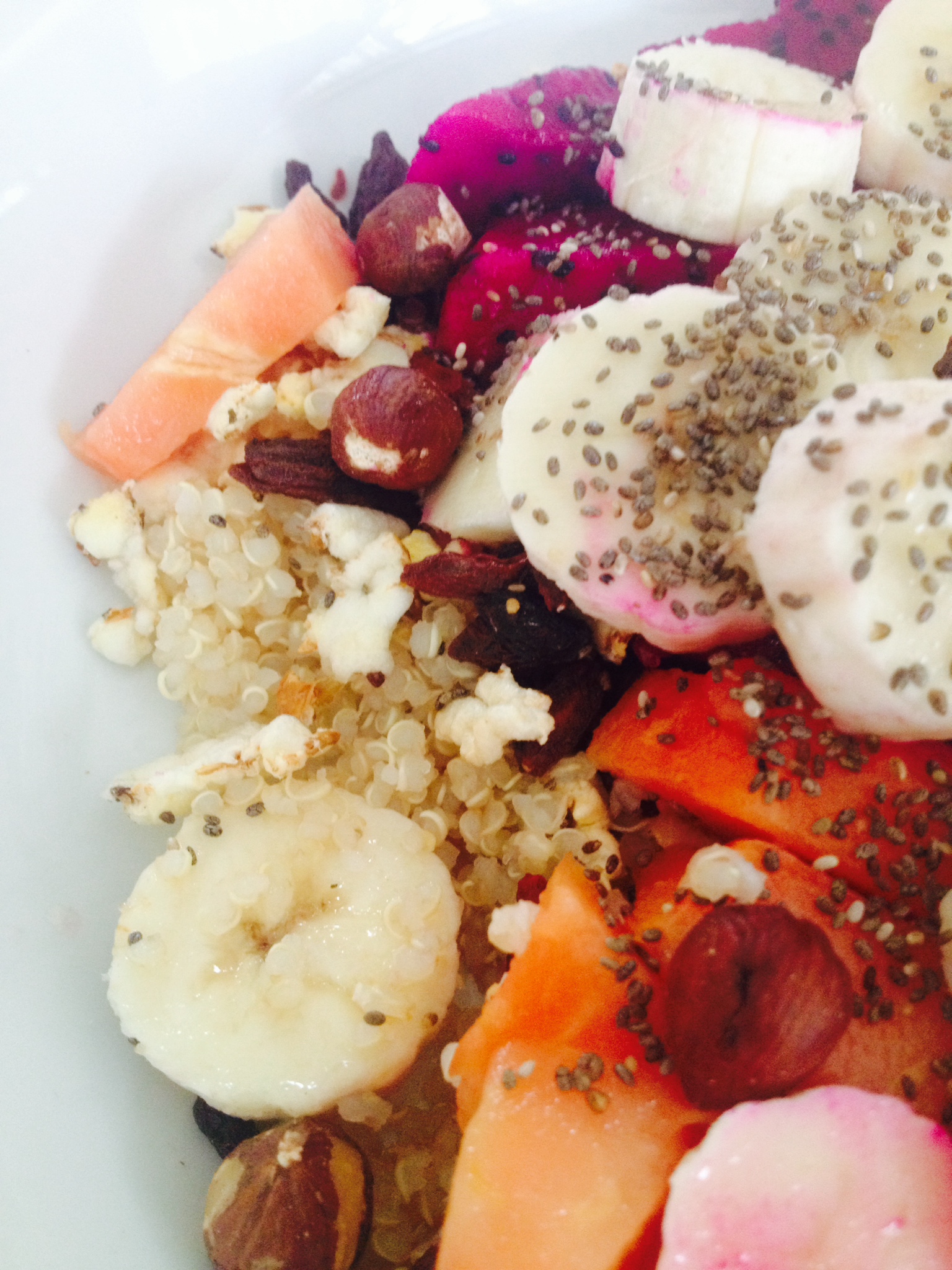
MY GLUTEN-FREE BREAKFAST CEREAL
Oh, it is so difficult (and expensive) to find gluten-free cereals! Here’s my creation:
cereals

(1) Boil some quinoa according to packet instructions. You can do this the night before (quinoa keeps in the fridge for a couple of days).

(2) Break a slice of corn-thins and add to the quinoa.

(3) Top with fruits, nuts, goji berries and chia seeds as shown.

(4) Serve with cold milk.

(NOTE TO THOMAS: Corn thins on the breakfast bar)


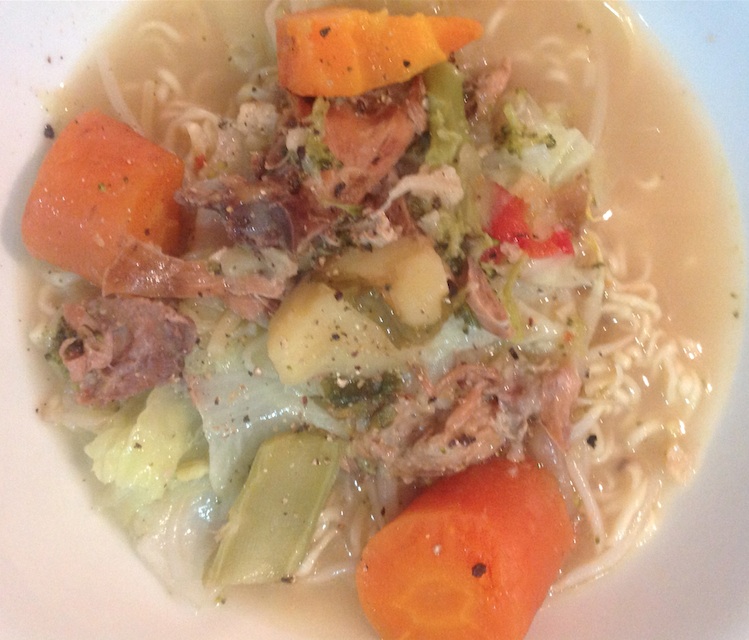
BONE BROTH
broth

Boil the following over low heat for several hours:
1. Organic, hormone-free and antibiotic-free chicken or beef bones
2. 2 tablespoons of vinegar
3. Carrots
4. Broccoli
5. Potatoes
6. Bay leaves

For a more filling meal, boil some small pasta (e.g. macaroni) separately and add to the broth just before serving.

Do not discard the leftovers (bones and veggies) – reboil it to make a weak soup and use it for the following:


BROWN RICE-MILLET BROTH
rice millet

1. Add washed rice and millet into the soup and cook until tender.
2. Just before serving, break an egg into the pot and cook until the egg white is solidified and the yolk still soft (use safe eggs)
3. To serve, add garnishes: coriander leaves, spring onions, salt and pepper (the leftover bits of carrots and veggies make it all the yummier).

(NOTE TO THOMAS: No brown rice or millet at home, just use ordinary rice this week)


QUINOA & GREENS SALAD
quinoa

1. Cook the quinoa according to packet instructions.
2. Prepare the base with mixed green salad leaves.
3. Add the heavier elements, such as avocados or roasted beetroot.
4. Spoon the quinoa onto the nest.
5. Top with nuts and seeds.
6. For dressing, drizzle olive oil and balsamic vinegar.


GRILLED FISH AND GREENS
IMG_0050

1. Marinate the fish with salt and pepper. Make incisions in the flesh and put ginger slices in the incisions. Leave for a while.
2. Drizzle with olive oil.
3. Grill on a low setting until the fish is cooked (NOTE: Thomas, the grill is the fire on top)
4. In the meantime, heat up some olive oil in the pan. Add in garlic slices, stir until brown, and then add in greens. Season lightly with salt.
5. Serve with rice.


More on the medical basis of the diet I propose by the University of Massachusetts Medical School: http://www.umassmed.edu/news/news-archives/2014/04/UMMS-first-to-develop-evidence-based-diet-for-inflammatory-bowel-disease/